
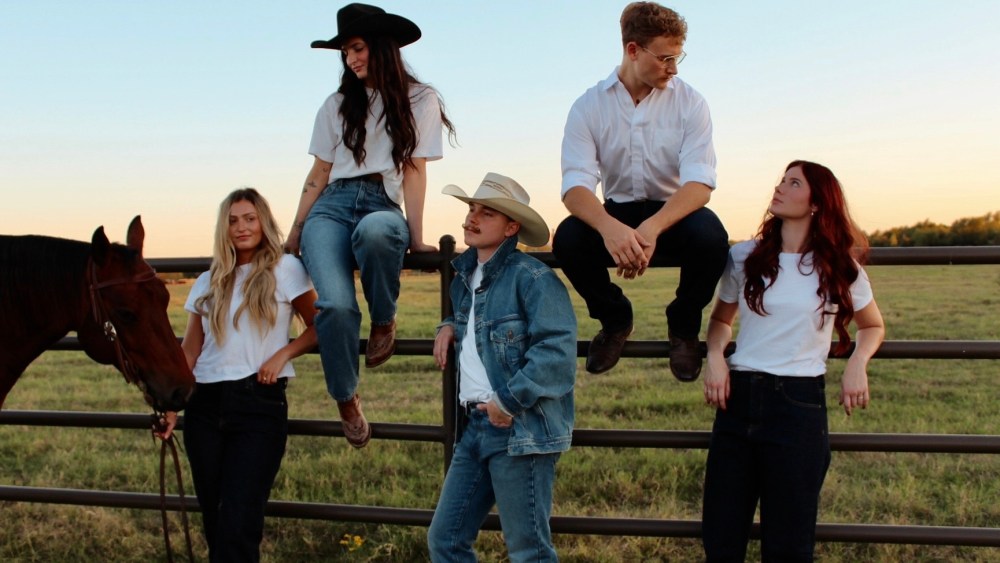
This month, founder Jessica Sheppard will launch Sheppard Denim Co., a men’s and women’s denim lifestyle brand that takes the upland cotton grown at her husband’s family farm, Williams Farm in the Texas Panhandle, through the supply chain. After leaving the family’s gin, the cotton is sent to Cone Denim’s mill in Mexico, where it is woven into custom “Sheppard” fabric. The fabric is then trucked to Los Angeles, where it is cut and sewn into jeans and jackets.
The brand is the brainchild of Sheppard, who grew up around farming and studied fashion merchandising at the University of North Texas. She first envisioned a farm-to-fashion brand in 2019, but she said the market wasn’t ready. At the time, the supply chain lacked transparency, and consumer awareness of fiber sourcing, sustainability, traceability and local production was still limited.
“Consumers weren’t asking the questions that they’re asking now,” she said.
By 2024, Sheppard began cold-calling denim mills, including Mary Black, Cone Denim’s sales representative, who urged the mill to explore the partnership. “I think they saw the vision from day one, and they wanted to make this happen. We just had to figure out the logistics of making it happen,” Sheppard said.

“What really stood out to me was Jessica’s personal connection to the project,” said Blake Gaines, Cone Denim’s director of design and marketing. “Sheppard Denim wasn’t created around a trend or simply to launch another denim brand. It came from her own experiences growing up around agriculture and her desire to connect that world with her career in fashion. That gave the project a genuine purpose from the very beginning.”
Sheppard Denim Co. is the first brand to take its own cotton to Cone Denim to develop a signature fabric. The 14.75 oz. denim is a three-by-one twill with a soft hand feel and double-dip dark shade.
Gaines said it’s not the typical approach. Working with customer-supplied cotton required additional coordination and technical evaluation to ensure the fiber can be processed successfully through spinning and weaving while meeting Cone’s quality standards. The mill’s technicians needed to understand the characteristics of the raw material to make sure each step of the process works together to achieve the desired fabric.
However, Cone’s roots in authentic denim manufacturing made it a natural partner for the brand.

“What made this project special was that we weren’t simply developing a fabric for a brand; we were helping connect a family farm in the Texas Panhandle to a finished denim product. That required collaboration across the supply chain, but it’s exactly the kind of challenge we enjoy at Cone. It allows us to apply our technical expertise in a way that supports a brand’s vision and brings a meaningful story to life,” Gaines said.
Cone Denim also connected Sheppard to Christine Rucci, the New York City-based denim consultant and founder of Godmother Denim NYC. Together, they worked on fits, trims and rounding out the rest of the brand’s suppliers, from L.A. sewing factories to antique brass hardware and bio-compostable shipping bags.
“I don’t know of any brand in the history of my years that grew their own cotton,” Rucci said.
She said the brand’s model shows how socioeconomic impact can extend beyond supply-chain transparency to preserving well-paid manufacturing jobs in L.A., supporting collaboration among small businesses and demonstrating how a small brand can work with larger industry partners.

The direct-to-consumer brand will launch on November 22 with $170 men’s and women’s relaxed straight jeans—Jessica and Trey’s favorite fits. The women’s jean size range is 24-34; the men’s is 30-38 with two inseam options: 32 and 34. A $275 unisex jacket inspired by a style worn by Jessica’s grandmother will launch later.
More washes and fits are in the pipeline, including a bootcut. Next year will bring denim accessories like tote bags and hats. The brand is also exploring opportunities to use The Lycra Company’s bio-derived spandex made with Qira and to start a wholesale business.
The next cotton bales are due in January. Sheppard pointed out how the process has given the farmer a closer look at the supply chain. Typically, once cotton is harvested and baled, it goes straight to the gin, and farmers lose sight of where it goes next. “This has been interesting from a farmer’s perspective, watching it go through the supply chain and seeing what their cotton actually looks like in a physical product, not just from the bale perspective,” she said.
Getting Sheppard Denim Co. off the ground has also revealed some hard truths about the cotton farming industry.
“I don’t think people really understand how hard farmers work and the long hours they work to grow a good plant,” she said. “Now I’ve seen the backside of the books, and unfortunately, the farmer is the one who’s getting paid the least amount of money in all of this. And I’m not saying that everyone else didn’t work hard or didn’t do their part, but this is sad to me. The American farmer is the reason why we have the denim, and they’re the ones not getting paid the most for their process.”
Sheppard Denim Co. will help tell this story through documentary-style footage shared on social media. The brand is also partnering with the farm’s cotton seed producer PhytoGen on promotions.
“Without growing a good cotton plant, we’re not getting good denim,” she said. “That’s the story I want people to see.”


