
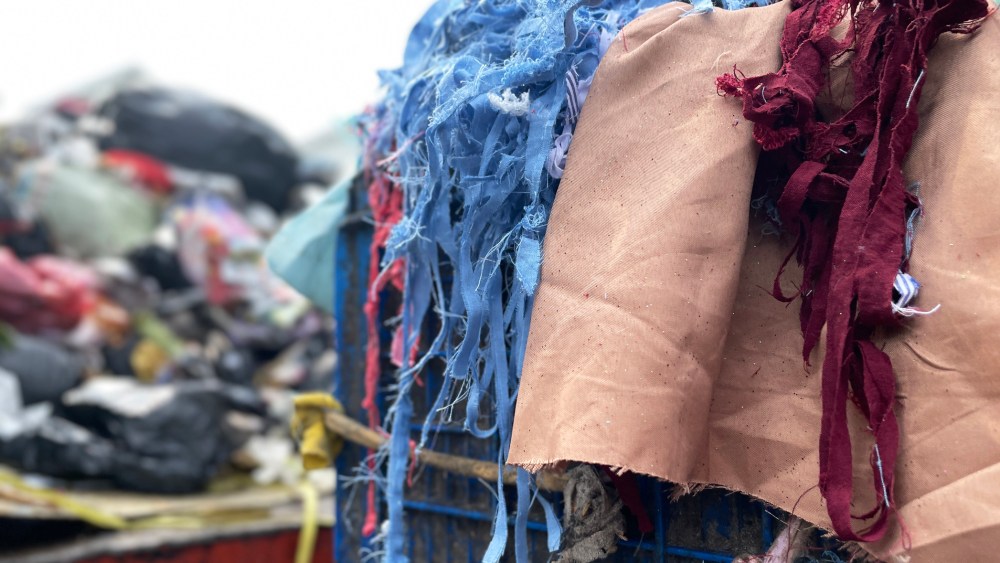
The textile and garment sectors have been important drivers of economic growth in both Uzbekistan and Kyrgyzstan, but more work is needed to sustain that momentum. As the European Union and other global markets enforce sustainability standards, all markets must assess their status regarding circularity. The United Nations Development Programme (UNDP) released a new report on the potential for circular textile value chains in Kyrgyzstan and Uzbekistan.
The two countries share some challenges when it comes to sustainability, but the textile sector in the two countries is very different.
Uzbekistan was historically a top exporter of cotton but has now created a vertically integrated cotton-textile cluster system, which encompasses the whole production chain. In Kyrgyzstan, garment manufacturing is centered more in small and medium-sized enterprises (SMEs), operating under a cut-make-trim model. The industry in Kyrgyzstan is also oriented more toward nearby regional markets.
In the report, the UNDP uses a Circular Transformation Index (CTI) to measure the degree to which circular strategies are being applied across sourcing, manufacturing, resource management, and waste handling and end-of-life processes. Overall, the analysis determined that awareness is growing, but most enterprises in both countries are at a low level of circularity.
In Uzbekistan, among large companies (500+ employees) and diversified manufacturers, there are generally higher CTI scores, with 23 percent of enterprises that had a high CTI score overall. In Kyrgyzstan, where most firms are SMEs that are engaged only in garment production, no companies received high CTI scores and 87 percent received low scores.
Energy efficiency is the most widely adopted circular practice in both countries. Many firms use LED lighting and energy-saving equipment. This strategy is motivated more by cost reduction and the immediate effect it has on operational bills rather than environmental strategy.
Conversely, waste management and sourcing are the weakest links in Uzbekistan and Kyrgyzstan’s circular practice. In terms of procurement, infrastructural and market limitations do not incentivize the use of certified or recyclable materials.
In Kyrgyzstan, the industry relies heavily on imported fabrics, and the limited availability of local supplier standards makes obtaining sustainable materials difficult. In Uzbekistan, there is higher engagement with certified sourcing, likely because the larger export-driven firms are preparing for international standards.
Regarding textile waste, there has not been sufficient development of traceability practices in either country to determine whether textile waste is recycled or put to productive use.
The report identifies digitalization as a top priority for the countries in their efforts to adopt circular practices. Traceability has become a key part of modern market expectations with enforcement of Digital Product Passports, supply chain data, tracking of product flow from market to end-of-life, and more. Uzbekistan already has an electronic cotton traceability system, which uses barcodes and RFID tags to trace fiber origin. Extending digital tools like this to recycled fibers and waste tracking would further enable circular value chains.
The UNDP describes the systemic approach they believe is needed to unlock circular potential in Uzbekistan and Kyrgyzstan. This method combines regulatory reform, financial incentives, capacity building, and cross-border collaboration.
The report states that a priority will be developing a framework for the circular economy that can help government, industry, and businesses align their goals. Alongside these frameworks, the countries should create financial incentives for investments in recycling technologies, renewable energy, and resource-efficient equipment. The countries should simultaneously invest in infrastructure and digital systems for handling textile waste. Along with the previously discussed digital tools for traceability, the industries need textile recycling and waste-sorting facilities. Targeted training programs could address the capacity and knowledge gap on resource-efficient production, sustainable sourcing, and circular design.
Finally, collaboration between Uzbekistan and Kyrgyzstan could help accelerate learning, build scalable models, and strengthen regional production.