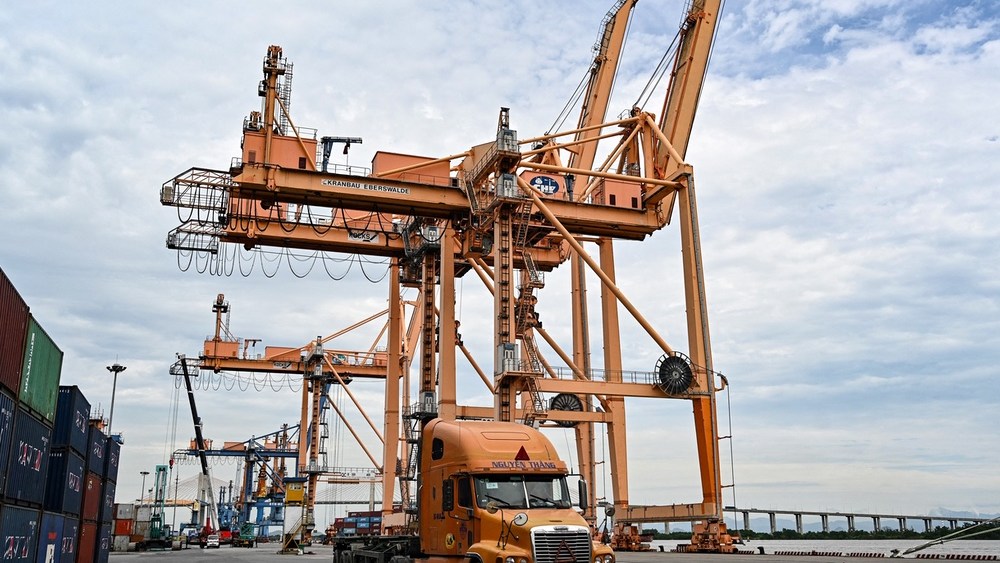
A sweeping ban on imports of goods made wholly or in part with forced labor went into effect in Vietnam on Saturday, marking a major regulatory shift amid intensifying pressure from the United States over unfair trade practices.
Initially issued in July following Washington’s Section 301 investigations into 60 trading partners over their ability—or lack thereof—to prohibit or effectively enforce bans on forced labor imports, the new decree establishes, for the first time in the Southeast Asian supply chain hub’s history, a codified compliance framework that applies to goods originating from any enterprise, country or territory.
The measure tasks individual ministries, such as the Ministry of Industry and Trade, with publishing detailed prohibited-goods lists, complete with Harmonized System—better known as HS—codes, unless already specified under existing laws. Beyond seizing violating shipments, it also requires high-risk sector importers to upload comprehensive bills of materials, certificates of origin and verifiable chain-of-custody data, penalizing companies that fail to trace their supply chains down to the raw-material level.
Foreign Ministry spokesperson Pham Thu cited the prohibition, which arrived hastily two days before the U.S. Trade Representative announced a 12.5 percent tariff on Vietnam, as evidence that Washington’s action did not “fully reflect the realities on the ground and Vietnam’s efforts” to prevent and eliminate forced labor. She also said Vietnam will continue to work with the United States in a “constructive and cooperative spirit” while urging it to “fully take into account” Hanoi’s efforts when adjusting tariffs on Vietnamese goods.
Even so, the USTR imposed the more punishing 12.5 percent tariff, versus the 10 percent levied on some other countries, because Vietnam’s forced labor prohibition had yet to go into effect, potentially allowing bad actors to illegally transship imported forced labor goods such as Xinjiang cotton and polysilicon by masking their true country of origin and bypassing the Uyghur Forced Labor Prevention Act.
Advanced Logistics Solutions wrote in a note on Monday that, with Vietnam now subject to the same Section 301 tariff as China, the cost advantage that once made it a central pillar of the “China-plus-one” sourcing strategy, bringing it neck and neck with Bangladesh as the world’s second-largest garment exporter, has “substantially narrowed, and in some cases effectively neutralized” for broad categories of goods.
The transition is especially pronounced because while Bangladesh, Cambodia, Indonesia and Malaysia stand to benefit from a so-called “textile mechanism” that could exempt part of their apparel exports to the United States from the tariffs if they use U.S.-produced raw materials, Vietnam has no equivalent loophole.
The freight services platform also noted that Vietnam is the subject of a separate Section 301 investigation over online piracy, counterfeit goods, weak border enforcement and unlicensed software use, meaning importers should “reasonably anticipate” the possibility of additional duties or other trade restrictions independent of the forced labor tariff.
As far as the forced labor prohibition is concerned, however, key details remain unresolved. The international law firm Nishimura & Asahi wrote in a note last week, for instance, that it’s still unclear how the Ministry of Home Affairs will flag or list affected goods, how forced labor links will be assessed, and whether Vietnam will rely on entity, country or region lists rather than shipment-specific findings. Because the decree neither names specific enterprises, countries, territories or treaties nor defines risk triggers and evidentiary requirements, the rule’s real-world implementation will require further guidance.
Despite this uncertainty, businesses importing goods into Vietnam should not wait to assess potential forced labor risks in their supply chains, Nishimura & Asahi said, before recommending that companies review supplier due-diligence procedures, strengthen supply chain visibility and evaluate the availability of documentation on product origin and production.
“These measures may become increasingly important if competent authorities issue further guidance regarding implementation and enforcement of the prohibition,” it added. “Businesses also should monitor future developments closely, including the publication of detailed product descriptions, HS codes and any additional guidance relevant to the scope and operation of the prohibition.”
A growing number of nations hit with the same tranche of U.S. tariffs have likewise scrambled to draft, pass or otherwise shore up forced labor import prohibitions. Those with bans in various states of implementation include Australia, Brazil, Cambodia, Canada, the Dominican Republic, Ecuador, El Salvador, Guatemala, Honduras, India, Jordan and Sri Lanka. Others, like Argentina, Bangladesh, Malaysia and Thailand, have committed to similar measures under U.S. reciprocal trade agreements.
The European Union’s Forced Labour Regulation, which entered into force at the end of 2024—well before the United States launched its Section 301 investigations—is set to take full effect on Dec. 14, 2027. Until then, most imports from the world’s largest single market into the United States face a 10 percent tariff because the rules are not yet applicable.