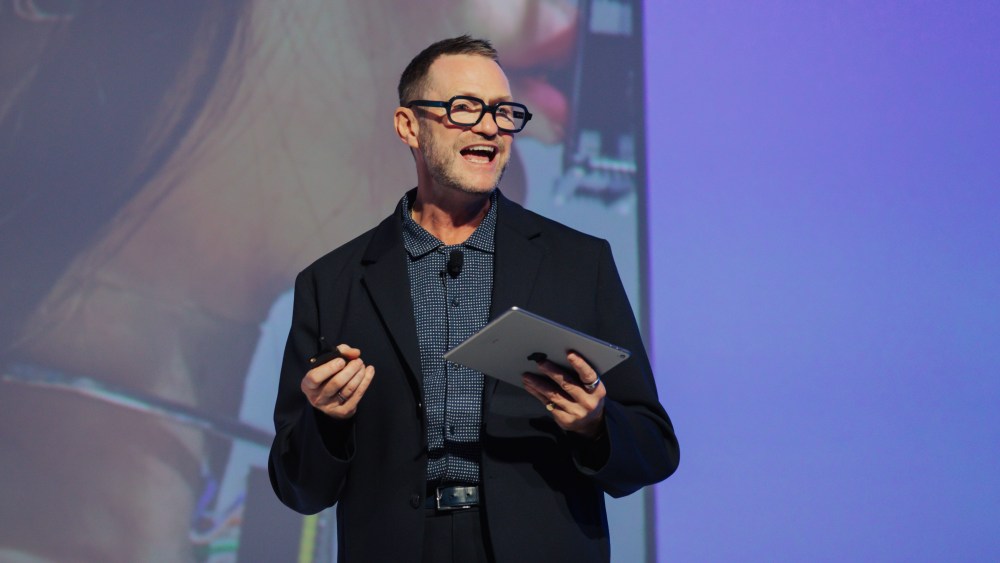
Beauty is losing its self-expressive spark, said The Future Laboratory cofounder Christopher Sanderson at the 2025 Beauty Inc Catalysts conference.
It’s a phenomenon he attributes, at least in part, to the rise of “the algorithm,” with programmed content patterns on social media platforms such as TikTok and Instagram increasingly delivering uniform ideals of beauty and wellness to users.
“Beauty has always mirrored the times; it reveals our social values,” said Sanderson. “Yet despite unprecedented levels of diversity that we now see in our culture, beauty has never looked more alike. From Hollywood glamour to Instagram’s poreless perfection, beauty’s evolution has traded aspiration for imitation.”
Related Articles
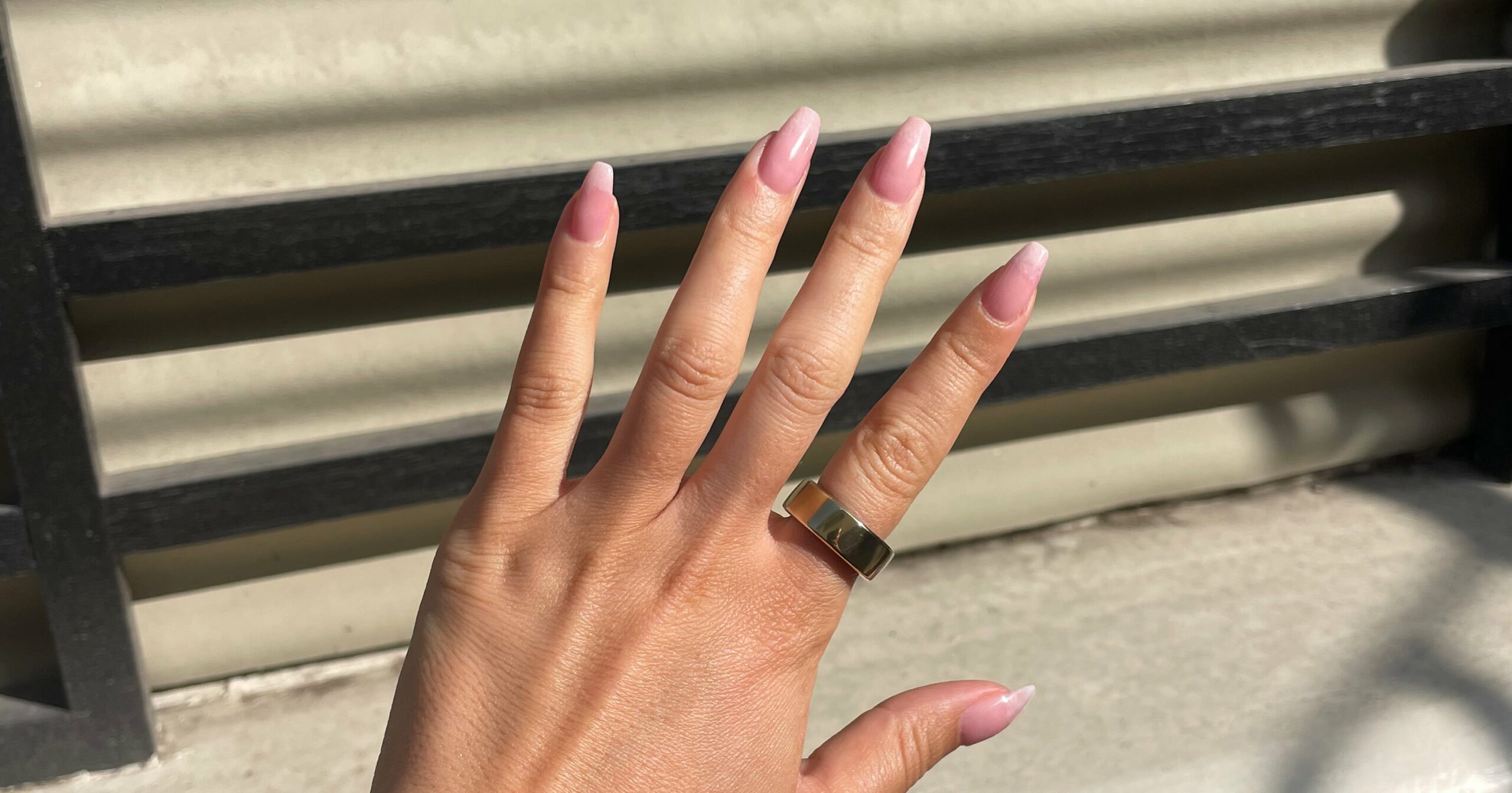
The industry has fostered an increasingly pervasive aesthetic sameness (think: “clean girl” beauty, “quiet facelifts,” skinny BBLs, and so on) that, according to Sanderson, must be overcome in order for beauty to forge a more meaningful future.
“What’s being lost isn’t just aesthetic diversity, but cultural depth, imagery and joy,” he said, adding that consumers, too, are beginning to feel fatigued. “Consumers are rejecting the algorithm script. Instead, they’re beginning to crave beauty that feels human again, sensory, expressive, imperfect, alive.”
He continued: “As luxury continues to redefine itself around emotion and experience, beauty is capable of leading that change. We believe that beauty will be to the luxury industry what fashion has been since the ’90s — the driver of change, the benchmark of future expectations.”
Sanderson pointed to Urban Decay’s recent campaign featuring OnlyFans creator and influencer Ari Kytsya, which called out beauty’s “blandemic” and dearth in product innovation.
“People are exhausted by the constant launches and messaging that really isn’t saying anything to us,” he said.
Even in wellness, which has become increasingly popular post-pandemic, some emerging ideals are distinctly status-driven. “Through biohacking, wearables, longevity culture, beauty becomes a quantified project — one that is tracked, compared and critiqued.”
The trend is one that Meredith Jones, a Brunel University professor with whom Sanderson recently spoke, called “makeover culture — a world where value is assigned through visible improvement,” he said.
This all points to opportunity for brands that are “willing to jolt us out of the digital fog,” Sanderson said. “How can you create new visual aesthetics that prioritize experimentation over perfection, to help consumers express their feelings rather than conform to a prescribed look?”
He pointed to Chappell Roan’s imaginative makeup looks; the recently opened “Dirty Looks” exhibit at the Barbican Center in London, and the “Beetlejuice lips” illusionary makeup trend that rose on TikTok following the 2024 theatrical release of “Beetlejuice, Beetlejuice.”
“When strangeness is intentional and rich like this, we enter what’s called the aesthetic uncanny, a space that fascinates rather than repels,” Sanderson said.
Culturally driven brand collaborations, too, are another way for brands to differentiate and bring excitement to consumers, such as Charlotte Tilbury’s recent F1 Academy sponsorship. “It’s one that’s not built on aesthetic synergy, but instead on shared purpose,” said Sanderson.
“Your consumer isn’t looking for perfection; they’re searching for meaning.The future of beauty will not be coded by algorithms or legacy ideals, but by what is inherent in this marvelous industry: creativity, courage and cultural intuition.”