
I’ve never been a big new year’s resolution person, and I feel like my slow and steady journey in cutting back on alcohol reflects the same sentiment. Resolutions feel awfully daunting to me – while the word itself suggests an intention, in practice, they can feel like a test. How far can you make it without “failing”? That’s not the kind of mission I’m interested in signing up for.
I approached my sober-curious journey in the same way. In the last couple of years, I started feeling like it was time to make a change, but I purposefully avoided establishing any defining parameters so that I wouldn’t let myself down. Giving up alcohol as a 30-something woman isn’t easy, especially when society says this should be the most social time of my life, so I’m being gentle with myself – I’m setting goals, but I’m not attaching them to a timeline or even a certain number of drinks. And while I struggle with anxiety and OCD that consistently tell me I should be more rigid with my rules, my mental health is improving without enforcing restrictions – and that’s progress.
Why I’m Cutting Back on Alcohol
I’ve had a problematic relationship with alcohol for a long time. As a small person with a low tolerance (who also has had an ongoing case of FOMO since I was a little girl), I was always trying to “keep up” with my friends when drinking. Partying wasn’t part of my college experience, but I started drinking on weekends after I graduated, and it quickly became apparent that browning or blacking out often went hand in hand. Whenever I consumed alcohol, I’d suddenly not register how drunk I was getting, or that I should say no to another drink. This caused me extreme anxiety and a wretched hangover the next day – and, as many of us know, there’s no solution for that. As I grew older, I learned that was just part of drinking culture, only to be remedied with a greasy bagel, an all-day nap, and the shared experience of the “Sunday struggle.”
That, plus the fact that drinking led me to make poor decisions (including picking up a nicotine vape from time to time when I was out), did not align with who I am as a person. My mental health and physical health is extremely important to me. As a marathon runner and athlete, my morning workouts are crucial to my emotional well-being. Even if it wasn’t obvious to the people around me – many of whom enjoy drinking and don’t mind getting a little “sloppy” – alcohol was leading me to be everything but the best version of myself and was directly affecting my relationships.
What It Was Like to Make a Change With Alcohol
When my therapist looked me in the eye and told me, “You have a problematic relationship with alcohol,” I said, “I know.” Of course I did. I had already talked to my sister about it, which for me meant I was fully ready to make a change – she holds me to whatever standard I set for myself without saying anything at all; I verbalize it, she acknowledges it, and then I do the work. That’s just the nature of our relationship, and I imagine anyone who has a sister they are close with can understand that bond and level of accountability.
People who have done work in this area know that this journey is not about proving yourself to others, but much more about self-love.
But doing the work and making a change felt daunting for a 33-year-old woman with friends, coworkers, and family who love to be social. How could I order just one drink? Should I stick to mocktails and not drink at all? Wouldn’t that be so boring? But I like the taste of a good cocktail and the feeling of getting tipsy. Why should I stop when everyone around me is ordering several drinks in one night?
Ultimately, it came down to this: I was no longer able to deal with the anxiety and the physical repercussions of drinking too much. All it took was a month or so of cutting back (which, for me, meant having no more than a drink or two in one night if I did decide to go out) for me to feel the difference. It’s been about seven months, and I feel lighter, healthier, stronger, mentally recharged, and a lot less anxious.
As someone who had microdosed 6mg of THC to fall asleep for a while, I decided to try microdosing a sativa strain on a night out, which I now enjoy with a nice cold Diet Coke instead. I find this makes me feel just as laughy, if not more so, and I never feel or behave out of control. (Food also tastes better, which is an added perk since my favorite part of a night out is always indulging in a delicious meal with friends.)
What’s Next in My Sober-Curious Journey
Part of me wants to give up alcohol completely; then, I could say I’m sober and wear that word like a badge of honor on my chest. I’ve gotten to a point where I sometimes beat myself up for having just two drinks. But I think that’s a touch of my OCD mixed with my competitive nature kicking in. People who have done work in this area know that this journey is not about proving yourself to others, but much more about self-love. Back when I was sober-curious but not making any real change, I used to scoff at Instagram posts that described a dry “lifestyle.” I sided with the “YOLO, life’s about balance” crew. Now, I’m starting to get it.
I’m not sure what the future holds, but I do know what it does not: drinking too much. And for right now, I’m OK with that.
Editor’s Note: If you’re interested in watching me talk about my journey, I released a podcast episode on the topic, so feel free to tune in to Dinner for Shoes for more.
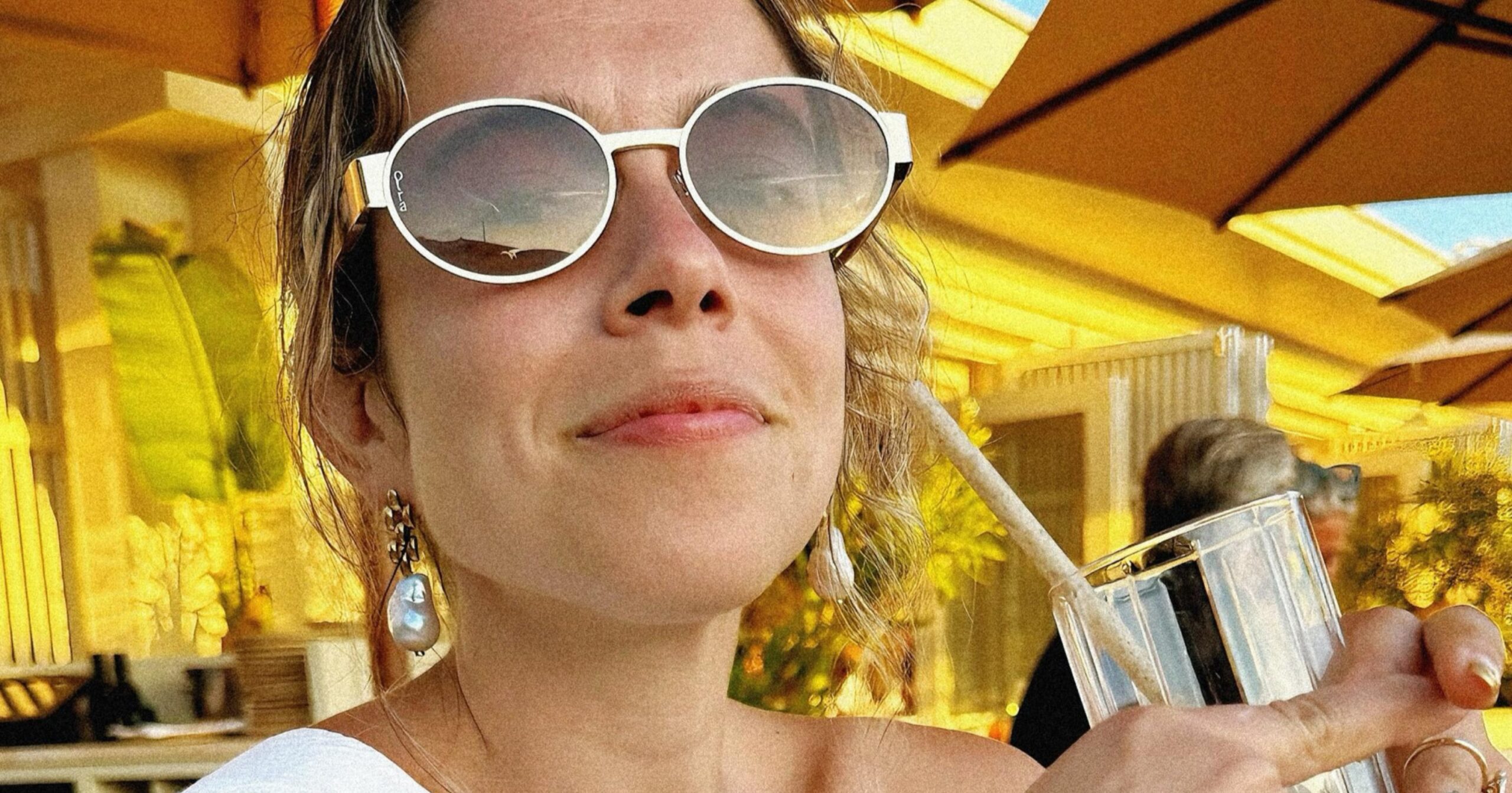
Sarah Wasilak (she/her) is the PS Shopping Director. With plenty of experience in the fashion industry and over 11 years as an editor at the brand, she enjoys writing and creating social videos across the lifestyle, health, and fitness categories. She is the host of the “Dinner for Shoes” podcast and has bylines at InStyle, Elle, Refinery29, Who What Wear, Elite Daily, Byrdie, and The Quality Edit.