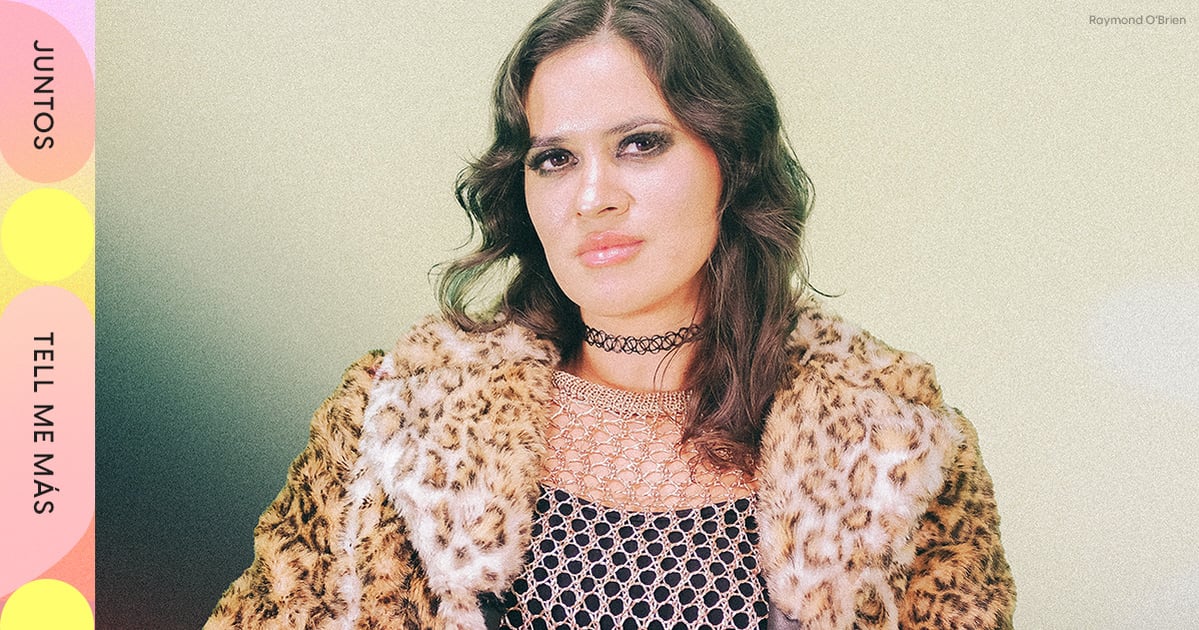
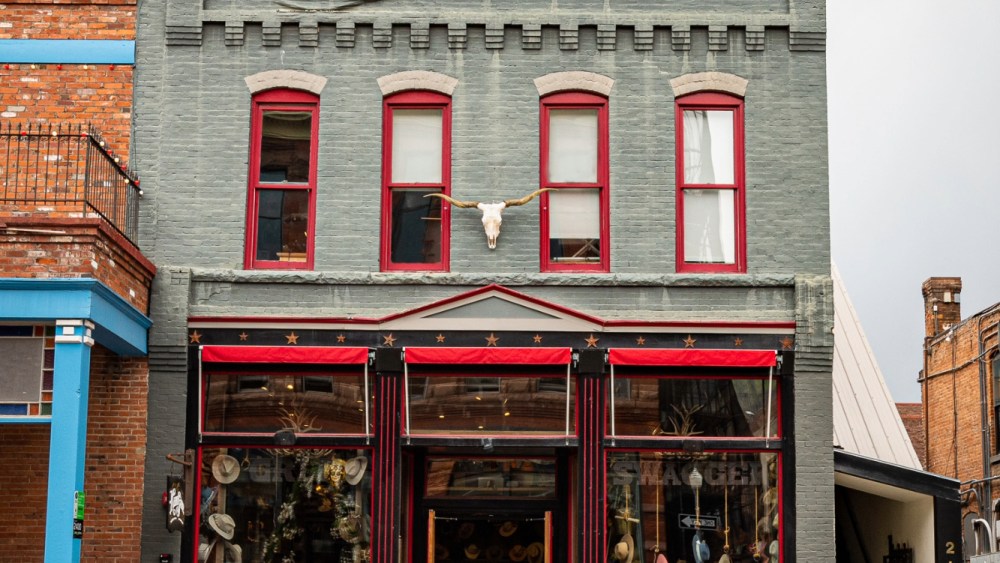
Wendy Kunkle is one tough cowgirl who wasn’t afraid to battle well-heeled equity firms to secure a future for a business she loved.
The co-owner of Aspen-based Kemo Sabe had already worked for the retailer for close to 15 years when its founders decided around 2020 to sell the business. At that point, Tom and Nancy Yoder were getting up in age and were looking for an exit strategy for their successful three-store Western chain that specializes in customized boots and hats.
Kunkle was an Ohio native who had relocated to Aspen and joined the business, moving from the sales floor to general manager and then president. When the Yoders made the decision to sell the business they founded in 1990, they asked Kunkle to help them find a buyer.
“I went to my brother and said, ‘We’ve got to buy this somehow. I don’t have any money, you have some money, let’s see what we can do’,” Kunkle said.
You May Also Like

They put in a bid and the Yoders “pretty much laughed at us,” she recalled, opting instead to explore selling to a private equity firm. But Kunkle believed that would be a disaster. “This was my passion, my everything,” she said, and she couldn’t imagine Kemo Sabe being sold to someone who didn’t understand the business and its loyal customers.”
As potential buyers began to emerge, she got another rude awakening. “The equity people started interviewing me and asking how I wanted to grow the company,” she said. “It really forced me to dig down deep and I knew what I could do to explode it. But they said, ‘There’s no way you can run the store. We’ll keep you on, but you can’t be the president or CEO. You’re nothing.’ They pretty much slapped me in my face.”
But rather than surrender, Kunkle became more determined, and with the support of her brother Bobby, they raised their bid. “We were definitely scared,” she said. “But when the bids came in, we were the highest so the Yoders reluctantly sold it to me through an owner-financed kind of thing.”
Mission accomplished.
But not so fast. One month after completing the sale, the pandemic hit, forcing Kemo Sabe’s three stores in Aspen, Vail and Las Vegas to close. “I thought I had put my brother in bankruptcy,” she said. “I was beside myself.” But while the stores were closed for three months, she and her staff “buckled down, cleaned the stores, did inventory, got ready.” She contacted her vendors and promised that if they’d ship her inventory, she’d sell it.

Once the stores were allowed to reopen, the customers came back in droves. “Luckily, everybody flooded to mountain towns” after the pandemic, she said.
The city required her to put ropes up outside the store to ensure there weren’t too many people inside at the same time, a restriction she initially thought would kill the business. But it turned out to be the opposite. “We still have the rope,” she said. “We had two-hour lines this Christmas.”
The Aspen store, in particular, has become a must-stop for celebrities like Kevin Costner, Jennifer Lopez, Rihanna and the Kardashians and wealthy consumers like Jeff Bezos and Lauren Sánchez in town during the holidays, making Kemo Sabe an even bigger part of popular culture.
Since taking over Kemo Sabe, Kunkle has expanded to six locations. Although the Vegas store was closed in 2023 — “It just wasn’t a good environment for my girls that work there,” Kunkle said — she has added units in Park City, Utah; Jackson Hole, Wyo.; Whitefish, Mont., and Round Top, Texas, employing 140 people.

“I know we’re retail, but we don’t treat our people like retail,” she said. “We treat them like family. How do we make them happy? How do we keep them? How do we make sure they have a great work-life balance? It’s everything from a 401(k) to insurance to free ski passes. And we pay our employees enough to make sure they can live in their towns.”
The staff is a key part of the success of the business.
But it’s not just the staff that is treated like family. Kemo Sabe’s customers are an integral part of the company’s success. Called “sales wranglers,” sales team members work with each customer to create products that are unique to them. So whether it’s a hat, buckle or a pair of boots, it’s not unusual for the team to spend 45 minutes or more with each shopper.
The majority of the merchandise offered in the stores is private label. The company owns two factories in Texas: one in Gainesville, where it makes hats, and a leather goods factory in El Paso, where it makes boots, belts, wallets and other products. “We also make our own buckles and our silver in Gainesville.”
Although there are some third-party brands such as Stetson in the stores, Kunkle believes wholeheartedly in a vertical model.
“It’s hard to rely on vendors,” she said. “You never know if you’re going to get something and if it’s going to be accurate. And you can’t turn on a dime with a vendor. When it’s in-house, if I notice that a boot isn’t working, I can stop production immediately. You can twist and turn much more quickly.”
Because the stores are small — the Aspen unit is just 1,700 square feet — Kemo Sabe doesn’t carry apparel. “I don’t have big enough stores, and apparel is fickle — it’s for someone way smarter than me,” she said.
But that didn’t stop Kunkle from partnering with Abercrombie & Fitch last fall on a Western-inspired apparel collection. She said Corey Robinson, chief product officer of A&F, is a longtime customer and had encouraged her to collaborate for years. But it wasn’t until A&F chief executive officer Fran Horowitz visited the Park City store that it happened.

The 12-piece womenswear collection of jeans, skirts, leather apparel, accessories and jewelry is sold at the Abercrombie stores and online, and the Western-inspired line has been a hit. “It’s been a win-win,” Kunkle said. The current deal ends in February, and Kunkle hopes it continues. “It was magical for me. I’m this Ohio kid who still sees myself as a salesperson grinding on the floor and this was really cool and exciting.”
So where does this Ohio kid see Kemo Sabe in the future? More stores and more product categories.

“We just brought in knives last year,” she said. “We’re always looking for that vertical moment, but in a slow, thoughtful way. It takes time to develop all this stuff.”
Adding more stores is also a possibility. “If a city comes up that makes sense, and there’s an opportunity to buy a building, then we’re definitely interested.”
Kunkle insists on owning the buildings in which her stores are located, which, like her product mix, gives her more flexibility. “We don’t want to be beholden to landlords — they don’t care about you,” she said. “For me, any business transaction should be real and honest.”
Even though her stores are located in what are considered high-end resort communities, these towns are also the heart of cowboy country. “When our founders opened Kemo Sabe, Aspen wasn’t like it is now — it was more of a cowboy town,” she said. “It wasn’t full of Pradas and Guccis. When we started, it was normal to have a cowboy store in a ski town. If you walk around Aspen, everybody’s wearing a hat. I think we’re doing a pretty good job of getting people into that romantic vision of what it means to be a cowboy — the ethics and the morals, and a handshake instead of a lawyer.”
When the company started, it sold about half menswear and half women’s, but today it’s 70 percent womenswear. “I guess we’re considered more of a fashion brand now,” she said. “We were the first to put swag on hats, put diamonds on hats, and that’s really upped our game.”
And whether the Kemo Sabe shopper is riding a horse or a subway train, she wants customers to fall in love with the product. With hats, for example, “We want to take a beautiful hat that’s done the old-fashioned way. It’s good for rain, snow, sun. A cowboy doesn’t wear these for fashion. They wear these for function.” Ditto for boots and the other merchandise.
So with Western wear now so prevalent in culture, Kemo Sabe is ready to outfit both the fashion and the traditional customer. “We’re ready for any trend or curve or change. We’re not going to change who we are or what we do, but we will tweak the trends, and also lead the trends,” she said.