JLL’s 2026 U.S. Luxury Retail Market Report reveals a strategic shift in market planning, as well as leasing activity and store openings, particularly across fashion apparel and accessories.
“Luxury retail in the U.S. entered the second half of 2026 at an inflection point,” the report’s authors said. “After leasing activity surged past 500,000 square feet in 2025, new store openings have slowed sharply. First-half 2026 openings totaled 123,000 square feet—a 46 percent year-over-year decline compared to 227,000 square feet in [the first half of] 2025.”
The researchers noted that their findings mirror industry trends from Bain & Company and Deloitte, where brands are optimizing their networks and prioritizing fewer, larger and higher-quality flagship stores instead of high store counts.
The data showed that while mono-brand openings are running 15 to 20 percent below 2022 levels, the average flagship size has grown by over 30 percent. By location, the data showed that openings were split evenly between malls and street retail. “However, street locations average 5,850 square feet compared to 3,144 square feet in malls,” the report noted. “Three of the five largest openings (greater than 10,000 square feet) are street-level stores in New York and Los Angeles.”
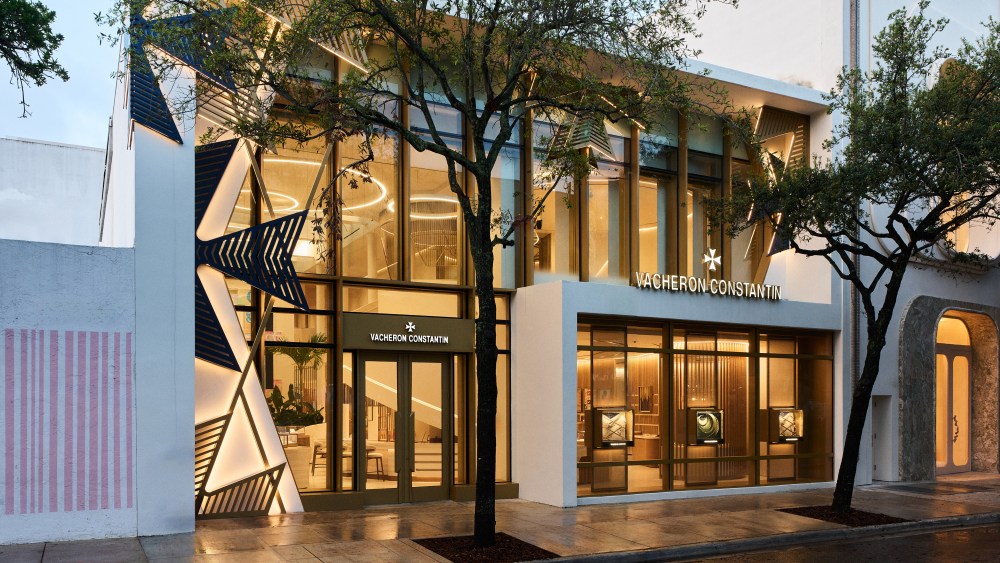
Regarding the top luxury corridors, Miami and Madison Avenue in New York City led the openings. The Miami Design District led the nation in opening count with eight new stores, “establishing the premier jewelry and watch cluster outside of a mall,” the report stated. Madison Avenue led all corridors in total square footage and was anchored by Dior’s 52,000-square-foot flagship.
The researchers said sales in the U.S. continue to grow while Europe and the Middle East drag, thereby positioning the U.S. as a primary global growth driver for luxury goods. There were also redevelopment spikes. “In Canada, the Oakridge Park project delivered 30 luxury openings in Vancouver, creating a single-event surge in North American footprint expansion,” the report’s authors said.
By category, apparel and accessories accounted for 62.1 percent of 2026 U.S. luxury openings (59 out of 95 stores). This includes clothing, leather goods, shoes and luggage. Jewelry and watches represented 33.7 percent of openings. Brands included Cartier, Van Cleef & Arpels and Vacheron Constantin, among others. The data showed that jewelry and watch sales grew 4 to 6 percent globally while leather goods and shoes dropped 5 to 7 percent, which follows steep post-2019 price increases on iconic handbags.
JLL researchers found that independent and family-owned luxury brands led retail expansion in the U.S. and Canada by count—making up nearly 50 percent of new store openings. However, their footprints remained compact, averaging roughly 3,200 square feet. Conversely, luxury conglomerates drove physical retail space growth.
LVMH and Richemont accounted for about 30 percent of total openings, but with contrasting strategies. The data showed that LVMH averaged nearly 9,000 square feet per location due to massive flagship investments from brands such as Dior and Tiffany in major hubs like New York and California. Richemont favored smaller, jewelry- and watch-focused boutiques spread across a broader geographic range.
Kering and Zegna held back on expansion, with each representing under 5 percent of openings as market headwinds prompted a more cautious real estate approach. While independent brands generate high transaction volume for leasing, LVMH’s large-scale flagships are driving the actual footprint transformation in prime retail corridors.