Michelin’s ResiCare bio-based resin subsidiary has teamed up with French chemical recycler and technology provider Axens to develop technology for the production of 5-hydroxymethylfufural (5-HMF), a building block for green chemistry. The partnership aims to speed up the industrialization and large-scale use of a bio-based solution designed to address decarbonization challenges faced by the chemicals and materials industries.
Serving as a fundamental building block in the production of resins, polymers and other more sustainable materials, 5-HMF can enable the gradual replacement of specific petroleum-derived molecules. The molecule is bio-based, non-toxic and versatile, able to be used to create resins and adhesives, along with bio-based polymers.
Polyethylene furanoate (PEF), a bio-based plastic widely regarded as one of the most credible alternatives to polyethylene terephthalate (PET), is an example of material made with the molecule. PEF offers significant opportunities for the textile fiber market as a more sustainable polyester-type material, as well as for food packaging and bottle manufacturing.
The 5-HMF molecule also has potential for use in a range of solvents, intermediates and products used in fine and specialty chemicals. With its compatibility with existing industrial processes, 5-HMF allows for the replacement of fossil-based compounds such as formaldehyde with renewable alternatives derived from plant-based resources.
“We are convinced that 5-HMF is destined to become a benchmark platform molecule for sustainable chemistry,” said Laurent Lemonnier, CEO, Michelin ResiCare. “Our partnership with Axens is a key lever for accelerating its deployment on a global scale and meeting the growing demand for high-performance bio-based solutions. This collaboration confirms both the strong development potential of 5-HMF across a wide range of applications and the performance of the technology we have developed together with IFPEN. It is fully aligned with Michelin ResiCare’s commitment to developing innovative solutions that contribute to a safer and more sustainable world.”
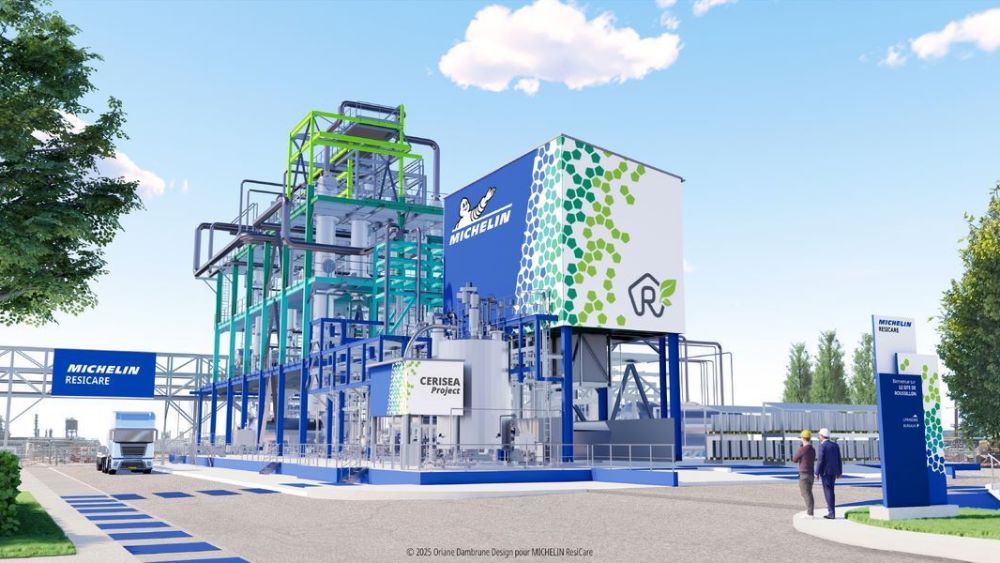
The technology for developing this molecule came as a result of a joint R&D program conducted by Michelin ResiCare and IFP Energies Nouvelles, supported by France’s ecological transition agency, Ademe, as well as the Circular Bio-based Europe Joint Undertaking. The first production facility, located in Péage-de-Roussillon, France, is scheduled to go online in early 2027. The operation will have a capacity of nearly 3,000 metric tons per year and will be operated by Michelin ResiCare.
This development comes just months after Axens collaborated with JEPLAN to test a viable route for polyester textile-to-textile recycling at a semi-industrial scale. That trial used polyester-rich textiles collected and sorted in France to produce tens of tons of bis (2-hydroxyethyl) terephthalate (BHET), the primary monomer for PET. That will then be converted into polyester yarns and fabrics for garments.
Jacinthe Frécon, vice president of process and equipment innovation at Axens, said this latest partnership with Michelin ResiCare continues the company’s work toward more sustainable materials.
“This project fully reflects Axens’ ambition to transform breakthrough innovations into concrete industrial solutions on a global scale,” Frécon said. “By combining a technology developed through leading research collaborations with IFP Energies Nouvelles and our expertise in licensing and engineering, we have the opportunity to accelerate the deployment of key bio-based solutions that will support the transition toward a more sustainable chemicals industry.”