MILAN — “The main challenge today is not the product, it’s the relevance,” believes Pal Zileri’s chief executive officer Carlo Anceschi.
Indeed, a May study by Bain & Co., “The Market Pulse,” highlights a “polycrisis” derived from long-term structural trends and short-term challenges. The former include the exogenous “extreme wealth polarization and tightening rules and regulations,” as well as the endogenous “competitive edge shifting from heritage to relevance and the evolving needs toward emotion and escape.” The short-term exogenous challenges are defined as “economic volatility, political turbulence and renewed desirability codes,” while the endogenous include a “rigorous scrutiny on value and conduct, reinforced multifaceted competition and a raised bar for excellence.” Together, they are accelerating a reframing of luxury demand.
Executives have been fine-tuning their strategies to respond to these shifts in the market, without neglecting tried-and-true solutions. Cue the Giorgio Armani Group, which is wrestling with the death of its founder last September, the reorganization of its management and creative leads, and the question marks surrounding a potential new future stake holding.
You May Also Like
Giuseppe Marsocci, CEO of the group, who was named to the role in October, believes consistency is the main challenge today and that it remains the group’s North Star. “The context demands attention because consumers are more selective and the pipeline moves more cautiously,” said Marsocci. The opportunities for Armani rest on “a strong identity and in the continuity that differentiates us from other brands, leveraging solid fundamentals and an organic, orderly growth, which reflects the way we work.”
Menswear creative director Leo Dell’Orco will unveil his second show for the Giorgio Armani brand, closing Milan Men’s Fashion Week on Monday, as Emporio Armani has shifted to a coed format during Milan Fashion Week for women’s and designed together with Silvana Armani, creative director of womenswear.
Touting the “positive feedback” from press and buyers to the collections, Marsocci said the first months of 2026 showed “good indicators, with retail growing, also in terms of the quality of sales — very well balanced between geographic regions, and better in boutiques compared to outlets, despite a context that is undoubtedly still complex.” He added that he expects the trend to continue, but highlighted that the group has a long-term view.
After the reopening of the Emporio Armani stores in Berlin and Athens, and in Mykonos for Giorgio Armani, new stores are in the pipeline for Sydney and Taiwan.

Seeking Novelty
Conversely, in a bid to fuel business, last year saw an unprecedented revolving door of designers, with brands hoping to inject a new dose of creativity, as observers attributed the slowdown to fashion fatigue.
Brunello Cucinelli contested this, saying that fashion “is not going through a crisis, but it’s the first time that there is a desire for new brands.”
He cited French philosopher Jean de La Bruyère, who said that: “One fashion has just destroyed another, and will itself soon be swept away by the one that follows, which will not be the last. Such is the fickleness of our minds.”
Cucinelli referenced the Bain & Co. studio, which states that “more than 70 percent of lost customers intend to return to luxury, but not necessarily to the same brands or categories. The appetite for luxury remains strong, the tolerance does not.”
The study’s authors, Claudia D’Arpizio and Federica Levato, state that “meaning becomes the new currency” and that “brands will be chosen or left behind” as “consumers increasingly redefine what feels valuable, and winning is becoming harder to sustain as innovation cycles are accelerating. Meaning must be continuously reinvented as cultural relevance now expires faster.”
AI is also redefining the relevance of luxury, they said, as consumers increasingly discover, compare and validate through this technology. “More than 50 percent already use AI in their luxury journey and more than 100 percent plan to reuse it,” states the study. “Drive memorability and win advocacy, which leads to build AI-native relevance. In an AI-shaped journey, emotional connection matters even more. Brands must become meaningful to both people and machines.”
Ever upbeat, Cucinelli was not worried, touting his namesake brand’s luxury and selective positioning, and the quality and innovation of its precious fabrics and handcrafted products — “sophisticated and in good taste,” which have led menswear to account for 50 percent of sales. Indeed, his company reported a strong start to 2026, driven by robust gains at retail in America and Asia, and confirming the estimate of 10 percent growth this year.
Kiton’s CEO Antonio De Matteis also sounded a positive note, saying that the company has seen “more than a double-digit growth in the first quarter.” He believes small- and medium-sized companies in this challenging context “can react more quickly and are more flexible.” Also, family-owned firms, such as Kiton, have a more long-term approach, he contended.
De Matteis said Kiton “still has growth potential, there are so many cities that can still be explored. You just have to challenge yourself.”
While a strong believer in wholesale, which represents 60 percent of sales, Kiton is also investing in its retail network, such as with a new store in Milan’s Via Montenapoleone opening in September. “It will span two floors and it’s a big step for us,” said De Matteis. A new store will open in Miami’s Design District, and Casa Kiton in New York, covering six floors, is being renewed and will open between the end of 2026 and early 2027. “America remains our first market, Korea and Japan are growing, and China is showing signs of a pickup, with small positive signs. Europe is holding up, but the Far East has slowed down,” said De Matteis.

New Phases
At Etro, CEO Fabrizio Cardinali said 2026 marks “a moment of strong acceleration and renewed evolutionary drive.” Etro has entered a new phase, following the exit of creative director Marco De Vincenzo in March after almost four years, and with a new shareholding structure. As reported, Rams Global; Mathias Facchini, who helms Swinger International and is the owner of the Genny brand, and SRI Group bought a minority stake owned by the Etro family last December, joining majority stakeholder L Catterton. The operation led to the exit of the founding family from the business.
Cardinali said the company is aiming to accelerate its menswear business, a segment “rooted in the brand since its first ready-to-wear collection was for men.” The brand is launching Etro Unique, dedicated to bespoke and made-to-measure garments, to offer personalized experiences and strengthen a direct relationship with its customers.
Rams Global is no stranger to the brand. In October last year, Cardinali unveiled Etro’s first residential project in a partnership with the firm to design the interiors of the Tower Rams Beyond in Istanbul. It was followed by another residential project in Phuket, by Amal Development in collaboration with The One Atelier.
Touting the success of these lifestyle projects, Cardinali said Etro is taking over the the St. Regis Atlanta and the Hotel Romazzino in Sardinia’s luxury resort Costa Smeralda.
In September, Etro’s collaboration with Birkenstock, unveiled in February, will hit stores. Another collaboration, with Globe-Trotter on luxury luggage, is already available. Teasing “high expectations from a new event planned in the U.S.,” without disclosing details, Cardinali said Etro is focusing investments in the medium long term in that market, also strengthening its retail network, including through a new store in Miami’s Bal Harbour.

In February, when CEO Carlo Anceschi succeeded Leone Scordo at the brand, which is controlled by Qatari fund Mayhoola, owner of Valentino and Balmain, he asked himself “a very simple question: What role must Pal Zileri have in the life of a man today? The answer has become the foundation of our strategy.”
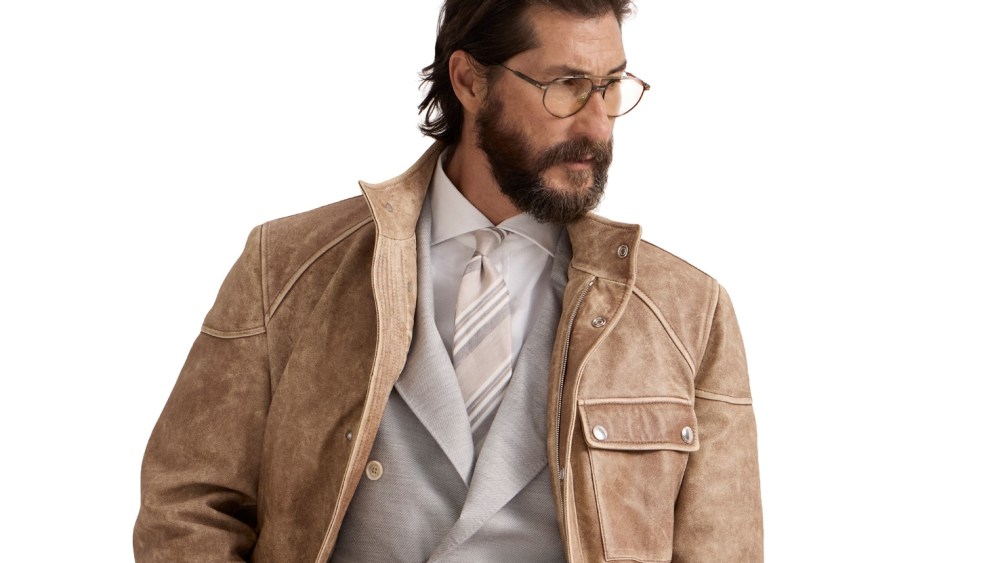
Contending that “the boundaries between formal and casual are increasingly less defined,” Anceschi, who previously held senior leadership roles at Brioni, Pomellato, Stella McCartney and Elisabetta Franchi, believes “the biggest opportunity” for Pal Zileri is to be able to respond to men who seek “a single wardrobe for multiple contexts,” reflecting their “dynamic and hybrid lifestyle” with clothes that are “the modern evolution of Italian sartoriality.”
Pal Zileri, he said, “blends credibility, quality, versatility and autheticity. We don’t want to be a nostalgic brand, linked exclusively to tradition, nor do we want to chase seasonal fashion dynamics. The main challenge today is not the product, it’s the relevance. We live in a market that is extremely competitive, where consumers have infinite possibilities to choose and where desirability is built every day,” Anceschi continued. Accordingly, he is aiming for Pal Zileri to be increasingly “distinctive and recognizable,” leveraging its “important patrimony in terms of quality, know-how and credibility.” He argued that the brand just “needed a more defined vision and a stronger consistency in the expression of its identity,” and he forecast “the first concrete results of the path taken” will be reaped in the second half of the year.

Corneliani’s CEO Giorgio Brandazza concurred with De Matteis, saying that a smaller size allows a company to be “faster and reactive” but can be penalizing in terms of retail investments, which would actually help develop the brand’s potential.
Consumer spending is “more responsible,” he believes. Customers “buy less, but better, and quality must be tangible.” The brand is going through a phase of modernization, he said, and touted Corneliani’s “credibility, collections available in the best stores and positioned close to our competitors.” The brand is “growing well in the U.S. and we have returned to have a more strategic relationship with Saks Global and working well with independents” in the region. Corneliani “is very active” in the Middle East, and will open its third store in Cairo, Egypt, in the second half.