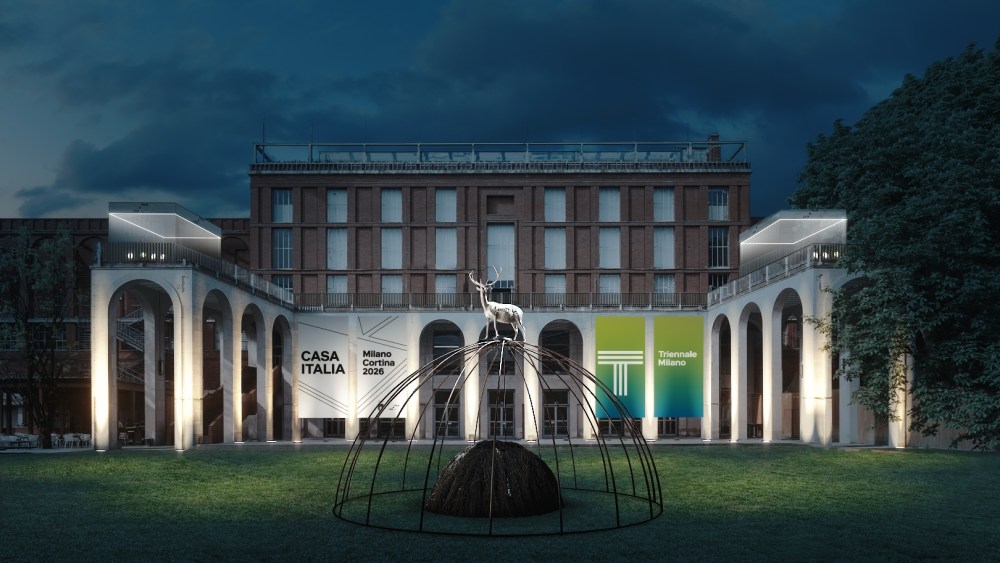
MILAN — At long last, Milan’s Triennale Museum will open its doors in Olympic glory on Friday.
The building, which was built in 1933, will serve as a beating urban heart during the 2026 Milano Cortina Winter Olympics and Paralympics, which will run until March 14.
Art and Design on Display
Situated on the edge of the city’s verdant Parco Sforzesco, the museum will host a comprehensive program, culminating in “White Out” curated by German Industrial designer Konstantin Grcic and Marco Sammicheli, director of the design museum Museo del Design Italiano of Triennale Milano.
“It is an exhibition that investigates the relationship between winter sports and design, with particular reference to the inevitable future challenges posed by the climate change already in process and by the innovations in technological progress,” organizers said.
You May Also Like

Divided into nine sections, the exhibit starts with Skins, a deep-dive into how extreme winter sports have ushered in a new generation of gear that protects against harsh conditions. Among the items on display is the EA7 Emporio Armani suit worn by athlete Federica Brignone on the occasion of her giant slalom World Championship gold in Saalbach in 2025. It closes with Futures, a glimpse into how design and athletic performance are intertwined when discussing humanity’s conquest of extreme environments.
Among the pieces supporting this thesis are the Balenciaga cage sandals from the 2007 fall collection.
On Wednesday, Triennale Milano also unveiled its permanent collection, offering new perspectives on Italian design from the 1930s to 2000. In tandem, 10 new Olympic and Paralympic posters commissioned from leading Italian artists like Aronne Pleuteri and Olimpia Zagnoli will also be on display through March 15.

At Home in Casa Italia
The B&B Italia Camaleonda sofa by Mario Bellini and the Montanaro chairs by Gaetano Pesce are among design icons that will keep national athletes and their coaches company during the Winter Olympic Games in both Milan and Cortina.
Within the Triennale Museum, Italian athletes will find a welcome reprieve and respite in Casa Italia, which will unfold under a theme called “Musa,” Italian for muse and symbolic of the evolutionary journey that since 2016 has progressively transformed the athletes’ house into a cultural project.
Inside, an intimate space culminates in a winter temple of Italian design with furniture pieces like the surrealist Liquify and Shimmer tables from Glass Italia designed by Spanish architect Patricia Urquiola, the Pack sofa by Edra and Francesco Binfaré for Edra, as well as Gufram’s Sasso Grande pouf by Piero Gilardi. Works by artists such as Claudio Abate, Camilla Alberti, Juan Araujo, Arman, and many more adorn the space.

Casa Italia in Cortina is also decorated with the same élan, except this time in a winter retreat of aluminum and wood. The headquarters for the Italian team are set within Farsettiarte, which was once an old cable car station and is now an exhibition venue with stunning views of both Cortina’s mountains and its historic town center.

Farsettiarte
Culinary Excellence
In true Italian fashion, the nation’s cuisine will be paramount within the Triennale as well as in Cortina. Star chefs such as Davide Oldani have envisaged the menu for the Milan space, while chef Graziano Prest is dedicated to the Cortina space, and food experts from the nearby mountain village Livigno will offer culinary experiences rooted in Italian traditions.
In Milan, the Triennale will also serve as the media hub during the Winter Games and will house the Olympics Torch and the Paralympic Torch until March 15.