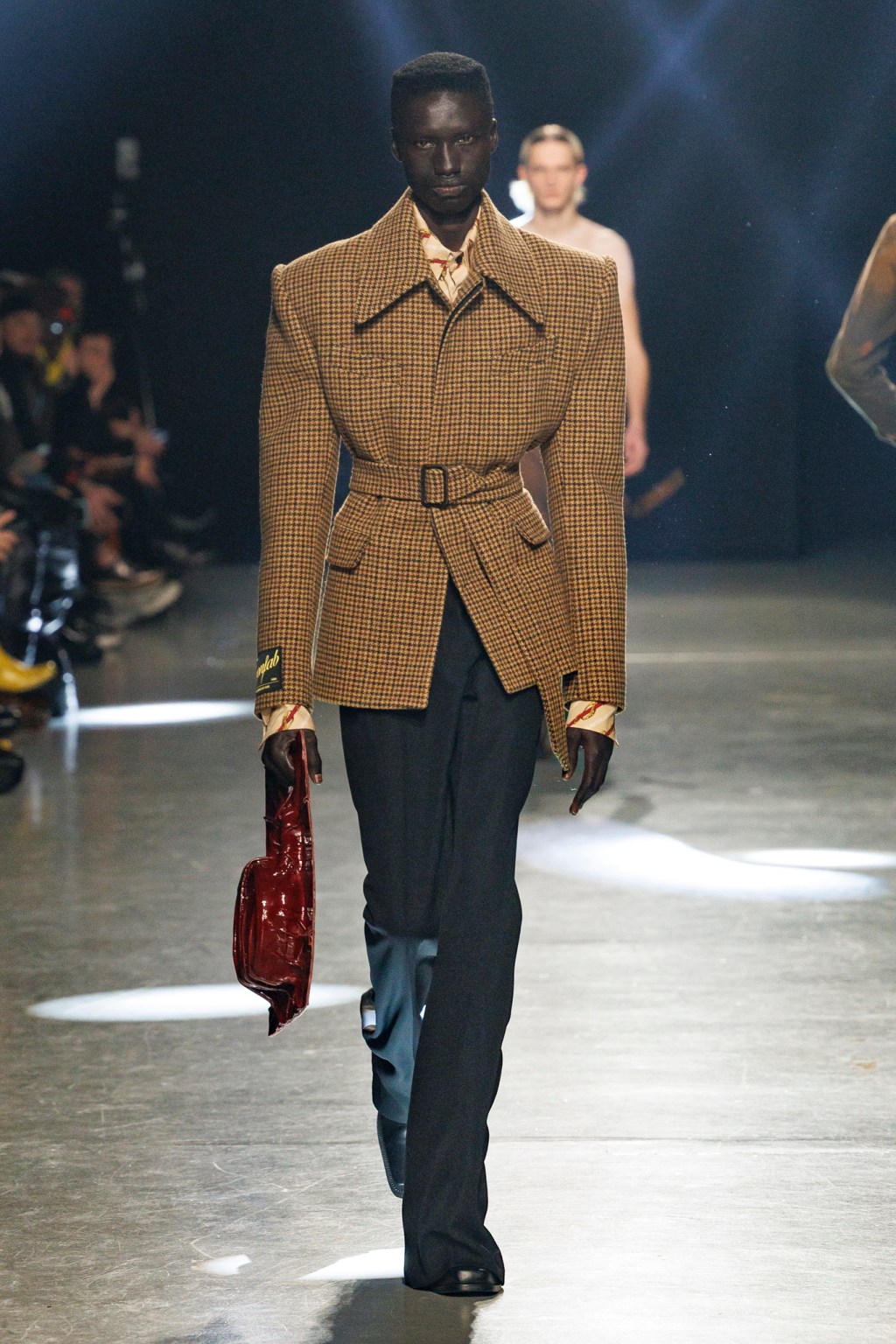
A Nigerian-Australian model accused a menswear company of using AI to lighten his skin in its promotional materials.
Elii Emeghebo said Peter Jackson, a menswear company that specializes in suits, used AI to alter his skin tone and reshape his nose, among other changes to his facial features, according to a report from ABC News Australia.
Paloma Cole, principal solicitor at Young Workers Centre, said the company altered his image “in a way that removes a number of his racial characteristics,” and then failed to pay him for the use of that image after making the changes. A racial discrimination complaint was brought to the Australian Human Rights Commission.
Emeghebo recalled feeling proud when he did the photoshoot for Peter Jackson, but that changed when he saw how his image was manipulated. “Then you walk past the shop, and you just see basically you, but without your identity there,” he said during the ABC interview. “It’s really confronting and it’s really unfair.”
The company, for its part, denied the accusation, noting that the alterations were not racially motivated. It said that it paid the agreed fee in full and used numerous unaltered images of Emeghebo across multiple channels.
“At a later stage, our creative team used AI-assisted tools to create a substantially transformed image derived from the original campaign material. Any suggestion that this process was undertaken because of Mr. Emeghebo’s race, color, or ethnic origin is categorically denied,” the company said.
AI continues to be a contentious topic for the fashion industry, especially in the modelling world. In the U.S., Francheska Pujols, a New York-based Dominican fashion model, accused Rainbow Shops for allegedly using AI generated images of her without consent.
Pujols, who filed her case twice after initially dropping it to try a private resolution, said in her lawsuit that the altered images, which include crude pictures of her, has harmed her reputation. She said she suffered the “loss of control over her likeness.
Since June 19, modeling agencies have been required to register as part of the New York State Fashion Workers Act. Among other provisions, the law, which took effect one year ago, prohibits model management companies from creating or altering a model’s digital likeness through AI “without clear, conspicuous and separate written consent from the model.”