With Generation Z, it all boils down to trust. For this demographic cohort, friends and family are trusted more than influencers and artificial intelligence.
This was the core theme in Pacsun’s second-annual Purpose Summit, which was held last week at Soho House’s Little Beach House Malibu. The event convened creators, industry executives, cultural leaders and “young voices” that spanned the brand’s four founding pillars of fashion, sport, art and music.
Organizers said this year’s summit was built upon the retailer’s 2026 Youth Report, which was developed with GlobalData and was the basis of the day’s discussion that centered on the forces shaping Generation Z.
“The finding became a throughline for conversations throughout the day, raising a larger question for the leaders in the room around how brands and organizations can build genuine relationships with a generation that increasingly values participation, community and trusted connections,” Pacsun said in a statement.
The event was anything but traditional. From the opening address to the topics discussed, the program offered diverse content and thought leadership as well as unique perspectives, such as a fireside chat about “Community, Beauty and Sport” and “Creativity and Leadership.”
Instead of a keynote opening address, the summit began with a guided meditation led by Tai Beauchamp, founder of Tai Media. Speakers included Sami Miró, fashion designer and creative director, Grace Kao, chief marketing officer at Snapchat, Elyse Cohen, chief impact officer at Rare Beauty, Jennifer Prince, chief commercial officer at the Los Angeles Rams, Amy Taylor, CEO of the Angel City Football Club and Jason Mayden, vice president of Jordan/Nike, among others.
“The Purpose Summit gives us an opportunity to take what we’re hearing from young people and put it into conversation with the people helping shape the world around them,” said Brieane Olson, CEO of Pacsun. “Co-creation starts with listening, but it also means giving people a meaningful role in what comes next. By bringing young voices together with leaders across different industries, we can challenge our own assumptions, learn from one another, and better understand how we can show up for this generation in ways that feel relevant and earned.”
The keystone of the report was in identifying Gen Z as “The Drawbridge Generation.” The report revealed that young people are pulling closer to family and friends “while becoming more selective about a noisy public world shaped by algorithms and inauthentic messaging,” Pacsun said in a statement, adding that influencers never break an 11 percent trust share in any category that was tested.
“AI presents an even sharper contrast between adoption and trust,” the company said. “While 85 percent of young people use it, only 2 percent trust it for fashion advice and 5 percent for financial advice.”
Neil Saunders, managing director and retail analyst at GlobalData, said the data showed that young people are “becoming more intentional about the relationships, influences and priorities closest to them,” even as financial independence “slips and social media dependence climbs.”
For its part, Pacsun said the findings “reinforce an approach the brand has increasingly put into practice through co-creation, bringing young consumers into the conversation rather than simply interpreting youth culture from the outside.” The brand said that exchange played out during the summit’s programming.
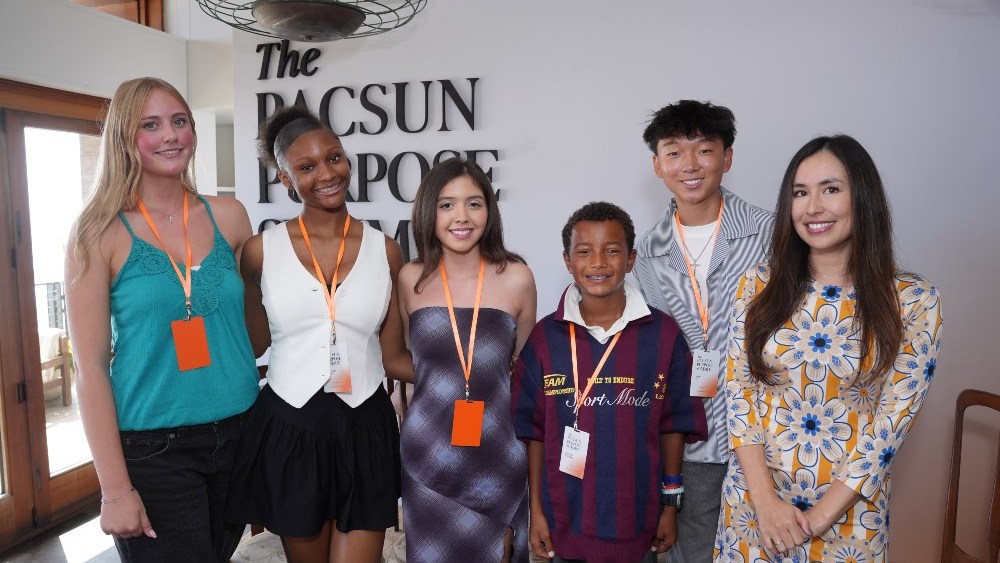
Indeed, the summit marked the first public appearance of the second cohort of Pacsun’s Youth Council. Pacsun said the Council gives younger consumers an ongoing voice within the brand via strategy sessions, workshops and executive mentorship. It serves as a direct feedback loop between the brand and the generation that it serves.
Pacsun said the new cohort was introduced in a session that was moderated by Kate Nishimura, deputy editor at Sourcing Journal, and featuring youth council members Sophia Johnson, Iya’Nique Kelly, Max Yu, Ashton Thomas and Mia Mendoza.
Asked about the one thing everyone needs to know about their generation, the responses were revealing and heartfelt. “There is a common misconception that people my age have short attention spans and don’t dive deep into anything,” Yu said. “That might be true in some cases, but the flip side is that we process information very quickly. We can immediately tell what we like or don’t like, and we won’t spend time on things we don’t like.”
Johnson said the one thing she wants people to know “is that we are very influenced by others. We look to other people for validation.”
Thomas noted the importance of social media, while Mendoza said she wished “more people knew that we really value comfort when choosing fashion. As someone who wears a school uniform every day, I always want to change that stuffy, structured fit into something comfortable yet cute.”
Kelly said, “If we tap into our intelligence, we can heavily influence other Gen Zers, Gen Alpha and Millennials alike.”
Regarding trusting friends and family over influencers and AI, Mendoza said, “I 100 percent trust my friends and family way more than social media. Whenever I go shopping with my friends, we try on clothes together, pick out outfits for each other, and almost play dress-up like Barbie dolls. They give me their honest opinions, and I really take inspiration from them.”
Kelly agreed and said, “When my friends and I go into a store, we play dress-up too, and I take what they like and incorporate it into my own style. I value their perspectives much more than, say, asking AI what I should buy for my birthday.”
The conversation then turned to branding and what would make them take notice.
“Offering a discount, because I don’t want to go out and spend $300 on a bunch of clothes,” Thomas explained. “Also, catching my eye while scrolling through social media makes me want to try it out.”
Yu said it would be good advertising. “You have to put your product out there, but if I see actual people wearing or demonstrating the product in public, I automatically assume it has credibility and feel more inclined to try it.”
Nishimura then asked what the panelists wished brands would ask young people more often. “I wish brands would focus more on functional enhancements,” Mendoza said. “As someone who wears a uniform, I hate it when skirts don’t have built-in shorts underneath. It seems simple, but I wish brands would consider practical details like that.”
Wishing brands were more open to public feedback was on Yu’s mind. “If a brand releases a product that isn’t popular but doesn’t allow the public to share what works or what doesn’t, the next drop will have the same issues,” Yu explained. “Creating an open feedback loop makes it much easier for brands to align with their audience.”
The session wrapped up by asking the panelists what product categories at Pacsun they were most excited about this season. The responses ranged from graphic drops such as the Essentials and West Coast Choppers lines to accessories, denim and hoodies, of course.
Digging deeper in the 117-page report revealed that young consumers are reaching an identity inflection point around age 16. Researchers found that Gen Alpha consumers want to look cool to the world and are influenced by the latest trends, celebrity endorser and social media influencers. Gen Z consumers are expressing their individualism and seeking comfort via fashion.
Appearance has a significant impact on how they feel and how they behave, but concerns over ethics and sustainability of fashion still exist. Often, though, a “guilt tariff” is paid by the Gen Z consumer when they cannot afford to buy more sustainable fashion and opt for cheaper fast fashion alternatives.
Finally, the report found that Gen Z’s and Gen Alpha’s vision of the American Dream is increasingly taking shape. They still hold many traditional aspirations: securing a stable job, owning a car, and becoming a homeowner by 35.
However, their understanding of success is inextricably linked to achieving good mental and physical health. To build meaningful, sustainable relationships with these consumers, retailers and brands need to create real community, deliver authentic brand messages, and treat the inner core with the respect it deserves.