
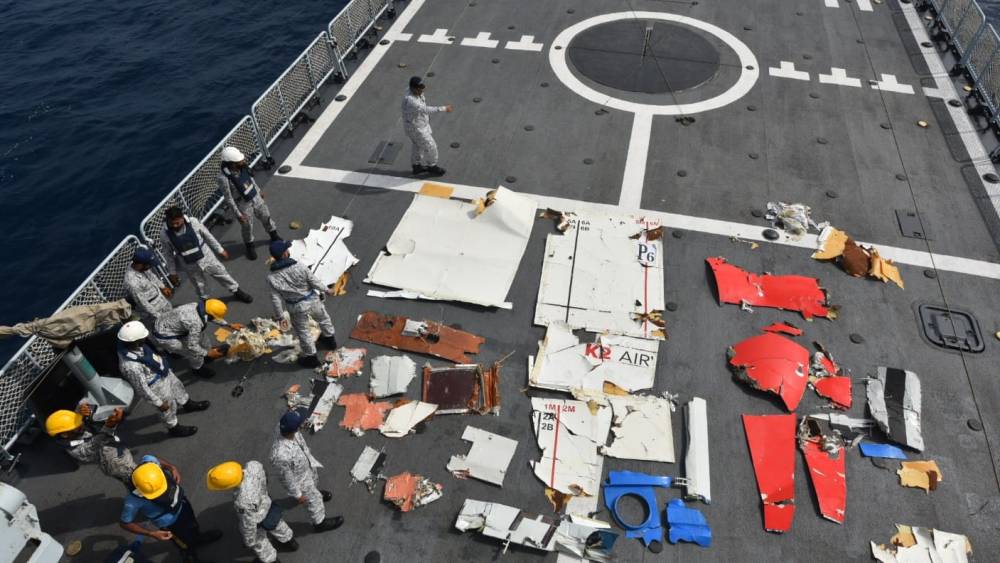
Pakistani rescuers found the wreckage of a cargo plane in a deep-sea search operation on Wednesday, 12 hours after it went missing off the coast of Karachi.
The K2 Airways Boeing 737 aircraft crashed into the Arabian Sea on Tuesday. The accident occurred roughly halfway through the scheduled two-hour flight en route from U.A.E.-based port city Sharjah to Karachi.
The cause of the accident is unclear and remains under investigation. A report from the Associated Press says the main fuselage is also missing.
Efforts to find the five crew members who were on board have extended through Thursday, according to the Pakistan Airports Authority (PAA). Various air and seaborne assets were employed by Pakistan Navy and the Pakistan Maritime Security Agency (PMSA) to locate the wreckage.
A merchant vessel operated by the Pakistan National Shipping Corp. also joined the operation, officials said.
Separately on Thursday, the Pakistan Navy rescued 20 Pakistani crew members after a cargo dhow began sinking east of Ormara. The incident was unrelated to the K2 Airways crash but occurred in the same coastal waters where naval assets have been supporting the search effort.
The wreckage was recovered 53 nautical miles (61 miles) south of Ormara Port, the PAA said in a post on X. The PAA said it will provide further details as the search-and-rescue operation progresses. The AP report indicated that rough monsoon conditions catastrophic were posing significant challenges to the search effort.
Retired Rear Admiral Faisal Shah told the AP the search for the main fuselage could take months or even years because the aircraft is believed to have crashed in waters about 9,800 feet deep, requiring specialized equipment.
Prime Minister Shehbaz Sharif had directed authorities to speed up the search for the 27-year-old plane, which went missing following reports of a navigational system problem after 9 p.m. local time Tuesday.
Air traffic controllers attempted to assist the crew, but contact was lost within three minutes after radar indicated the aircraft had begun a rapid descent.
In a statement, K2 Airways identified the missing crew as captain Muhammad Rizwan Idris, first officer Faisal Jatoi, flight engineers Muhammad Hamid and Muhammad Arif Siddiqui and aircraft loader Muhammad Taufiq Khan.
The private cargo airline said it was cooperating with government agencies for the investigation.
Preliminary Flightradar24 data showed the plane first losing altitude before briefly climbing. before a second, sudden and dramatic loss of altitude. It then plunged about 5,000 feet in less than a minute, climbed roughly 6,000 feet in 30 seconds and entered a dive from 36,550 feet.
The last transmitted data point placed the aircraft at 1,100 feet above sea level, with a vertical rate of minus 22,400 feet per minute—about 250 miles per hour downward.
The Boeing 737 entered service in 1999 as a passenger aircraft before it was converted into a freighter in 2011. K2 Airways started leasing the plane in 2024, six years after the company was established. The model’s maximum payload is 18,600 kilograms and is designed for cargo operations north of 2,400 nautical miles (2,760 miles).
The accident could attract added scrutiny to Pakistan’s aviation safety record, with the apparel-producing country experiencing several deadly plane crashes over the past two decades.
An accident near Karachi’s Jinnah International Airport in May 2020 killed nearly 100 people and prompted U.S. authorities to ban Pakistani carriers from U.S. skies. Both Europe and the U.K. similarly banned Pakistani aircraft that year, before lifting the suspensions in 2024 and 2025, respectively.
A Pakistan Army military plane crashed in the country’s northern city of Rawalpindi in 2019, killing five crew members and 13 civilians on the ground.
The latest accident also comes amid broader attention on cargo aircraft safety.
Last year, a high-profile cargo plane crash in the U.S. resulted in the deaths of 15 people including three crew members. A UPS MD-11 aircraft manufactured by Boeing caught fire and crashed after an attempted takeoff at the courier’s Worldport air cargo hub in Louisville, Ky.
According to a report released by the National Transportation Safety Board early this month, UPS never instructed inspectors to examine a faulty bearing that caused the plane’s left engine to detach during takeoff. The delivery company said Boeing had recommended, but did not require, additional inspections of the component.