
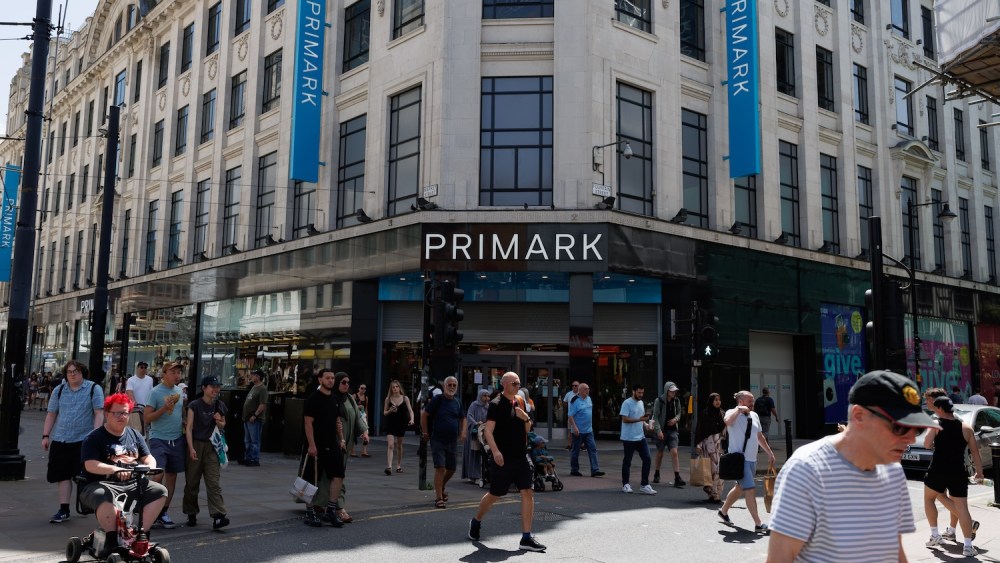
Primark is finally bringing its low-cost fashion business to shoppers’ doorsteps.
The retailer plans to introduce home delivery in the United Kingdom for the first time, marking a major shift for a company that spent years arguing that the economics of shipping low-priced merchandise directly to consumers did not make sense.
Associated British Foods (ABF), Primark’s parent organization, did not provide a launch date for the service. But it has acquired an automated fulfillment facility in Sheffield, England that will support both the retailer’s existing click-and-collect operation and the planned home delivery capabilities.
“We have always known that there is an incremental customer segment that Primark could reach by offering home delivery,” Associated British Foods CEO George Weston said during the company’s Thursday earnings call. Historically, he added, “there just was not a way for us to make money from providing that service.”
The move comes as Primark faces a tougher consumer environment and intensifying competition from online-first fashion retailers including Shein, while its own comparable store sales are expected to decline 2.6 percent for fiscal 2026.
The company expects fourth-quarter same store sales to fall 3 percent, although the U.K. has remained one of its stronger markets.
Weston said the economics of home delivery have evolved, including higher delivery fees and changes to returns policies. At the same time, Primark has built out an e-commerce experience that did not exist several years ago, when it first trialed click-and-collect in the U.K. market in 2022.
“That is why now is the right time to take this step,” Weston said, calling home delivery “an attractive growth opportunity” for the retailer.
The Sheffield facility is central to the strategy. ABF acquired the automated site for 90 million pounds ($121.7 million) from fellow U.K. fashion retailer the Debenhams Group, which used the space to fulfill merchandise for the Pretty Little Thing brand. The site gives Primark a ready-made fulfillment operation rather than requiring the company to build a new facility from scratch.
The warehouse will first provide click-and-collect capabilities for Primark shoppers, with home delivery following afterward.
The timing comes as retailers still continue to grapple with the cost of serving the last mile. A recent FarEye survey of more than 500 delivery operators found that median cost per delivery rose 12 percent year over year in 2026, matching the increase in 2025. Sixty percent of operators reported cost increases of more than 10 percent, while 20 percent saw costs rise more than 20 percent. Overall, 88 percent said delivery costs were growing at the same rate as revenue or faster.
At the same time, consumer expectations continue to put pressure on retailers to provide faster service. Seventy percent of consumers surveyed by Radial said they would give up discounts during the holiday season to receive their packages on time, while 78 percent said fastest shipping was the top priority when comparing similar products at the same price.
That puts Primark in a particularly delicate position. The retailer is built around low prices, making delivery costs more difficult to absorb than they might be for higher-priced fashion brands. However, Weston said the home delivery market has moved enough in Primark’s favor to change the calculation.
“We can offset some of the cost of home delivery. The market really has come towards us in terms of pricing for delivery to people’s homes,” said Weston. “The depot will give us a good ‘pack-and-dispatch’ base, cost base.”
For Primark, the bigger question is whether delivery can generate new demand for e-commerce rather than simply shifting purchases away from stores.
“The trick is to make sure that the bulk of the home delivery sales are incremental, not substitutional. We think that we’ve got the tools to help us along to achieving that,” said Weston. “We expect that the introduction of home delivery in the U.K. will actually drive same-store sales as we attract more people into the brand.”
The logic is based partly on Primark’s experience with click-and-collect, which Weston said says has brought in a “new shopper” to the brand.
According to Weston, Primark’s incremental technology investment required for home delivery should be relatively modest because it has already built much of the digital infrastructure needed to support the channel.
“The extra capex is not huge,” he said.
Primark’s delivery announcement coincided with the unveiling that it would expand the brand to Mexico. The retailer will open stores in the market through a strategic partnership with department store operator El Puerto de Liverpool.