
It’s been a busy couple of weeks.
The nation moved quickly from preparing for the midterm elections to marveling at the blue wave that overtook Congress to worrying over the popping of any AI bubble.
But in between it all, there was still time for a little retail.
And when the chief executive officers of a core group of fashion brands weighed in with quarterly results, politics and AI were not exactly in the discussions with analysts.
But the same issues driving the politics of the moment — affordability and the economic outlook — were front and center.
“For the U.S., there’s clearly winners and losers and you can see that in the performance,” said Laurent Vasilescu, an analyst at BNP Paribas, of fashion brands. “It seems like that the higher-end consumer seems to be still powering through. The U.S. still seems to be on the stronger side of things. Anecdotally, people would point to the credit card companies like Amex reporting good numbers.”
Fashion CEOs are increasingly grabbing hold of what they can reach and not fretting overly about the broader world.
“Regardless of the macro, we’re running our play,” Ralph Lauren Corp. CEO Patrice Louvet told analysts. “We’ve got an eye on the long term because we want to make sure we’re continuing to build this brand in the right way for long-term success. Because we have both the diversity of growth drivers and the flexibility to pivot and take advantage of clear opportunities for Ralph Lauren in the marketplace, that’s where our confidence comes moving forward.”
Ralph Lauren had another “beat and raise” second quarter, when sales were up 9 percent to $2.2 billion, although some new caution on the business in Europe seemed to spook investors.
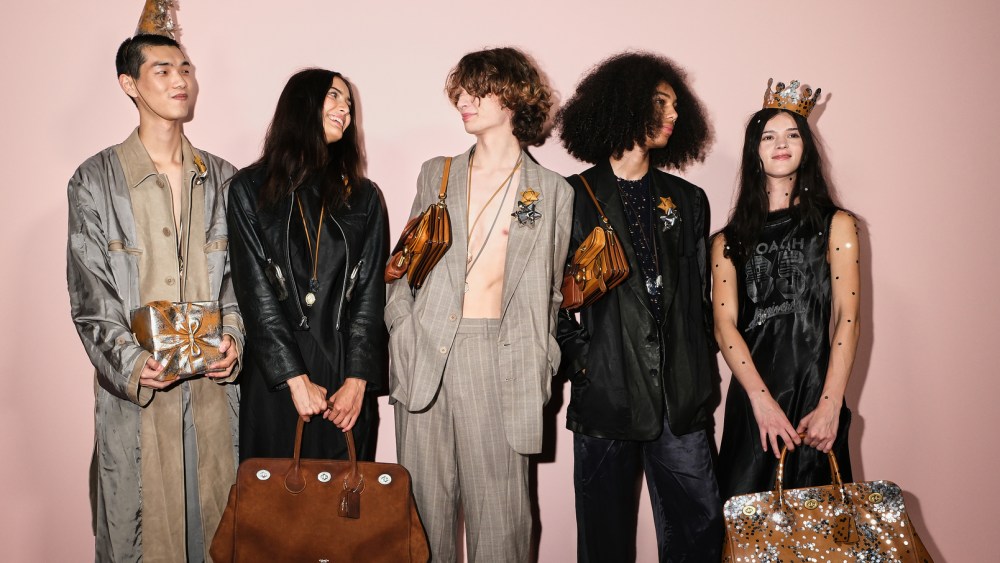
At Coach parent Tapestry Inc., where fiscal first-quarter sales rose 12 percent to $1.9 billion, the sentiment was much the same.
“In the U.S., while we see a discerning consumer, they’re choosing our category and our brand, and our value proposition has never been stronger,” said CEO Joanne Crevoiserat. “Industry forecasts for holiday in the U.S. are calling for midsingle-digit growth. There’s a constructive backdrop overall as we head to holiday. At Coach, we’re looking at midsingle-digit growth expectations for both the quarter and for the year in North America. We’re ready to compete and win.”
Ralph Lauren and Tapestry have been proving that they’re ready to compete and win for more than a decade, pushing their stock market valuations over $20 billion each as they cut away messy distribution, elevated their brands and funneled more money to marketing.
While those two have forged the path forward, the question has become whether other brands can follow. Michael Kors-parent Capri Holdings and Under Armour Inc. are trying to pursue similar strategies.
“We know there’s market share to be regained and taken,” said John Idol, CEO of Capri, on a call with analysts. “The industry and, in particular, some of the other luxury European luxury brands, are having a bit of a struggle right now. And we actually think this is a super time for us to be able to resonate with consumers who are being a bit more choiceful. We can see that with some other brands around the world who are enjoying the fruits of that success.”
Capri Holdings’ quarterly sales fell 5.5 percent to $809 million and analysts are watching for a turn. Meanwhile, Under Armour is still in deep reset. Its sales fell 7 percent to $1.2 billion last quarter.
“Our focus at Under Armour is to build a stronger brand through compelling products and more consistent execution,” said Kevin Plank, founder and CEO of Under Armour. “We remain focused on revenue quality and profitability, putting our resources behind innovative products, aspirational storytelling and elite execution while maintaining expense discipline.”
Blake Anderson, an analyst at Jefferies, said “the million-dollar question” is whether fashion retailers will be able to hold the line on pricing over the longer run.
“I think that companies have generally said that there will be some promotion and that they want to still maintain or grow market share, but they’re not going to reduce prices or discount just for the sake of growing,” he said.
“We’ve been in more of an inflationary environment for apparel and footwear this past year,” he said. “Part of that is due to price increases due to tariffs and passing through. But the question is always going to be, How much pricing power do these brands have and is it sticky? Does it sustain? There’s a lot of question, does this continue into next year or do we see lower pricing as we have to lap the higher pricing from this year? It really will depend on the brand and the company and really the momentum they have and the investments they’re making.”


