This year was filled with maybe more than its share of milestone moments for the fashion industry.
From President Donald Trump’s Liberation Day tariff war and Giorgio Armani’s passing to Saks Global’s financial drama and the parade of new designers hitting the runway, 2025 was a busy year.
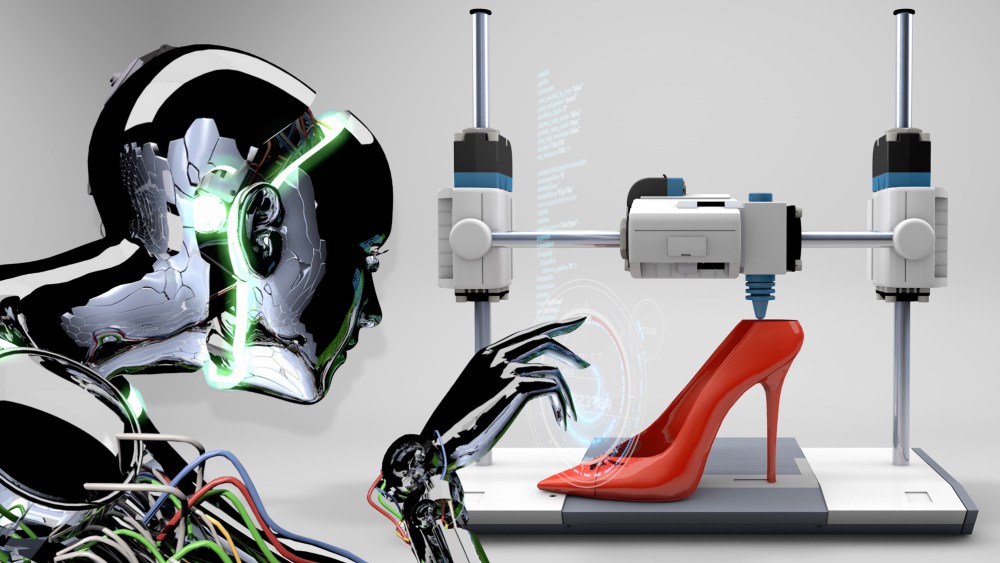
But as significant and important as all that change has been, artificial intelligence is something else — a lot more than the next big thing and, just maybe, the next revolution.
You May Also Like
Although AI is still seen as relative early in its growth curve, it has already found its way to the design studio, the warehouse floor, customer checkout, vendor invoices and much more.
On the front end, brands and consumers are negotiating a new relationship, with each other and the fast-changing technology.
Ralph Lauren Corp., for instance, launched Ask Ralph in September.
The feature makes Ralph Lauren style recommendations, serving up goods that can be bought via app immediately. It also answers commonly asked fashion questions, with the responses drawn from Ralph and his team.
David Lauren, chief branding and innovation officer, told WWD when Ask Ralph launched that companies need to dive in and figure out how to use AI.
“Perfectionism is important in fashion, but it can also stop you from taking risks and moving forward,” Lauren said at the time. “I think we know that there’s a good marriage here, but it’s going to have to grow together to get stronger and better.
“Everybody’s racing. Don’t. Just stop racing. Set your own pace, understand who you are and move carefully to understand how your brand is best married to technology,” he said.
That being said, the AI race has clearly started.
Harvard economist Jason Furman made headlines when his back-of-the-envelope math found that investment in information process equipment and software accounted for 92 percent of U.S. GDP growth in the first half.
So without the billions flowing into new AI data centers to power the race between OpenAI, Meta, Amazon and the rest of them, the U.S. economy basically stalled.
Of course, that money might have gone elsewhere, but right now, it’s not. It’s going to AI.
A lot of that has to do with the technology’s massive potential to remake not just the customer experience, but how companies operate.
In September, Morgan Stanley estimated that fashion brands and retailers could see $6 billion in “total cost savings opportunity and potential,” at the midpoint of their estimates.
That equals a 20 percent increase for earnings before interest and taxes in 2026, which the bank described as “a large, sector-wide tailwind.”
By way of example, Morgan Stanely estimated that Lululemon Athletica Inc. could save $14,300 per employee, totaling $560 million annually.
Fashion companies are not going all in and automating everything they can — yet — but most are looking hard at how to use AI and some are starting to make their first moves.
Levi Strauss & Co. said last month that it was launching an “integrated agentic AI orchestration platform” with the help of Microsoft.
The central feature is an AI “super-agent” meant to simplify and automate work at the company.
Jason Gowans, chief digital and technology officer, said the denim giant has more than 50,000 points of distribution around the world and a kaleidoscope of receivables, payables, vendor touch points and more.
Levi’s unleashed AI on its system, finding that it had 1,100 standard operating procedures made up of a total of 19,000 different steps. Thirty-five percent of the actual work being done was data entry.
So AI helped identify the problem and is also stepping in as the solution in some areas. Data entry is something automated systems can handle well.
Gowans suggested that making the jump to a more AI-powered system is a need-to-have, not a nice-to-have.
“If you look at things like data center growth, [graphics processing unit] production, electricity consumption, and also expansion of GPT[-based AI] capabilities — all of that lives on an exponential curve,” Gowans said. “Your average brand typically lives on this very slow-growth, linear curve.
“If you think about what’s going to happen in to the future — 2027, 2028 — for every day that you are not jumping onto that exponential curve, the gap is going to widen,” he said.
Levi’s has plenty of company as it tries to stay on the right side of that divide.
John Furner, the incoming chief executive officer of Walmart Inc., crowed to analysts last month about the potential of the discounter’s app-based AI agent “Sparky.”
“I’m also really excited about some of the new capabilities coming over the next few months as Sparky can take more action on behalf of our customers,” Furner said. “And when you put that on top of this platform with physical assets, with deployed inventory all around the country — we’re using agentic AI to help people think about the things that they may want to reorder or in other words, give them nudges about staying in stock. There are so many ways that we can serve customers, which is very different than where we were five to 10 years ago. We can serve people in minutes. We can keep you in stock at home. We have a really broad assortment and having a digital agent that is there working for you, we think, is going to be really powerful.”
For AI in general, powerful is the right word.
And so the questions are big. How many jobs will AI take? Will companies really repurpose their people to more creative, AI-powered roles? Is the technology too powerful? Could it really somehow take over in an ever-more connected world?
The future will tell.
“We become what we behold,” said Father John Culkin, borrowing an idea from his friend, media guru Marshall McLuhan. “We shape our tools and then our tools shape us.”
People made AI. Now, AI is helping nudge humanity — and business and fashion — into a new and still uncertain direction.