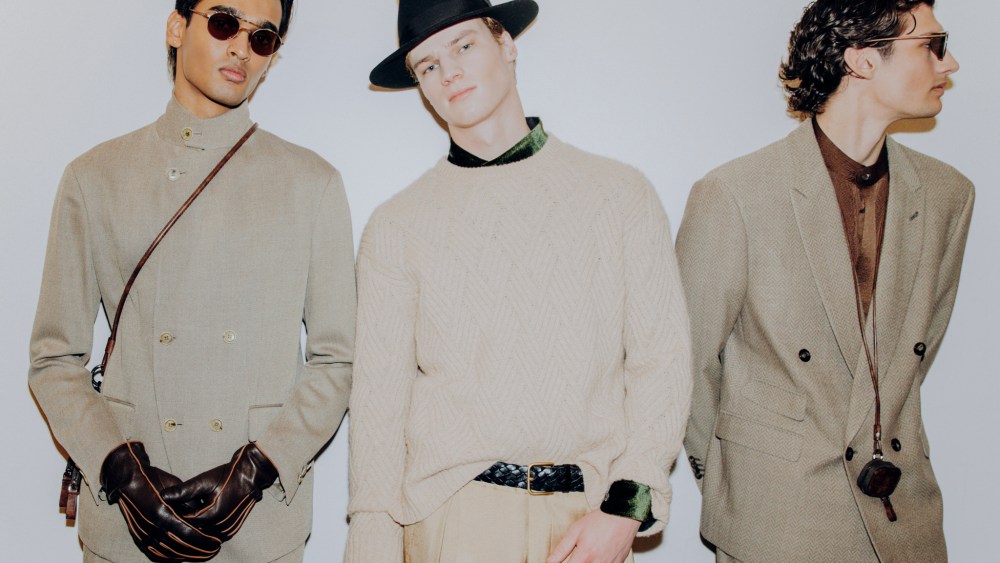
MILAN — The calendar of Milan Men’s Fashion Week may have been lighter in runway shows, but retailers were pleased with the offer seen in the city, taking the time to peruse the showrooms. Ralph Lauren’s return to Milan with a show was a key moment, as was the first menswear collection shown by Leo Dell’Orco at Giorgio Armani after the designer’s death in September, taking a bow with his nephew Gianluca. Prada was singled out for its new slim silhouette, as was Zegna‘s concept of timeless garments to hand over across generations. Simon Holloway’s Dunhill was also widely praised.
“There was a quiet return to formality this season, with tailoring front and center across the board, whether softened and relaxed or more buttoned-up,” said David Thielebeule, fashion director at Bloomingdale’s. “Milan may have hosted fewer runway shows, but presentations and showroom appointments more than filled the calendar. Taken together, the season pointed to a renewed embrace of the classics, defined by elegant layering, tactile richness, and expressive, directional outerwear.”
You May Also Like
Joseph Tang, fashion director at Holt Renfrew, said “the strength of Milan menswear was clearly felt this season. Collections were unified with a focus on offering modern men versatile options that balanced with personality.”
Simon Longland, director of fashion buying, Harrods, believes Milan menswear “has always lived between two opposing forces: Fashion with a capital F, and quiet luxury rooted in sartorial tradition and timelessness. This season, more than ever, the balance of the schedule leaned firmly towards the latter. The result was a Milan season defined by quality, cut, cloth and craft.”
Longland added that he felt “there was a palpable sense that product integrity and the final customer were front and center. Less noise, fewer theatrics — but a stronger, more coherent message around what modern luxury menswear looks like today: thoughtful, considered, and built to last.”
In a season where relaxed tailoring remained relevant, with the double-breasted jacket still going strong, designers often revisited heritage tweeds, herringbone and classic motifs including Prince of Wales. Knitwear was extensively developed, as was layering.
Whether or not because of the pending 2026 Milano Cortina Winter Olympics, there was a strong alpine inspiration running through the collections and accessories — cue the hiking boots.
Textured fabrics, bouclé wools and cashmere flanked cashmere suede and the ubiquitous velvet and corduroy. There were preppy looks but also lots of eveningwear, including modern takes on the tuxedo. Bombers in more luxurious versions than in past iterations and shearling peppered several collections.
Here is what retailers had to say:
Young-Su Kim, senior vice president, general merchandise manager, men’s, and men’s fashion director at Bergdorf Goodman
Favorite collections: Ralph Lauren’s first men’s show in over 20 years was a powerful return. Presenting Polo and Purple Label together, the collection spanned casual sport to elegant luxury and served as a reminder that Ralph has long defined American luxury menswear and prep. Showing the two lines together felt especially modern, reflecting how men actually dress today by mixing tailoring with sport. At Prada, the slim, minimal silhouette stood out. Many of the garments appeared compressed, wrinkled or worn, giving them a sense of history and the feeling of inherited or vintage pieces.
Best presentation concept: The idea of garments being shared, both across generations and among individuals, was particularly compelling. This theme was central at Zegna, where it underscored the importance of long-lasting craftsmanship, and came to life at Mordecai, where models swapped jackets during the presentation — a gesture that created a strong sense of community and belonging.
Trendspotting: The palette remains rooted in neutrals and earth tones — browns, beiges and soft naturals — but designers avoided monotony through texture and pattern. Lofty cashmere knits, soft washed leather jackets and subtly woven handmade tailoring added richness and depth, seen across collections from Brunello Cucinelli, Giorgio Armani and Brioni.
Must-have items: My standout item from the shows was a Prada navy Mac coat distressed at the seams to reveal a puppy-tooth plaid underneath, as if it had been painted over.
General comment on the season: The season felt thoughtful and emotionally grounded, with many designers exploring the idea of a wardrobe that carries history with pieces meant to age and be passed between generations. The sense of community and shared experience added warmth and humanity across presentations.

Eric Pech, buying manager for men’s luxury, contemporary, and outdoor at Galeries Lafayette
Favorite collections: Prada and Zegna.
Best presentation concept: Setchu. It was less about the event itself and more about how Satoshi Kuwata personally explained his inspirations for the fall 2026 collection — fishing in the landscapes of Greenland — through a live demonstration and performance at the beginning of the show. It was a poetic and truly joyful moment.
Trendspotting: While loose silhouettes remain, we are seeing a return to fitted and structured styles. The palette is dominated by greens with touches of wine red and violet.
Must-have item: A comfortable, warm cashmere jumper and a double-breasted fitted jacket.
Budgets: Growing.
General comment on the season: The fall 2026 collections in Milan celebrate timeless elegance and refined materials, greatly enhanced by the craftsmanship of Italian fashion houses.
Bruce Pask, assistant vice president, men’s fashion office at Saks Fifth Avenue and Neiman Marcus
Favorite collections: Mr. Ralph Lauren’s dual-collection runway show was a master class in styling, presenting menswear that was both timeless and timely. The easy elegance of Ralph Lauren Purple Label’s layered camel and gray looks and sharp banker’s-striped tailoring contrasted beautifully with Polo’s vibrant, textured patchwork of Americana-inspired looks, preppy codes, Western-inflected eveningwear, Highland plaids and great-outdoors influences. It was truly a triumph. Simon Holloway spoke of the ‘60’s style of Lord Snowdon, the photography of David Bailey and the “infinite grays” that inspired his modern, elegant Dunhill collection during an intimate salon showing. The Prada collection’s torso-skimming, long and lean coats and trim suits, with side entry pockets cut high and tight, felt focused and sharp. Undone French cuffs, brimmed caps and flattened hats and colorful capelets added welcome whimsy to the strong collection. Alessandro Sartori mined the nostalgia of four generations of Zegna men for his latest collection, creating new takes on vintage-inspired houndstooth checks and tweedy stripes for his streamlined, low-slung tailoring, rich suede outerwear and relaxed shirt jackets boldly dotted with covered buttons. Umit Benan’s wardrobe of lush, unconstructed coats and jackets, brushed knitwear and cozy, relaxed pants were among the most luxurious and appealing.
Best presentation concept: Zegna’s monumental wardrobe created a poetic setting for a strong, sentimental collection. Prada’s deconstructed, stacked shells of dwellings by OMA felt both homey and mind-bending. Dunhill’s intimate walk-through of the collection, narrated by designer Simon Holloway, was incredibly personal, informative and thoroughly enjoyable.
Trendspotting: The preppy wave continues, with rugby shirts and corduroy blazers and pants. The great outdoors influences remain prominent with diamond-quilted outerwear, alpine hiking boots and lug-soled shoes. Other trends include a rich, nature-based color palette with burgundy as an important accent, classic tailored topcoats, especially when double-faced or softly constructed, and exotic leathers used across footwear, accessories and ready-to-wear. The double-breasted jacket also remains key and was seen in a more formal expression this season in pinstripes and tailored suits.
Must-have items: My must-have items were Massimo Alba’s double-breasted soft cashmere “jogging” suit, Umit Benan’s slouchy-shouldered, low-slung DB coat, a pair of Santoni Karl Alpine hiking boots, a Brunello Cucinelli frosted corduroy suit or sport jacket, a Polo patched mixed-plaid jacket and Prada’s distressed leather bump-toe boot with colorful speed lacing.
General comment on the season: A man’s unique self-expression and singular identity were the touchstones for many designers this season in Milan. Mr. Ralph Lauren, showing his men’s collections here for the first time in 20 years, noted most articulately that he was “inspired by the different ways men live, their individuality and personal style.” This thoughtful approach across collections created breadth and nuance and celebrated the way men dress today.

Jian DeLeon, men’s fashion director at Nordstrom
Favorite collections: Ralph Lauren, Zegna, Prada, and Setchu.
Best presentation concept: Zegna’s massive closets featuring pieces across the luxury label’s different eras had me wanting to remodel my own wardrobe and everything in it.
Trendspotting: Red seems to be the statement color of the season, popping up from eye-catching outerwear to instantly covetable knitwear. Tonal tailoring seems to be making a comeback, from charcoal grays at Ralph Lauren and Dunhill to rich burgundy at Brioni and Isaia.
Must-have item: A perfectly broken-in fringe leather jacket from Polo Ralph Lauren.
General comment on the season: Fall 2026 continues to interrogate menswear archetypes across the board. There’s a prevailing exploration of “new old clothes,” experimenting with heavily washed textures like corduroy and herringbone to create a lived-in contrast, and extending to luxurious fabrics like cashmere and shearlings with a bit of a vintage appeal.
Sophie Jordan, menswear buying director at Mytheresa
Favorite collections: Ralph Lauren was the standout of the weekend. There have always been subtle overlaps in the Polo and Purple Label collections as we do the buy but showcasing them together in one show gave freer rein for each collection to embrace the signatures of the other in their own way. I also loved Prada, with my favorites being the navy knit with pink shirt cuffs and the two-tone trenchcoats with bright mini raincoat capes. The slimmer silhouette, styled solely with a sleek black or gray pant and the perfect amount of “chunky-not-chunky” boots, added a functional and wearable take on the collection. Umit Benan’s collection was a highlight. I love it when a designer lives and breathes their own clothes, as the universe this creates has authenticity and desirability. The quality and execution are exceptional, with an Italian take on craft and fabrication combined with an American sensibility. These clothes translate into the real world with true ease and sophistication — simple but never basic. You could wear the collection head-to-toe and never look overdone or try-hard.
Best presentation concept: Zegna’s set always feels grand and elaborate, helping to tell the story. This season, it started with a cabinet showcasing the first jacket made by Zegna and led through to an oversized wardrobe set full of clothing representing pieces passed down through generations of the family. Craftsmanship and family are always at the forefront of this brand.
Lardini always chooses an apartment to showcase their collections, so you get the best of both worlds: reviewing the collection while also exploring someone’s actual home.
Trendspotting: It was a season of texture, with bouclé wools, cashmere, and tweeds; super-luxe cashmere suedes that almost looked like velvet, and the beginning of the comeback of distressed denim. Layering remains a key component of the season, continuing the theme of individuality in the details. The four-pocket jacket is always a key shape within menswear, but I haven’t seen so many on the runway for a long time, whether it’s ski-inspired gabardine or nylon, or a ‘50s motorcycle version in leather or suede. Tailoring is always important; many brands showed a relaxed silhouette but in classic heritage tweed with a modern take on tradition. Prada set the tone for what’s next with a slimmer silhouette, which I expect to see make a bigger return next season. Alpine inspiration has been a key theme across many collections, from Brunello Cucinelli’s true performance offering and Ralph Lauren’s mountain-inspired looks to the other end of the spectrum with a luxe take on the après-ski lifestyle, like the OTT faux fur jackets at Dolce & Gabbana. Our technical ski business is a strong performer, currently trading up 36 percent year-on-year. We plan to grow our OTB in the skiwear category and expand our après-ski offer with more novelty knitwear, fleeces, mountain boots, and shearling-trimmed down jackets.
General comment on the season: For me, the mood was one of being “all in” in whichever direction you want to dress for the season ahead. There was a lot of diversity in aesthetics across my key brands in Milan, but each made a statement and a commitment towards a certain fabrication, silhouette, or vibe. Anything goes but approach it with conviction.
David Thielebeule, fashion director at Bloomingdale’s
Favorite collections: Ralph Lauren, Brunello Cucinelli, Zegna, and Prada.
Best presentation concept: To mark the first runway show since Mr. Armani’s passing, the Giorgio Armani collection was presented at Via Borgonuovo 21, his own palazzo and longtime home. The intimate theater, which for decades served as the setting for the designer’s iconic shows, felt like a deeply fitting tribute to the maestro. Leo Dell’Orco’s first solo outing was a graceful evolution of the house codes and a thoughtful celebration of timeless Italian elegance.
Trendspotting: Green emerged as the color of the season, with purple and burgundy close behind. From celadon and sage through deeper tones like forest green, green functioned as the new neutral across nearly every presentation. Zegna’s nuanced shades of olive were grounded by terracotta, honey and ochre, creating a natural palette that felt instinctive and timeless. At Brunello Cucinelli, tweeds and rustic knits were elevated with pops of purple and burgundy, with the frosted corduroy standing out as a particular favorite. Silhouettes skewed generous, with voluminous coats and languid, oversized trousers, all anchored by softer, more relaxed shoulders. Texture did much of the heavy lifting: corduroy was everywhere, while velvets and tweeds were layered with rich, substantial knitwear.
Must-have item: The double-breasted blazer remains firmly in the spotlight. At Ralph Lauren’s standout show, the silhouette came through both Polo and Purple Label, each speaking to a different side of the brand’s DNA. Polo delivered a preppy, collegiate take that felt straight out of an Ivy League campus, while Purple Label leaned into polished authority, with double-breasted suits and blazers that read decisively CEO-approved. Showing the two collections side by side on the runway captured Ralph’s range perfectly — from youthful, rule-bending prep to the elegant gentleman who knows exactly how a tuxedo should fit. Everyone was represented, and the styling was impeccable.

Victor Poulsen, buyer for men’s luxury & designers at Printemps
Favorite collections: Soshiotsuki, Ralph Lauren, Paul Smith, and Prada.
Best presentation concept: Brunello Cucinelli and Stone Island stood out for the clarity and strength of their concepts.
Trendspotting: Knitwear is key this season. Strong developments in silk-nylon blends, dévoré techniques, and rich brown tones.
Must-have item: Hats and bags emerge as the leading accessories for men’s fall 2026.
Budgets: Stable overall.
Buying process: I prioritize extensive showroom walkthroughs, competitor visits, and defining a clear buying strategy in advance. Client insights and feedback from sales associates are essential inputs before entering the buying market.
General comment on the season: In uncertain times, it’s crucial to offer customers meaningful, well-crafted products that can stand the test of time. There is a clear desire for longevity, authenticity, and stronger personal style expression.
Bosse Myhr, director of womenswear and menswear at Selfridges
Favorite collections: The Dunhill collection was inspired by a photography studio set in the 1960s and by the work of Lord Snowdon. The completeness of all looks was exceptional. Beautiful fabrics and leathers, all making for a standout collection designed by Simon Holloway.
Best presentation concept: Satoshi Kuwata, founder of brand Setchu, personally presented a collection with a narrative of how each look came together and how it was intended to be worn, all in a very intimate gallery-type setting. The collection itself was tailored on one side with some more casual elements that felt very desirable as well. Sir Paul Smith took a similar approach, introducing the collection in his own words, encouraging his design team to continue exploring the history of his brand together with him. The collection showed some very beautiful and very wearable looks.
Trendspotting: Prada showed a great collection of very slim and fitted silhouettes. The jackets and trousers being standout items. This is in contrast to the wider looks that have been more dominant in recent seasons.
Must-have item: Without an actual fashion show, but one of the other highlights of fashion week was the collection presented in the showroom by Umit Benan, knitwear, including cardigans are must-have items, alongside the cashmere coats.
Budgets: We are looking positively to AW2026 and are confident in the way the collections so far have been developed.
General comment on the season: Milan Men’s Fashion Week AW26 provided some great show moments this season; the DSquared2 show opened by Hudson Williams was one example of the many highlights that ensure that Milan menswear stays highly relevant.

Joseph Tang, fashion director, Holt Renfrew
Favorite collections: Prada continued to challenge traditional menswear codes through unexpected proportions and distinctive styling twists. The collection stood out for its strong emphasis on outerwear and confident, offbeat color combinations. Giorgio Armani delivered a show deeply rooted in the house’s heritage. The collection was a refined celebration of Armani’s signature elegance, with fluidly draped suits styled with quiet confidence, reinforcing the timeless appeal of a well-dressed man.
Ralph Lauren marked a triumphant return to Milan after more than 20 years. The show drew heavily from 1990s Polo Sport references, reinterpreted through a distinctly American lens, blending nostalgia with modern polish.
Zegna presented a sophisticated evolution on men’s tailoring focusing on elevated knitwear, soft tailoring, and double-layered constructions. It reinforced Zegna’s ongoing shift towards a more relaxed and sophisticated way of dressing.
Best presentation concept: Stone Island offered a compelling demonstration of its ongoing leadership in material innovation. The presentation provided a rare glimpse into the brand’s research process, showcasing experimental knitwear in a culturally relevant and forward-thinking format.
Trendspotting: Texture mixing emerged as a key theme throughout the week, with designers layering thick cashmeres, herringbone jackets, and garment-dyed trousers. Brunello Cucinelli and Ralph Lauren delivered particularly strong interpretations of this tactile approach. A utilitarian influence on outerwear was evident, with aviator jackets emerging as a key silhouette. Shearling trims, suede finishes, and funnel-neck collars were featured prominently at Tod’s, Canali and Lardini. There was also an embrace of eclectic styling, combining nostalgic prints, bold and unexpected colorblocking, and confident pattern mixing. This styling approach was especially strong at Prada, Ralph Lauren and Umit Benan.
Must-have items: Jeep coat by Brunello Cucinelli; a Zegna double-layered knit; shearling-lined suede boots by Tod’s; Prada’s exaggerated cuff shirt; Ralph Lauren statement Polo pieces; Stone Island knitted jacket; Lardini’s double-pleated trouser; Eleventy’s double-face plaid jacket, and Canali’s shearling jacket.
General comment on the season: Individuality defined Milan this season. Suiting was a clear focus, presented in a modern way that prioritized ease, elegance, and personal expression rather than formality. The collections reflected a broader shift toward craftsmanship and the value of the human touch in fashion today. Italian brands continue to evolve traditional tailoring codes, making this an important moment to translate these ideas directly to our customers.
Simon Longland, director of fashion buying, Harrods
Favorite collections: This season, the strongest “shows” were the ones that felt complete: a clear point of view, real product conviction, and a wardrobe that moves the customer forward. Ralph Lauren’s return to Milan brought scale and theater, but crucially it was backed by wearable, elevated classics that translate beautifully across Polo through Purple Label. Zegna delivered that modern luxury sweet spot — quiet confidence, investment dressing, and a proposition built on longevity and wardrobe building rather than novelty. And Prada was Prada in the best way: intellectually sharp, slightly disruptive, and refreshingly anti-“power uniform” — a collection that challenged the idea of what contemporary menswear authority looks like.
Best presentation concept: Brioni excelled because it understood the moment: craftsmanship, ease, and a sense of journey — luxury that doesn’t shout, it lasts. Dunhill was a masterclass in mood and restraint — an incredibly precise take on British elegance, with the kind of tonal sophistication that customers immediately understand.
Trendspotting: Tailoring. We saw a confident split: either slouchy, relaxed, often double-breasted tailoring (softened shoulders, easier proportions), or clean, slim, sharply tailored lines for the customer who wants refinement without volume. Prada and the broader conversation around modern tailoring really underlined this shift. Co-ords and tonal dressing: Head-to-toe dressing in shades of one color is now a key styling language — particularly in neutrals and “quiet” hues. It reads modern, premium and effortless. Colors of nature: A very clear palette story: greens, grays, browns — earthy, mineral and outdoors-referenced tones that feel calm, grounded, and timeless. Bombers continued to evolve — less “street,” more luxury wardrobe essential: cleaner finishes, elevated fabrics, and styling that works over tailoring as easily as with casual trousers. Leather and suede were everywhere in a more refined register — often softer, more tactile, and less overtly aggressive. It’s about texture, depth and longevity rather than statement.
Must-have items: A jacket or coat in beautifully supple suede, ideally in chocolate brown or charcoal. It perfectly encapsulates the season’s mood — luxurious yet understated, timeless yet modern, and endlessly versatile within a contemporary wardrobe.
Andrea Bonecco, head of womenswear, menswear and kids at Rinascente
Favorite collections: Prada, Dolce & Gabbana, Zegna, Giorgio Armani and Brunello Cucinelli. Among emerging designers, Domenico Orefice and Victor Hart are worth keeping an eye on.
Best presentation concept: Zegna’s grand walk-in wardrobe concept effectively conveyed the show’s message and content.
Trendspotting: Fluid trousers, double-breasted jackets, lightweight single-breasted coats and chunky knits.
Must-have items: A Prada coat; a colorful cape layered over a Prada trench; a Giorgio Armani dress; elegant pinstriped pieces in deep green and burgundy from Dolce & Gabbana, ideally paired with a polka-dot shirt.
Budgets: We will maintain our strategy of concentrating investments on our bestselling brands.
General comment on the season: With the exception of Prada, Zegna, Dolce & Gabbana and Giorgio Armani, many established brands favored presentations over runway shows. By contrast, a number of emerging designers opted for traditional catwalks.
Andrea Burbi, senior buyer for menswear at LuisaViaRoma
Favorite collections: Ralph Lauren above all, followed by Soshiotsuki.
Best presentation concept: Rowen Rose.
Trendspotting: Shirt, tie, wide-leg trousers. Much greater attention to materials than in the past for tailored items such as coats and jackets. A lot of gray: tailored suits, trousers, and outerwear [pointed to] a more sober and mature palette.
Must-have item: Tie and shirt, even in less formal looks.
Budgets: Controlled budgets with a decrease, which is natural in a phase where demand is steadily lower for economic but above all socio-cultural reasons.
Buying process: There is a renewed desire to discover brands that are able to tell a story and convey emotions, and LuisaViaRoma will continue to follow this path.
General comment on the season: Given the desire to dress well again, I believe the season will be more focused on substance rather than hype: quality, materials, and garment longevity above all.