Was corsetry ever empowering or just constricting? That’s a long-debated and polarizing topic, even if one asks 1950s pin-ups who embraced the trend, turning bodily discipline into a performance of confidence.
The British Guyanese designer Saul Nash looked at those icons and their penchant for body-con dressing, transposing it into athletic-inspired gear and tailoring for men. He found similarities in the way modern sport uniforms also emphasize physical features, albeit for performance and ergonomic reasons. Or maybe — in the era of fitness obsession — also for the very same reason.
Nash’s designs were cut for movement and comfort, though.
You May Also Like
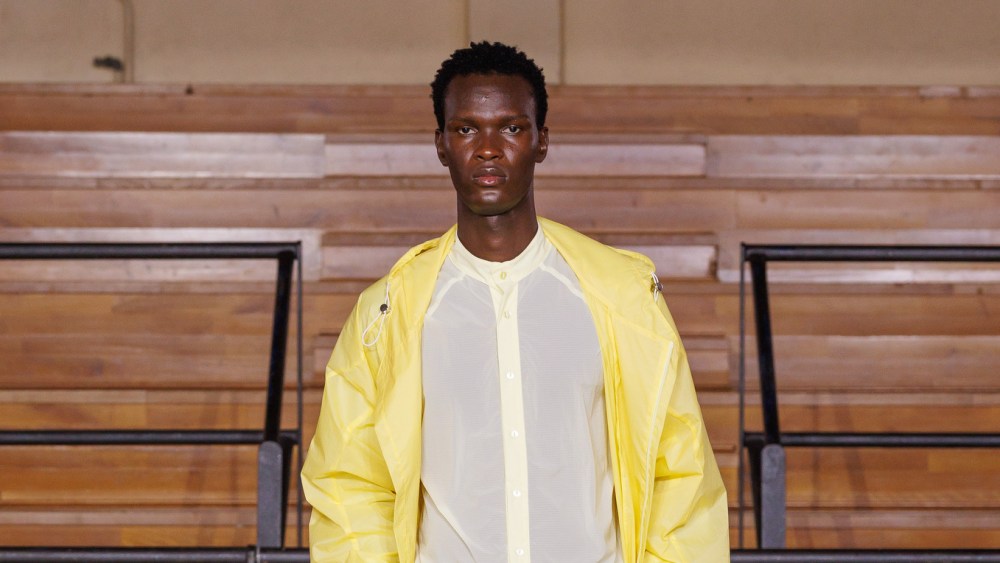
The leggy looks of his spring collection, courtesy of athletic short shorts, came with leggings underneath, paired with hooded windbreakers. The gorpcore vests and parachute pants in paper-thin nylon (a similar fabric appeared on the Prada runway one hour earlier) exposed the models’ statuesque bodies. Singlets became ubiquitous underpinnings — for bomber jackets and anoraks — and their shape was recreated via stitching on sweatshirts, base layers and tracksuits. The high-waisted shorts and trousers hitting an appreciable note between tailored and functional nodded to equestrian gear. Ditto for Nash’s inventive tailoring, with competition jacket-like designs, gathered at the back, hooded and done in pinstriped technical wools and denim, oftentimes paired with Bermuda shorts.
“I was really looking at this idea of what our pin-up of today is, and to tell that story by blurring the lines between sportswear and tailoring,” Nash said. “I think they’re confident, open-minded, strong individuals.”
Whether or not one is fit enough, it certainly takes some guts to pull off the closing look: a sheer, long-sleeved mesh unitard.