The founder of the Indigenous Nations Apparel Company claims that Shein knocked off 20 of its designs and allegedly used its own imagery to sell the copycat goods.
Michelle Cameron, a member of the Peguis First Nation, started her label in Winnipeg five years ago. In an interview Wednesday, she said that she was first alerted that Shein had allegedly copied INAC designs on May 21. After emailing Shein on May 22 about the alleged infraction, Cameron said she received a response from Shein on May 25 with a link to file a complaint. The majority of the INAC knockoffs were taken down from Shein’s site on May 26.
Asked if anyone at Shein would be commenting about INAC’s claims, a media representative for Shein said Wednesday, “We have not heard back at this time.”
Cameron said that she has not heard from any Shein representatives and that she is exploring taking legal action. More than anything, she said that she wants other artists “to know that it’s not OK to steal someone’s art for their website.”
As a purpose-driven brand that supports Indigenous creators and community organizations, Cameron said that the greatest challenge of the Shein situation is the underselling. The fast-fashion platform was selling goods at half the price that INAC offers, she said. INAC T-shirts retail from $20 to $30 and hoodies are around $40 to $50.
“It’s not just about us. I wanted to bring attention to this because many artists are having their designs stolen and put on their website. For us, it wasn’t just one design — it was 20 of them,” she said. “I wanted to be a voice for others, who might not want to speak up. This is an ever-growing issue that Indigenous artists’ designs are being stolen.”
Cameron also alleged that Shein not only copied designs but they used imagery of INAC models from a proprietary photo shoot. That included a photograph of her daughter modeling INAC products, she said.
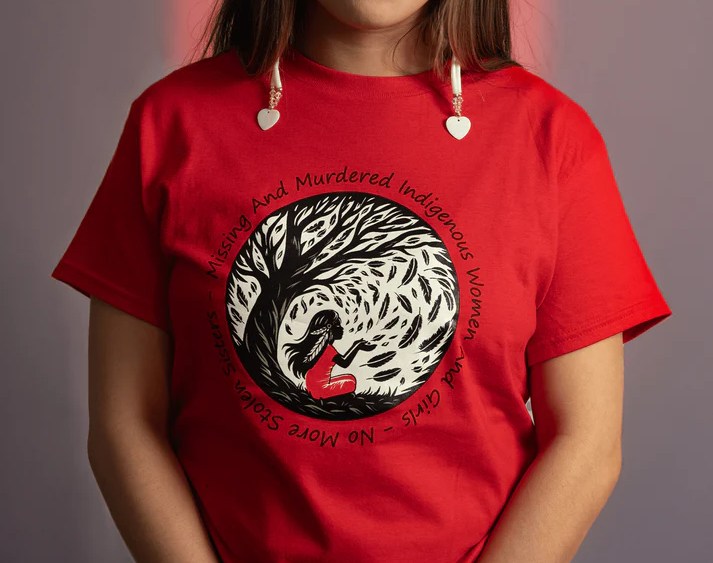
One of the designs that Shein allegedly appropriated was a shirt from INAC’s Red Day Dress collection, which is designed to raise awareness about missing and murdered Indigenous women, girls, and Two-Spirit People. Red Dress Day is an annual day of remembrance that is held on May 5. The T-shirt was designed and produced locally on Treaty 1 Territory, the traditional lands of the Anishinabe (Ojibway), Ininew (Cree), Oji-Cree, Dene, and Dakota peoples, and the Homeland of the Red River Métis.
Speculating that her public outcry might deter any future copies, Cameron said, “And maybe if they want to sell art, they will reach out to the artists to say, ‘Hey, can we partner with you? We’d love to buy your product.’ Maybe the artist would get a royalty, when it’s sold. I hope they learn from this and something comes of this for others.”
INAC recently had a similar situation with Amazon, which immediately took down the item in question, after receiving a cease-and desist letter, Cameron said.
Cultural appropriation has been a recurring issue in the fashion industry in recent years. Last year, the fashion designer Willy Chavarria issued an apology to the Oaxaca community after coming under fire for designing a collaborative shoe with Adidas Originals that was inspired by the traditional leather sandals “huaraches” that are made by Indigenous craftspeople in Mexico. In 2021, the Minnetonka shoe company apologized for culturally appropriating Native American culture, and committed to supporting the community.
Online shoppers can find guidance about buying authentic goods made by Indigenous creators at such sites as the Conscious Collective, Ecocult and The NTVs. Founded in 2014, the site sells Native clothing and accessories. The site advises, “We encourage you to buy authentic and not the cheap knock-off designs that appropriate the culture. We are a premium Native American brand that is driven by Native art and culture.”