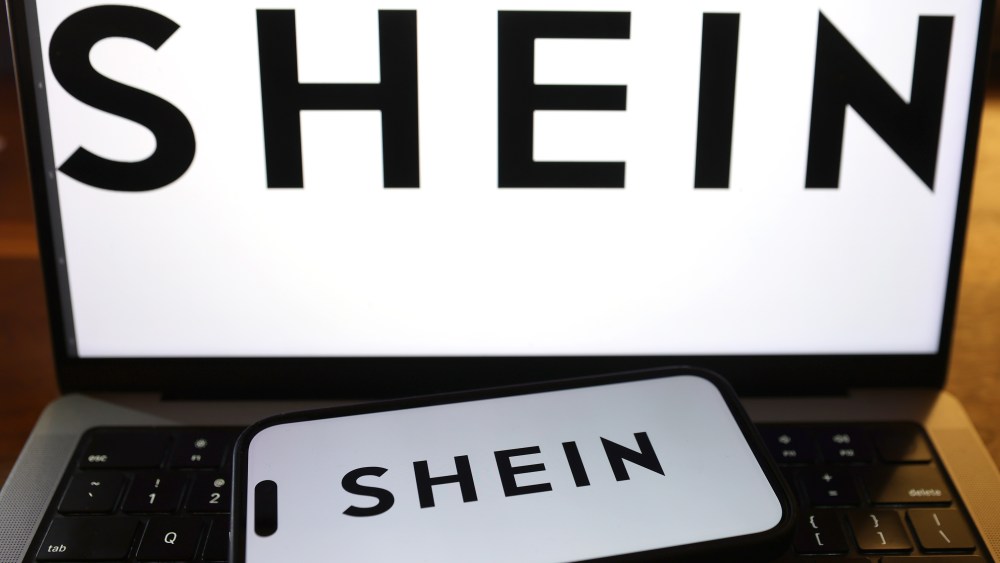
Shein officially launched its global offering on Monday, setting the stage for its IPO.
The Chinese ultra-fast-fashion-company, which passed its Hong Kong Stock Exchange listing hearing in July, is offering 280 million shares at 47.60 Hong Kong dollars to 49.50 Hong Kong dollars apiece and seeking to raise up to 13.86 billion Hong Kong dollars, or about $1.77 billion. At the top of the range, the offering values Shein at roughly $27 billion — a fraction of its pandemic-era peak valuation.
Goldman Sachs, Morgan Stanley and JPMorgan are serving as joint sponsors and overall coordinators, while cornerstone investors include Boyu Capital, Tiger Global, General Atlantic, Tencent, Greenwoods Asset Management and Taikang Life Insurance.
You May Also Like
The final offer price is expected to be set Aug. 31, with trading scheduled to begin Sept. 1.
The IPO will become the largest new share sale on the Hong Kong exchange this year, as the local market records a resurgence in listings.
The company’s new valuation reflects an increasingly crowded and complicated fashion retail environment. At roughly $27 billion, Shein would trade at about 0.7 times forecast sales, according to LSEG data cited by Reuters, which lands below H&M and Inditex on that metric, although above Zalando.
Contending with slower growth, higher fulfillment and compliance costs, tariff and import restrictions, and ongoing regulatory scrutiny, Shein’s net profit fell 38.7 percent to around $2.06 billion in 2025, according to company filings. In the first quarter of 2026, revenue growth slowed to 1.1 percent to $9.05 billion, while the net loss swung to $99 million from a $395 million profit in the same period a year earlier.
Revenue in the U.S., historically one of Shein’s most important markets, declined 14 percent in the first quarter, while the European Union grew slightly to account for around one-third of total sales.
Pressure on Shein continues to mount due to changes in global trade policy.
The U.S. ended the de minimis exemption that had allowed packages valued below $800 to enter the country without import duties, while the European Union also moved to impose fees on low-value e-commerce imports.
Shein said products of Chinese origin sold through its platform and shipped to the U.S. are now subject to tax rates ranging from 10 percent to 87.5 percent.
For the three months ended March 31, fulfillment expenses increased to around 47.7 percent year-over-year.
According to the filing, Shein plans to adopt a dual-class share structure, which helps preserve power for its founder Chris Xu, also known as Xu Yangtian, who holds a 33 percent stake in the company.