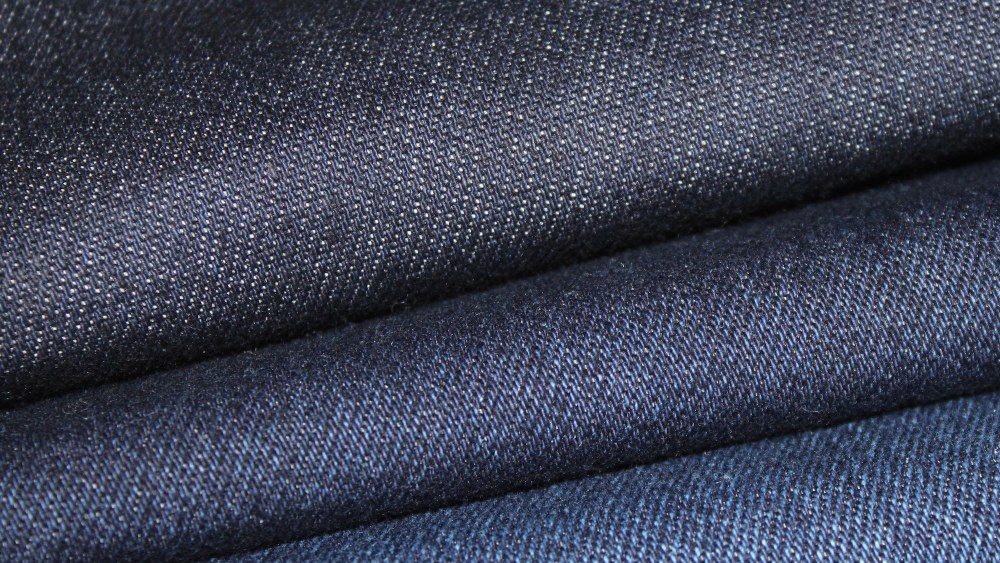
Luxury fibers are increasingly finding their way into denim as mills and brands look to elevate the category with refined textures, subtle performance benefits and more premium positioning. Materials such as silk and cashmere are being blended with traditional cotton constructions to create denim that balances authenticity with a heightened sense of sophistication.
AGI Denim offers both blends in its collection. “We see a strong desire in the market for product differentiation. We see some designers and brands are looking for ways to create pieces that stand apart while still retaining the authenticity of classic denim,” said Henry Wong, AGI Denim’s VP, product development and marketing.
Luxury fibers introduce refined sensory qualities without compromising denim’s structure. Silk is a strong, lustrous, protein-based natural fiber with exceptional softness and drape. When blended with cotton, it enhances smoothness, introduces sheen, and creates a lighter yet comfortable construction while preserving denim’s traditional character.
“The result is denim that retains the structure and character designers expect, while offering a heightened sense of comfort and refinement,” Wong said.
While silk offers functional advantages, its greatest impact is often perceptual. Wong said the fiber allows denim to occupy a more premium space while still maintaining the authenticity and familiarity that designers expect from classic constructions. “When these technical advantages are blended with enhanced softness and refined hand feel, the denim is perceived as more elevated and premium—naturally placing it in the luxury category,” he said.
Despite its appeal, use of silk in denim remains rare in the market. Historically, Berke Aydemir, Naveena Denim Mills’ senior GM R&D and technical sales, said luxury fashion houses have incorporated silk blends into premium denim collections aimed at high-end markets.
Momotaro Jeans incorporates up to 42 percent silk in the weft of select styles, with jeans retailing for over $700. Loro Piana similarly produces women’s denim made from a 41 percent silk/59 percent cotton blend, woven in Japan, with retail prices exceeding $1,000.

Demand for these luxury blends is gradually increasing, but higher fiber costs mean growth is most pronounced in premium and niche segments. Though its growing, luxury fibers account for “well below” 5 percent of Pioneer Denim’s total volume. Christian Recca, Pioneer Denim’s worldwide marketing and merchandising manager, described the interest in luxury fibers as a “refinement of consumer expectations.”
“Brands are seeking fabrics that balance comfort, traceability, and a premium tactile experience without looking ostentatious,” he said. “There is an increasing sensitivity toward responsible fiber usage; our clients value a balanced approach that respects both luxury aesthetics and material ethics.”
This focus on elevated yet conscientious materials is reflected in designers’ latest choices. After several seasons of linen and hemp bringing more pronounced texture to denim, the segment is now shifting toward fabrics with more luxurious enhancements. “Silk is a luxury fiber that adds a premium twist to traditional jeans, jackets and skirts in tune with the current elevated casual trend,” said Mark Ix, Advance Denim’s director of North American marketing.
Advance Denim was an early adopter of silk blends, beginning production of mulberry silk denim more than five years ago. By combining silk with cotton and Tencel in its fabric constructions, the mill creates styles with an ultra-soft hand feel while maintaining the strength and durability associated with hardwearing denim.
“Although we have had silk denim in our line for quite some time, we have been receiving an increase in requests from both high end and mid-market brands for both silk and cashmere denim styles,” Ix said. “The current popularity of luxury fibers comes from a mix of material innovation and fashion trends. The consumer is looking for understated luxury that bridges the gap between casual and dressy. We are also seeing the consumer spending more on less garments and focusing on quality quiet luxury.”
Sensory experience
Beyond its luxury appeal, silk is also valued for the performance benefits it brings to denim constructions. The fiber noticeably elevates hand feel, making denim smoother and softer against the skin, while adding a subtle sheen and surface richness that enhances the aesthetic.
Silk also supports improved moisture management and breathability, improving wearability across all seasons.
Ginza Pure—a silk, cotton and modal blend—is part of Maritaş Denim’s Luxe Drift collection. Alihan Kesim, Maritaş’ deputy general manager, said the 8.5 oz. fabric has “a natural sheen on the surface without disrupting its authenticity” and creates a “slouchy sensation” that aligns with trendy fluid silhouettes.

Naveena Denim Mills offers two silk-cotton blended denim fabrics: Silvina, a 11.75 oz. fabric with an authentic crackled surface appearance and light, fluid drape; and Kino, a 13.75 oz. fabric with greater structural body and form retention while maintaining softness through the silk component.
Both fabrics are made with 90 percent cotton and 10 percent silk and are dyed with green-bottom indigo, which provides a wider spectrum of wash effects, richer tonal depth, and more dynamic contrast development during abrasion and finishing processes. “The goal was to enhance sensory comfort and aesthetic depth while preserving denim authenticity,” Aydemir said.
Pure Denim developed two fabrics with AMSilk’s spider silk-based proteins: a 11.2 oz. fabric with 67 percent cotton and 33 percent spider silk, and a 12 oz. version with 59 percent cotton and 41 percent spider silk.
“Silk enhances denim without altering its identity. By integrating it in the weft, we preserve the traditional look while improving comfort and performance,” said Gigi Caccia, CEO and owner of Pure Denim. He added that the fabrics perform well in standard washing and finishing processes, giving brands full creative freedom.
Incorporating silk into denim significantly reduces the stiffness typically associated with rigid constructions—qualities that mills have long pursued through loose weaves, lyocell blends, enzyme washing and more.
“There is a clear positive response to denim that maintains authenticity while offering elevated comfort,” Aydemir said, adding that silk also improves drape and supports the development of lighter-weight fabrics suited to more refined and fashion-oriented silhouettes.
This shift toward comfort and refinement is also expanding how designers use denim across silhouettes and categories. “Silk blend denims perform strongly in fluid silhouettes, overshirts, lightweight jackets and modern tailoring approaches,” Kesim said. “They elevate denim beyond its classic workwear carrying it into a more elegant space.”
Sustainable choices
Silk’s inherent sustainable benefits make it an attractive option for brands wishing to combine luxury performance with more responsible material choices. As a natural protein fiber primarily composed of fibroin, silk is biodegradable under natural conditions and, unlike synthetic fibers such as polyester or nylon, does not release microplastics during wear or washing, Aydemir said.
Julieta Mercerat, PV Fashion Team’s denim project manager, highlighted silk as a compelling area of innovation within premium denim, particularly for brands seeking new ways to use natural fibers. “Although I do not see it as a trend, it reflects a genuine long-term movement in the luxury sector, moving again towards natural fibers,” she said.
For Mercerat, incorporating silk is both a statement of brand identity and a strategic positioning choice tied to the perceived value of the natural fiber. However, she warned against diluting its value through minimal use or synthetic blends. “Using silk in very small percentages—5 or 8 percent, sometimes mixed with fibers like nylon or polyester—only for the sake of mentioning silk on the label does not necessarily bring real value, even though it does happen,” she said.
AMSilk believes its animal-free, recyclable and biodegradable bio-silk belongs in premium denim. The German biotechnology company produces spider silk proteins through a fermentation-based process and spins them into fine filaments through a wet spinning process.
“We were motivated by innovation with substance,” Caccia said about the mill’s partnership with AMSilk. “What stood out was the combination of scientific innovation and sensorial beauty: the yarn is extremely fine, silk-like in touch and appearance, and perfectly suited to elevating denim into the luxury space.”
As with any biotech innovation, scale and cost are challenges but Caccia said production is expanding and becoming more industrialized. Additionally, from a processing perspective, AMSilk fibers integrate smoothly into established textile manufacturing equipment, minimizing the need for costly machinery changes or process adjustments.
“Interest is strongest among premium and luxury brands, attracted by both the novelty of the material and its performance benefits,” he added. “These brands are looking for meaningful differentiation, and silk-blended denim offers both elevated touch and sustainability credentials.”
AMSilk will produce about 30 tons of spider silk this year and it has plans to scale production to 700 tons by 2030. It is currently 30 percent more expensive than traditional silk, but Benoît Cugnet, AMSilk’s head of fiber, expects it to drop as production and market adoption grows.
Backed by strategic investment and strong collaborations with key partners in fermentation and materials processing, Cugnet said AMSilk’s platform enables the production of high-performance silk proteins with consistent quality and increasing volumes. “This infrastructure enables us to meet the demands of mass manufacturing, with the reliability and repeatability required by global fashion brands. Our scale up trajectory is firmly aligned with the needs of partners seeking high performance, sustainable materials at industrial volumes,” he said.
The benefits of AMSilk in denim are wide sweeping. Spider silk’s bacteriostatic properties inhibit the growth of odor-causing bacteria, keeping denim garments fresher for longer and reducing the need for laundering. This reduces the risk of skin irritation and fabric degradation, preserving garment integrity and appearance. It also enhances breathability and moisture management, keeping the wearer cool and dry.
Through its partnership with Pure Denim, Cugnet said AMSilk further learned how its biotechnology-based production aligns naturally with the denim industry’s sustainability efforts, such as reduced water and chemical usage. Recent life cycle assessment (LCA) studies comparing AMSilk to traditional mulberry silk production show significant environmental advantages, including an 85 percent lower climate impact, a 97 percent reduction in water consumption and a 92 percent reduction in land use.
“These insights are guiding the next phase of our development, which includes broadening yarn specifications, optimizing blend ratios for luxury and performance applications, and expanding collaborations with mills that prioritize innovation and environmentally responsible manufacturing,” he said.
Conquering challenges
Cost remains the biggest hurdle for luxury fibers like silk. Significantly more expensive than cotton, silk’s reliance on sericulture also affects supply stability and scalability.
While Naveena’s silk developments have been well-received in presentations and sampling stages, Aydemir said the transition to commercial adoption remains selective due to pricing considerations. “Silk denim is positioned at the higher end of the premium fiber spectrum in terms of cost,” he said. “Compared to other premium or sustainable fibers used in denim—such as hemp, pineapple fiber, or linen—silk is generally more expensive due to its production process and raw material value.”
Mills strive to balance cost with performance to keep fabrics viable for a broad customer base. Typically, blends with 8–10 percent silk enhance hand and comfort without compromising denim’s durability and easy care. But AGI Denim found that even a modest 5 percent silk inclusion can noticeably elevate the fabric’s overall appeal.

Silk also introduces unique challenges in denim production. During R&D, Maritaş has invested heavily in developing techniques that preserve silk’s delicate fibers while ensuring long-term durability and performance.
While traditional denim is prized for rugged durability, silk softens the fabric’s structure, making it less suited for heavy-duty workwear uses. Consequently, Aydemir stresses that silk denim is aimed more at premium and fashion-forward segments rather than utility markets, which inherently limits its range of applications.
Redefining luxury
Communicating sustainability to consumers has long been a challenge—especially when it comes to explaining both the price premium and the underlying need for more sustainable practices.
By comparison, incorporating luxury fibers such as silk into denim creates a tangible opportunity for storytelling—something consumers can immediately see and feel. When these fibers are thoughtfully integrated, Wong said the fabric instantly conveys a higher level of refinement.
“From there, it naturally opens the door to a richer sense of romanticism and storytelling,” he said. “These materials carry a long history of craftsmanship and luxury, so brands can build narratives around them while still grounding the story in a tangible improvement to the fabric itself.”
Wong added that luxury can be less about overt branding and more about materials, craftsmanship, and how a product feels and wears over time. The inclusion of luxury fibers in denim signals that additional thought and material quality have gone into the fabric, even if the garment still looks like classic denim. “In that sense, these fibers allow denim to retain its everyday versatility while quietly introducing a layer of luxury,” he said.
While silk’s higher cost and specialized production inherently support exclusivity and premium positioning, Aydemir emphasized that price alone does not define luxury.
“Today’s denim consumer defines luxury not solely by price, but by quality, comfort, craftsmanship and exclusivity,” he said. “Luxury denim is expected to deliver superior hand feel, refined drape, subtle aesthetic depth, and a distinctive presence compared to standard cotton denim. There is also a growing demand for elevated sensory experiences—how the fabric feels, moves, and ages.”
Caccia noted that consumers increasingly value pieces designed to endure, appreciating clothing that performs better and retains its integrity over time.
While luxury blends in denim may never enter the mainstream, their emergence highlights how the denim category continues to evolve. As mills experiment with luxury materials and new technologies, denim is being reimagined with a greater emphasis on tactility, refinement and elevated performance—while still preserving its core identity.
“Silk-blended denim may remain a niche, but it represents a new wave of innovation. Denim has always evolved, and biotechnology is simply the next chapter,” Caccia said.
By combining authenticity with luxury, mills and brands to push the boundaries of what denim can be: elevated, tactile and contemporary. “It is not about replacing traditional denim, but about expanding its expressive and sensory possibilities,” Aydemir said.
This article was published in SJ Denim’s spring issue. Click here to read more.