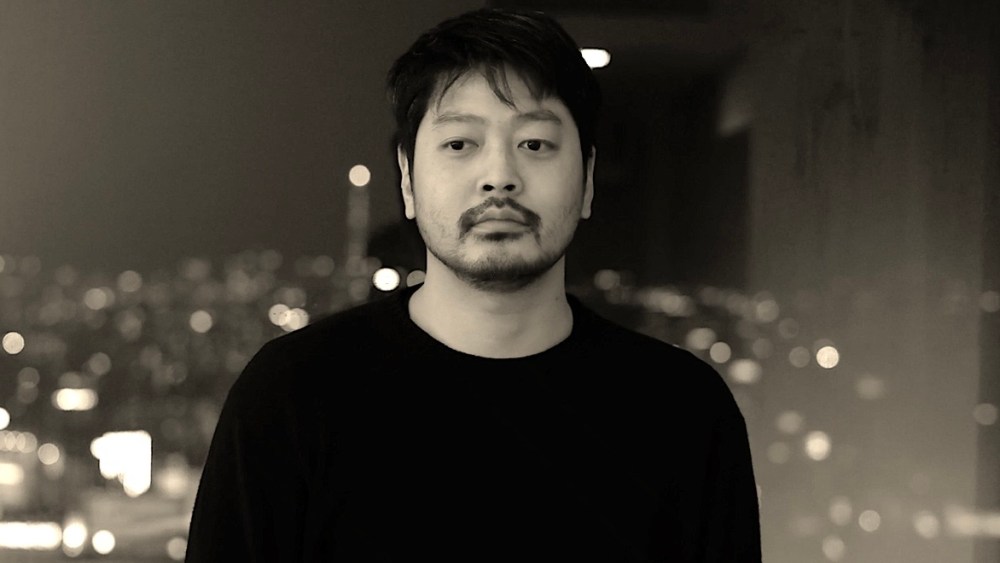
Soshi Otsuki’s relationship with Italy has deep creative roots.
The Japanese designer’s tailoring creations have always straddled Japanese precision and Western menswear codes, specifically drawn from the Italian sartoial tradition of laid-back elegance. And it was no secret that the late Giorgio Armani is among his personal heros.
“I see my creative process as passing a Western sensibility through the filter of a Japanese mindset,” Otsuki said in an emailed interview a few weeks before flying to Florence where he will unveil his men’s fall 2026 collection as guest designer of trade show Pitti Uomo on Thursday.
You May Also Like
After more than a decade of exploring this duality by letting Western and Italian references seep into his work while gaining cult status for his oversize suits inspired by ‘80s-era power dressing, the 35-year-old, Tokyo-based Otsuki is making a reverse trip — both physically and creatively.
“Up until now I have been telling the story of the era when Italian suits flowed into Japan. This time, I am approaching the collection with the intention of re-exporting that story back in the opposite direction,” Otsuki said. “In a sense, presenting at [Pitti Uomo], the hotbed [of menswear], feels like being invited into the game after having worked outside of it. As a result, I was conscious of respecting the rules more than ever — while still subtly shifting them,” he said.
The designer was also asked to create the outfits worn by models in Pitti Uomo’s campaign for this week’s edition, centered on the theme of “Motion.”
Otsuki’s Euro trip this week marks his second important overseas journey in a few months, after September’s visit to Paris to accept the top award at the 2025 LVMH Prize for Young Designers at which he beat more than 2,300 applicants of 115 nationalities, walking away with a grand prize of 400,000 euros, plus a year of coaching from experts at luxury giant LVMH Moët Hennessy Louis Vuitton, parent of brands including Louis Vuitton, Dior, Loewe and Celine.
A graduate of Bunka Fashion College who also attended Coconogacco, the private fashion school that is producing some of Japan’s most exciting new talent, Otsuki, who established his namesake brand in 2015, said that recent months have been all about the “validation” of his work.
Shortly after scooping the talent competition’s prize, he inked a deal with brand development platform Tomorrow, which started representing Soshiotsuki’s wholesale operations in the fall 2025 season and has ambitions to expand its international presence. The brand’s current biggest market is the U.S., Otsuki said, although tariffs have impacted the company’s ability to further fuel growth in the region.
The LVMH Prize for Young Designers has brought some relief to the independent fashion talent who admitted he’s been navigating the same hurdles as his fellow up-and-coming creatives, including cash flow.
Mindful of the exposure Pitti Uomo can bring, the designer said he’s not shifting away from the languid tailoring that has informed his brand’s ethos since the inception, but he was equally set on exploring nuances of his fashion lexicon, for example by juxtaposing slim pants with his signature relaxed silhouettes.
This approach, too, reflects his East-West vision.
“Japanese tailoring tends to be extremely precise, and at times I feel it can lack a sense of playfulness. Italian tailoring, by contrast, has a kind of sensuality — almost as if it might fall apart if you pulled a single thread,” Otsuki said. “It’s not about which one is better, I value holding both of these perspectives at the same time.”
One should expect to see his roomy tailoring with linings slashed in reference to kimono sleeves, and jackets wrapped like karate uniforms, but also a good chunk of new proportions hinged on heritage sartorialwear — all done in a color palette spanning several gradients of gray.
“I consciously use gray extensively, as a way of defining [it as] Soshiotsuki’s signature color,” the designer said.
The show on Thursday, his first outside Japan, is to be held at the Santa Maria Novella Refectory, which he selected for its subtle decorations and natural light filtering through the windows.