A single garment factory subjected to 740 audits in one year. Suppliers spending 16 days a month on compliance paperwork. Workers laboring in factories where temperatures can reach 130 degrees.
Companies expect sustainability outcomes. They do not, however, inspect or operationalize them.
At Sourcing Journal’s “Road to 2030: Dealing with Detours” forum on Thursday in New York City, those conditions accentuated a widening gap between sustainability commitments and operational reality.
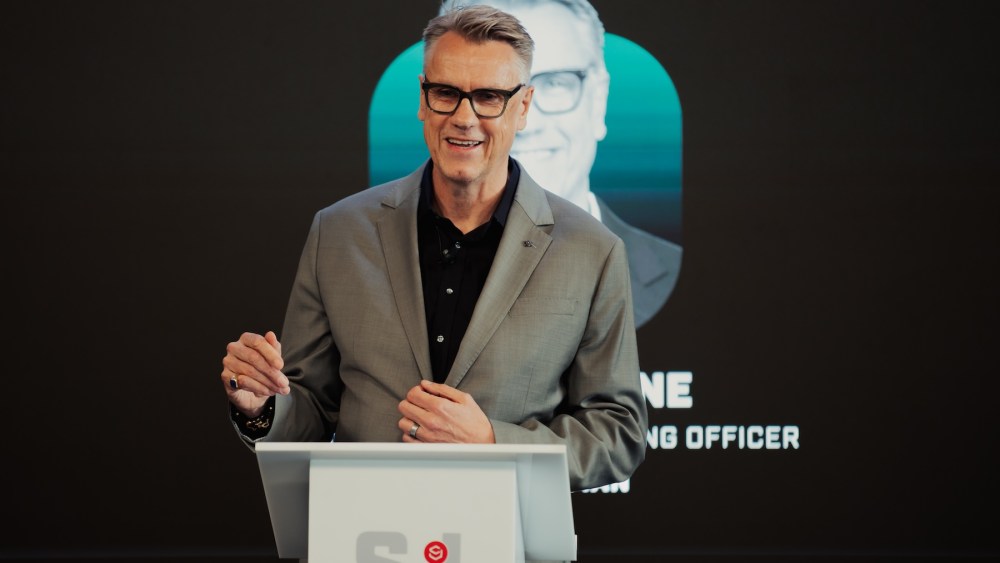
In a keynote address, Colin Browne, former CEO of Cascale and now president and chief operating officer of David Yurman, framed the challenge through a familiar metaphor.
On a clear night in April 1912, two Titanic lookouts scanned the horizon without binoculars—the tool they needed locked away, the key carried off by an officer reassigned at the last minute. The ship, he said, was built for momentum, not course correction.
“They saw the iceberg,” Browne said during his keynote. “But by the time they saw it, it was already inevitable.”
The analogy set the mood for a broader critique: an industry with increasing visibility into its impacts but limited control over the systems that drive them. After spending “too many years” in the textile trade, Browne described what he called an “expectation-inspection” gap—arguing that sustainability remains largely absent from the metrics that shape business decisions.
“You do what your boss inspects, not what your boss expects,” he said. “CEOs expect sustainability, but they’re not inspecting sustainability. It’s not front and center of what we do.”
Expectation, he said, often takes the form of “nice language” on vision statements and corporate messaging, while inspection reflects the “cold, mechanical reality” of how companies actually operate.
In many cases, sustainability efforts are driven less by integration than by external pressure. “The reason we do it, for many businesses, is about managing regulatory burden… managing reputational risk,” Browne said.
That disconnect is particularly visible at the factory level. Browne pointed to the volume of audits suppliers are required to undergo, describing a system that favors compliance over long-term improvement.
“Can you imagine what that would feel like… you can’t do anything other than just manage the next person who is coming in to audit you,” he said.
At the same time, global instability, inflation and the rapid development of artificial intelligence have made it easier for companies to deprioritize sustainability initiatives. Browne acknowledged those pressures but rejected them as justification for delay.
“There’s always an excuse,” he said. “The time for excuses has passed.”
He called instead for a structural shift—embedding sustainability into core business functions rather than isolating it within dedicated teams.
“If it’s an integral part of what we do… it should be part of everybody’s job,” Browne said.
Without that change, he warned, the industry risks continuing to document problems it already understands without meaningfully addressing them.
“I’d propose that the ice is still out there; we’re still looking at a giant iceberg in our future and the water is rising,” Browne said. “We have two choices: to inspect and actually act and do something with that. The alternative is that we’ll end up just colliding with the iceberg. The time for expectation, I propose to you, is over.”