A new project in Pakistan has secured 1.25 million pounds ($1.6 million) worth of funding to build a full-scale demonstration plant that would make clean energy from agricultural waste, which could potentially help lessen the country’s dependence on imported coal.
The project, funded by the government of the United Kingdom, links two seemingly unrelated problems in Pakistan in order to create a solution that would help address both.
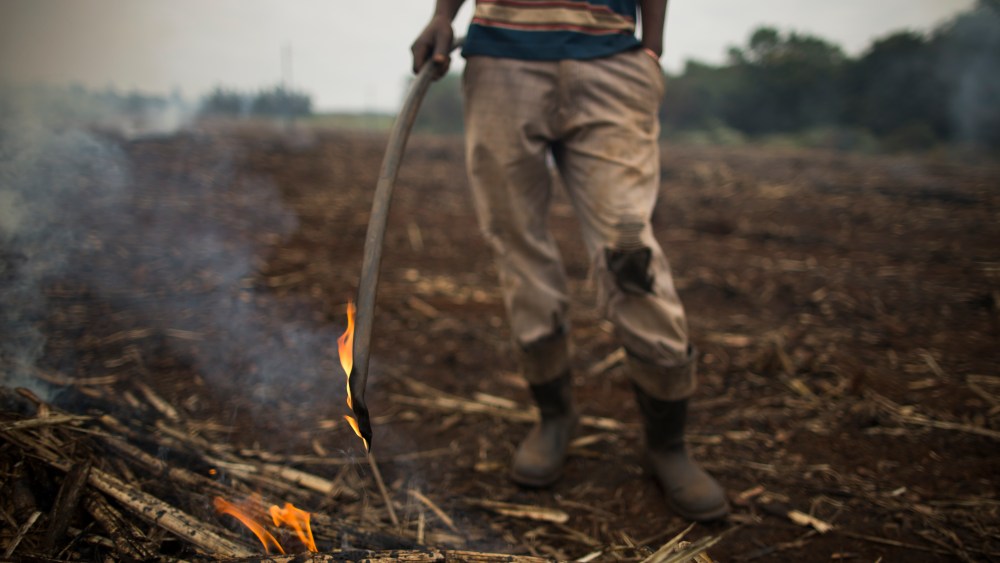
Punjab burns millions of tonnes of cotton stalks and sugarcane waste every winter because farmers have “no other use” for the biomass, a practice that has been contributing to the air pollution that is already well past, according to a statement from Northumbria University Newcastle. Meanwhile, Pakistan spends more than $2.5 billion every year to import 19 million tonnes of coal, while rural communities in South Punjab endure power cuts that can last up to 18 hours a day.
The project, which is called Safer Plus, will turn cotton stalks and sugarcane waste into engineered bio-coal pellets, providing a renewable source of energy through a heating process known as torrefaction. These pellets can potentially replace imported coal in brick kilns and textile mill at less cost and without needing any modification on existing equipment.
So far, three unnamed textile mills have already committed to the project, with promises to use the biocoal commercially if Safer Plus proves successful.
The demonstration hub will be built on the campus of the University of Kamalia in South Punjab, where it is expected to process around 5,000 tons of agricultural waste per year and produce up to 4,000 tons of biocoal. The hub will remain operational at the university for at least 10 years after the project ends so it can continue supplying biocoal to the local community.
“What makes this project different is that we are not proposing another laboratory study,” said Dr. Jibran Khaliq, project co-lead at Northumbria University’s School of Engineering, Physics and Mathematics.
“[W]e have spent six years developing and validating the knowledge, and now we are building a live commercial facility with three textile mills already committed to using the fuel. This is the step that turns research findings into an investable, replicable business that Pakistan can own and scale,” he said.
At least 60 percent of training places on the project are reserved for women, and payments will be made directly into women’s own mobile wallets to ensure they have independent control over their earnings, Northumbria University said.
Eventually, the ambition is to have 30 hubs across Pakistan within the next decade, which, if successful, are estimated to displace more than 100,000 tons of imported coal every year.