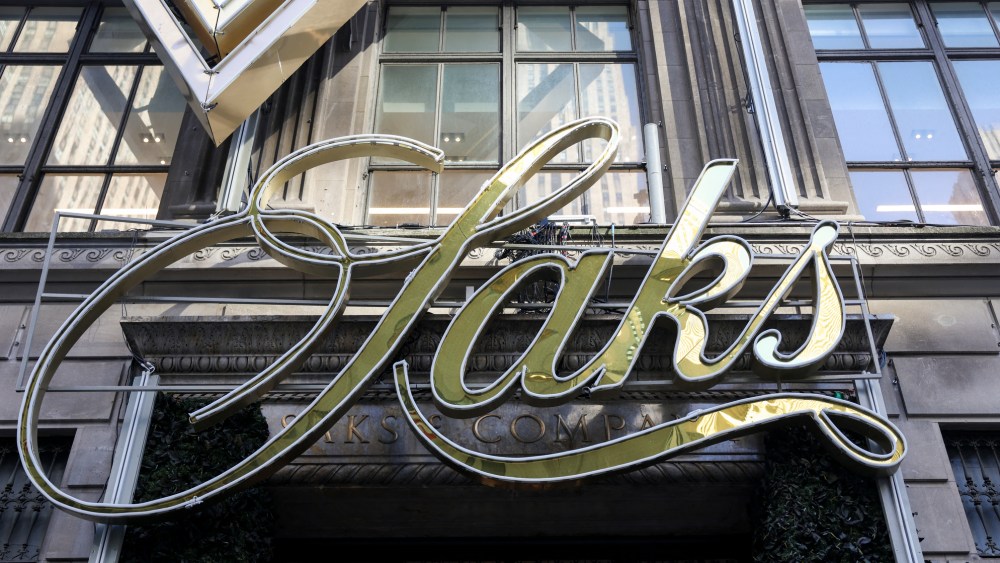
As Saks Global prepares to exit bankruptcy court stage right this summer, the cast of characters is coming into clearer focus.
A recent filing in the case updated the reckoning of just who owns what on the ad hoc committee of bondholders, which threw Saks Global a lifeline in January by providing $1.5 billion in debtor-in-possession financing that was vital to keeping the company’s lights on through the bankruptcy.
When Saks Global filed for Chapter 11 it was days away from running out of money completely and would have likely had to liquidate if the bondholders hadn’t backed the reorganization. As it is, the retailer is navigating the process smoothly and is finalizing its plan of reorganization and its go-forward business plan while also closing most of the Saks Off 5th stores and about half of the Saks Fifth Avenue chain.
You May Also Like
It won’t be clear just who will own Saks Global after bankruptcy until the company files its plan of reorganization and the court approves it. But the ad hoc group of lenders is seen in the driver’s seat.
According to the latest filing from the ad hoc group, it collectively holds $3.3 billion in Saks Global debt — including prepetition bonds and DIP financing.
The biggest player by far is Pentwater Capital Management, which controls $1.2 billion of that debt, or 37.9 percent of the ad hoc group’s holdings. Pentwater is run by chief executive and investment officer Matt Halbower, who founded the fund in 2007 and now oversees more than $3 billion in assets, with an emphasis on distressed investments.
FFI Fund Ltd. holds $553 million, or 16.8 percent, of the ad hoc group’s debt and XYQ US holds $414 million, or 12.6 percent. Six of the other investors in the ad hoc group each hold a single-digit stake in the retailer. The final member of the group, Fidelity, owned $99 million in Saks Global debt in January, but has since whittled that down to $10 million, or 0.3 percent of the group’s holdings.
Saks Global succumbed to bankruptcy just a year after loading up with debt to buy Neiman Marcus Group for $2.7 billion.
Neiman Marcus, at least, has been through this process before.
After more than a decade of being passed around between financial investors and seeing its balance sheet weighed down with the resulting debt, Neiman Marcus slipped into bankruptcy in 2020 as the pandemic shut down retail. In that case, the lenders going into the case became the owners when the company reemerged and successfully operated the business before selling it to Richard Baker and Saks Global in late 2024.