Holiday shoppers are looking to secondhand goods to stretch their gift budgets—and to their own closets to help fund the season.
According to ThredUp’s 2026 Holiday Resale Report, 62 percent of U.S. adults plan to shop secondhand this holiday season. Those shoppers expect to devote an average of 37 percent of their gift budgets to previously owned items, a share that rises to 45 percent among Millennials and 43 percent among Gen Z.
Meanwhile, 53 percent of respondents have sold or expect to sell belongings to help pay for holiday purchases, suggesting resale could play a role on both sides of consumers’ holiday budgets.
For ThredUp, those overlapping behaviors present an opportunity to attract customers as households weigh competing demands on discretionary spending.
“We see an opportunity to attract more shoppers this holiday season,” Alon Rotem, ThredUp’s chief strategy officer, told Sourcing Journal.
The outlook comes as 42 percent of respondents expect to spend more on the holidays than last year, while another 42 percent expect to spend the same amount. Consumers also expect 2.2 times as many social occasions during November and December as in a typical two-month period, adding to the demand for gifts and occasionwear.

Rotem pointed to inflation and higher energy costs as pressures on holiday spending. Some shoppers are cutting back on purchases for themselves or rewearing clothes to make room in their budgets for gifts and other seasonal expenses, he said.
Secondhand may also help shoppers cover more names on their gift lists. Thirty percent expect it to help them buy for more people, while 29 percent say it will help them purchase a preferred gift. The corresponding figures for 2025 were 23 percent and 21 percent, based on respondents’ recollections rather than a separate survey conducted last year.
Price, however, is only part of the appeal.
Among reasons respondents ranked in their top three for welcoming secondhand gifts, value drew 55 percent and uniqueness 52 percent. Millennials placed uniqueness ahead of value, at 59 percent versus 52 percent.
When asked to choose between a one-of-a-kind, vintage or hard-to-find secondhand item in excellent condition and a new, mass-produced equivalent, 55 percent preferred the secondhand option. That share climbed to 69 percent among Millennials and 66 percent among Gen Z.
The stigma traditionally associated with giving used merchandise also appears less pronounced. When asked how they would feel if a gift they loved turned out to be secondhand, 62 percent said it would make no difference, while another 22 percent said they would like it more.
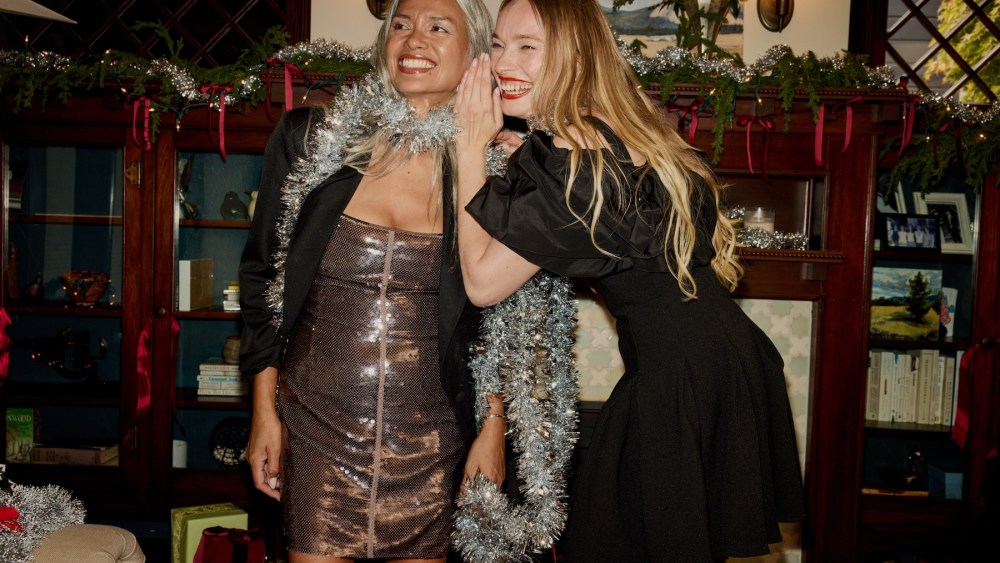
Holiday parties are another reason consumers are considering resale. Thirty-two percent plan to buy secondhand clothing for special events or occasions, including 47 percent of Millennials and 44 percent of Gen Z.
ThredUp sold 37 percent more items during the 2025 holiday shopping period—defined as Nov. 1 through Dec. 24—than it did in 2023; full-year unit sales rose 22 percent over the same period.
Certain apparel categories experienced particularly strong seasonal growth.
Dresses and one-piece garments rose 47 percent in holiday units, compared with 27 percent for the full year. Sweaters rose 41 percent during the holiday period, substantially exceeding their annual growth rate, while activewear increased 16 percent during the holidays despite a 2 percent decline in full-year units.
ThredUp cannot simply order more dresses or sweaters when shoppers want them. Its inventory depends on what sellers send in—making the timing of those submissions particularly relevant ahead of the holidays.
“Our supply comes from millions of closets, so the lever is timing,” Rotem said.

The company has recently tested seasonal bags designed to encourage sellers to submit cold- or warm-weather merchandise when demand is strongest. Rotem said the approach may help align incoming inventory with seasonal shopping patterns while improving the selling experience and potential earnings for consignors.
The supply side of the business could also benefit from consumers looking to offset their holiday expenses.
Millennials were most likely to report having sold or expecting to sell belongings to fund holiday purchases, at 69 percent, followed by Gen Z at 66 percent. Among all respondents, 7 percent had already sold items at the time of the September survey, while another 46 percent said they definitely or probably would.
Rotem described ThredUp’s Clean Out program as healthy and growing, although the company did not offer figures establishing whether seller activity had increased specifically ahead of the holiday season.
ThredUp has also introduced Direct Listing, a peer-to-peer resale platform that gives sellers greater control over their transactions. Rotem said the program charges no seller fees, permitting participants to retain the full sale price of their merchandise.
Handbags from Tory Burch, Coach and Longchamp, along with apparel from labels including Dôen, Veronica Beard and Ulla Johnson, are among the strongest earners on Direct Listing, according to the company.
The report combines transaction data from ThredUp’s marketplace with a GlobalData survey of 2,123 U.S. adults conducted Sept. 4-18. The survey sample was nationally representative by age, gender, location and income. Marketplace comparisons cover the holiday shopping periods from Nov. 1 through Dec. 24 in 2023 through 2025, rather than projected sales for this year.
Whether shoppers follow through on their stated purchasing and selling plans remains to be seen. But for a resale platform dependent on a steady exchange of merchandise between consumers, the appeal of secondhand shopping increasingly goes beyond finding a lower price.
“The structural point is that the closet is both a source of spending power and a source of supply,” Rotem said.