
On Dec. 3, Tommy Hilfiger will be honored with the Lifetime Achievement Award at the 39th annual FN Achievement Awards. Below is an article from the magazine’s Dec. 1 print issue about legendary designer and founder.
Tommy Hilfiger has been a self-professed sneaker fanatic since the age of 12, when he bought his first pair of Converse.
Decades later, the designer was a pioneer in the fashion world when he introduced the Tommy Jeans “Fly” kicks in 1997.
And sneakers still play a pivotal role in the brand that Hilfiger — the honorary chairman and principal designer of Tommy Hilfiger — has spent 40 years building into a lifestyle powerhouse. The label, a division of PVH Corp., generated global retail sales, including those by licensees, of about $9 billion in 2024.
You May Also Like
Footwear has always been near and dear to the designer, and with his U.S. shoe partner, Marc Fisher Footwear, the brand offers a full range of women’s and men’s footwear, from heels, leather boots and sandals to running, tennis and boat shoes. (His adult footwear for European distribution is produced in-house.)

Known for his modern take on preppy designs, Hilfiger has consistently put the emphasis on casual footwear, enabling the category to develop into a significant growth driver.
“I thought we’d be in the footwear business, but I never thought the footwear business would be as strong as it’s become,” Hilfiger said. “And I think the fact that we are a fairly casual brand and that we were able to get into sneakers early has helped grow the business.”
The designer said he always dreamed of building a lifestyle label, and the company views itself as being one of the global American brands. “But I never dreamed that we would be spread across the Earth,” he admitted. Today, Hilfiger’s brand has 2,000 retail stores and tens of thousands of points of distribution around the world.
Tipping Points
Hilfiger’s initial foray into fashion was as a teenager in 1969 through his own store, People’s Place, a rock ’n’ roll-inspired destination in his hometown of Elmira, N.Y., stocked with bell-bottomed jeans from Manhattan.
When he founded his namesake brand in 1985, Hilfiger was catapulted into the spotlight with the now-famous “hangman ad,” a provocative billboard placed in New York City’s Times Square. The ad daringly positioned newcomer Hilfiger alongside established American designers such as Ralph Lauren, Calvin Klein and Perry Ellis, introducing his name to the public in a dramatic fashion.
Hilfiger’s first collection redefined men’s fashion by modernizing wardrobe essentials like button-down shirts, chinos and other timeless classics. During those formative years, the founder went all in on being a preppy, all-American brand. “And then we went into womenswear, children’s, licensing, fragrance, accessories, watches, footwear, jewelry and every category connected to fashion that would build the journey to becoming a lifestyle brand,” he said.
Another highlight came when the company ventured into Europe. In 1997, Hilfiger solidified the brand’s global expansion by establishing Tommy Hilfiger Europe BV in Amsterdam.

A year earlier, buzz had already started to build around the brand in Europe when Leonard Lauder, then-chairman and chief executive officer of Estée Lauder Cos., came up with a plan to debut the Tommy and Tommy Girl Fragrances in the market. “We would lead with a launch of fragrance, and six months later, we would then drop the clothing,” said Hilfiger.
“This was really Leonard’s strategy and a thought process that would help us. We thought it was a good strategy because of the amount of advertising that was going behind the fragrance. The spend was phenomenal. The images of the advertising became iconic. It unlocked our opportunities in Europe with a brand that had been an unknown, but was becoming a known,” the founder recalled.
Another milestone was going public in 1992, and that move gave Hilfiger the financing to open shops-in-shop, hire additional team members, advertise more and fund the growth of the business.
It was around the same time that Hilfiger began to align the brand with the biggest names in entertainment and pop culture. His knack for connecting with the right people at the right time has proven to be a winning formula through the decades.
As he started to become a cultural phenomenon in the early ’90s, the label gained traction in the burgeoning hip-hop scene. Grand Puba, a rapper and member of brand Nubian, put Hilfiger in the limelight by name-dropping the label in two iconic songs: “What’s the 411?” with Mary J. Blige and “360 (What Goes Around Comes Around)” — and wearing Hilfiger on his album cover.
These lyrical shout-outs not only introduced Hilfiger to a new, younger audience but also solidified the brand’s appeal within the hip-hop community.
In 1994, Snoop Dogg took the stage on “Saturday Night Live” to perform his hit, “Lodi Dodi,” dressed in a Hilfiger shirt, transforming the label — literally overnight — into the cool brand.
“We became really connected to pop culture,” Hilfiger said. “And then when we did the advertising for Tommy Jeans, we did it with children of icons — Rod Stewart’s children, Mick Jagger’s children, Keith Richards’ children, Kareem Abdul Jabbar’s son, and Quincy Jones’ daughter. That connected us to … what I call F.A.M.E.S. — Fashion, Art, Music, Entertainment and Sports,” said Hilfiger.
As the years went on, the brand engaged with countless celebrities and musicians, sponsoring The Rolling Stones, Lenny Kravitz, Britney Spears, Sheryl Crow, Aaliyah and Beyoncé Knowles, among others.
Fast-forward to today, and influencers are at the center of Hilfiger’s tried-and-true formula.
“Influencers have enormous fan bases, and when they connect to our brand, their fans connect to them and then to [us],” said Hilfiger. “Celebrities gave us the cool factor and notoriety, but the influencers basically lead people to us. People maybe know the name, but they don’t know the brand. They’re a magnet to bring people in.”
Influencers are just one part of the founder’s recipe for creating and cultivating the brand’s modern identity.
“You really need to have a very strong image through marketing, PR, advertising, influencers, fashion shows, events, sponsorships, all of the above,” Hilfiger said. “I’m engaged with that on a day-to-day basis. I also work with the team on the strategy and the direction of the product, which is near and dear to my heart. The main focus I impose upon them is to keep connected to the DNA of the brand.”
To that end, when the company hires new designers from different parts of the world, the Hilfiger team gives them an in-depth education about the brand’s history.
Workshops take place at the state-of-the-art archive facility in Long Island City,
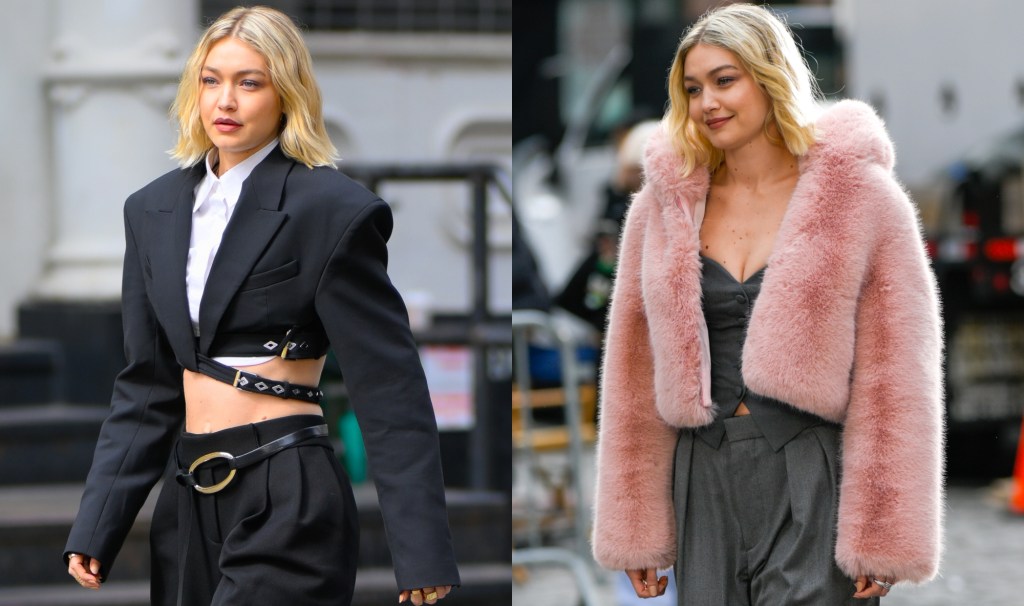
N.Y. There, iconic pieces — ranging from Met Ball ensembles to the clothes designed for The Rolling Stones and the Ferrari team — are on full display, as well as collaborative styles created with Gigi Hadid and Zendaya.
“The designers are influenced and inspired by all of these archival pieces that completely drive the future of the brand,” he said.
The Shoe Strategy
Hilfiger has benefited from his partnership with a strong shoe specialist, Marc Fisher Footwear, which has been the exclusive U.S. and Canadian licensee for Hilfiger footwear since 2011.
“[Marc] has been an amazing partner. He calls himself a ‘shoe dog.’ He and Susan [Itzkowitz, president of Marc Fisher] are very engaged with every detail. They’ve really built the footwear brand in the U.S. for us,” said the designer. “A lot of it had to do with their attention to detail and their respect for the Tommy brand. And with any licensee, that is incredibly important.”
In addition to working closely with the team at Fisher’s New York sales office, Hilfiger has visited the company’s headquarters in Greenwich, Conn., many times.
“We’ve become personal friends over the years. I knew his dad, and I was very good friends with his [dad’s] partner, Vince Camuto,” said Hilfiger. “But Marc is really a pro in the business.”
Marc Fisher, founder and CEO of his eponymous company, called Hilfiger a “true industry pioneer — bringing classic American style to the world with an energy only he can create.”
Fisher said that energy serves as inspiration for every shoe the companies build together: “For over 15 years, [Tommy has] been both a friend and a mentor to me, with a sixth sense for where fashion and innovation are headed.”
Even prior to Fisher’s involvement, Hilfiger’s footwear flourished alongside his growing fashion business. Prior to 2009, he had a license with Stride Rite in the U.S., and then brought the U.S. footwear business in-house for a short time before partnering with Fisher.

The brand introduced footwear in Europe through a licensing partnership with Hamm Shoe & Accessories Co. GmbH in 2002. Five years later, Hilfiger acquired the European footwear licensee, bringing the business in-house, a model that continues today for all EU adult footwear.
For kids’ shoes in Europe, the company has partnered with Elisabet Srl since 2017. And since 2019, BBC International has been distributing its children’s footwear in North America.
Overall, the shoe business is equally divided between women’s and men’s. In the women’s segment, the brand offers heels, mules, loafers and ballet flats, but casual outsells everything, Hilfiger said.
When it comes to crafting shoes for the runway, the design team conceptualizes the ready-to-wear pieces first and then tackles footwear. “It’s done in limited quantities, sold online and in our flagship stores,” said Hilfiger.
His favorite part of the process is designing product that is both fashionable and commercial.
“It excites me when we make something we think is exciting, and it actually sells,” Hilfiger said. “Sometimes designers will make something that they really love, but it won’t [move]. We’re always thinking about what the consumer will wear and what the consumer will buy as a result of what might be missing in his or her wardrobe.”
The Road Ahead
As he continues to build all aspects of the business, Hilfiger is constantly thinking about what it takes to succeed in today’s ever-changing fashion climate.
First and foremost, the designer believes it’s important for the brand to stay consistent.
“If you look at some brands that maybe bounce around from one position to another, and change their direction every year, I think it confuses the customer. I like the idea that we stay very close to the consumer with the DNA of the brand, keeping it classic American cool,” said Hilfiger.
Hilfiger likes to keep his finger on the pulse of the industry — and he’s an ardent supporter of the next generation of talent.
“Being supportive of our industry is very important,” he said, citing his involvement with the CFDA and CFDA/Vogue Fashion Fund. “It’s important to understand what is going on from all different standpoints.”
But fashion isn’t the only passion that drives Hilfiger.

“I’m a very curious person, and I like to know what’s going on in … the entertainment world, in the sports and music worlds. Being connected to pop culture is one of the benefits we’ve had in building the brand,” he said. “I’m really intrigued with the art world as a collector, and I’m just a fan of different artists. I think curiosity is probably something that I’ve always had, and I continue to engage in.”
Looking ahead, Hilfiger aims to further develop the home business with furniture, accessories and tabletop.
He and his wife, Dee Ocleppo Hilfiger, also a tireless fashion force, recently published a book, “Hilfiger Homes,” highlighting their past and present properties all over the world, including their estate in Palm Beach, Fla.; Mustique vacation home, and Greenwich manor. “I’m very interested in hospitality and residences and perhaps restaurants,” he said.
Few people could keep up with his frenetic pace, but Hilfiger has no plans to slow down.
“I enjoy every minute of it. I can’t see myself retiring because I wouldn’t know what to do. I’m engaged in the business on a day-to-day basis and I find it very exciting. I find it very inspiring to continue,” he said.
One of his newer projects is a partnership with another all-American brand.
As official apparel sponsor of the Cadillac Formula 1 Team, Hilfiger will design and create custom kits for the entire team and its drivers for the 2026 Formula 1 World Championship season.
Hilfiger will also produce and manage the team’s fanwear collections, including exclusive caps, and a broad range of merchandise and accessories inspired by the team and the drivers. The collection launches in February 2026, in time for the spring season.
In another multiyear partnership, Hilfiger recently became the official lifestyle apparel partner of the US SailGP team, and the partners unveiled a co-branded capsule collection.
As fashion’s newfound fascination with the sailing world continues to grow, it’s no surprise that Hilfiger is leading the way.
“We’re always moving ahead, always evolving,” he said.
For 39 years, the annual FN Achievement Awards — often called the “Shoe Oscars” — have celebrated the style stars, best brand stories, ardent philanthropists, emerging talents and industry veterans. The 2025 event is supported by Caleres, Listrak, Nordstrom, Skechers, Vibram and Wolverine Worldwide.