In an analysis by Sourcing Journal of data from S&P Capital IQ, the top 100 public companies in the textile, apparel and luxury goods sector ranked by annual sales are global powerhouses led by LVMH Moët Hennessy, Christian Dior SE and Nike Inc.
Many of the top brands by annual sales also took prominent positions in the list of top companies ranked by market capitalization.
The sector has 1,350 constituents that generate $1.47 trillion in annual sales. The top 100 have $731.5 billion in annual revenue. S&P Capital IQ uses the Global Industry Classification Standard (GICS) framework to identify these companies.
In the top 100 list, those ranked in the first dozen or so reflect a mix of luxury houses, sportswear giants, retail holding groups and supply chain manufacturing giants. But what defines their success?
First, there’s a polarization between premium luxury brands and those that leverage mass market and scale value. LVMH, Christian Dior, Hermès, Kering, Richemont and Prada operate on higher gross margins, intentional scarcity and brand heritage. Brands such as V.F. Corp., PVH Corp., Ralph Lauren and Tapestry rely on broader global distribution and multi-brand portfolios as well as volume-driven accessible luxury.
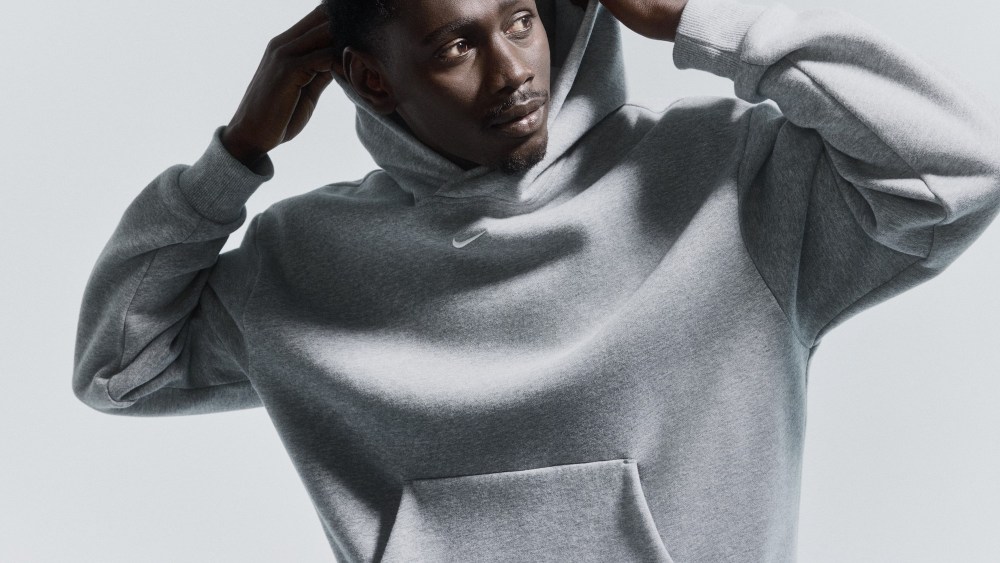
Other top brands position themselves within the convergence of performance sportswear and fashion lifestyle, including athleisure wear. Sportswear leaders such as Nike, Adidas and Puma and specialty performance and outdoor apparel brands like Lululemon and Amer Sports (parent of Arc’teryx and Salomon) have successfully blurred the line between athletic performance and everyday lifestyle.
These top-tier brands find success by controlling the customer experience via owned retail stores and e-commerce to maximize gross margins and capture customer data. These brands also sit in the technical apparel space, which continues to capture higher margins as consumers increasingly prioritize comfort, wellness and functional outdoor fashion.
In the luxury segment, single-brand strategy is increasingly rare among the top tiers. Conglomerates such as LVMH (Louis Vuitton, Dior, Tiffany & Co.), Kering (Gucci, Saint Laurent), Tapestry (Coach, Kate Spade), V.F. Corp (The North Face, Vans) and ANTA Sports leverage shared back-office infrastructure and centralized supply chains as well as global real estate scale to lower costs while preserving individual brand identity.
Many of the luxury brands succeed because they have the ability to raise prices without reducing consumer demand, thereby maintaining high desire and exclusivity.
Also topping the list are companies with stout vertical integrations and ones focused on contract manufacturing. This includes upstream manufacturing giants like Yue Yuen Industrial and Pou Chen Corporation, which is the world’s largest footwear contract manufacturer. These companies power the retail operations of Nike, Adidas, Puma and Timberland from behind the scenes.
Downstream retail and precious metals leaders such as Lao Feng Xiang, China National Gold Group and Titan Company benefit from vertically integrated manufacturing-to-retail networks in massive domestic markets such as China and India.
Another key to their domination is supply chain bargaining power. The top 20 companies on the list dictate terms to suppliers and logistics networks, which enables them to achieve lower cost-per-unit metrics and better working capital cycles as well as faster go-to-market speed than smaller peers.
Top 100 Publicly-Traded Textiles, Apparel and Luxury Companies (ranked by annual revenue)
Company Name: Revenue (in $US millions)
- LVMH Moët Hennessy — $92,161.3M
- Christian Dior SE* — $92,161.3M
- Rajesh Exports Limited** — $82,579.2M
- Nike, Inc. — $46,523.0M
- Adidas AG — $28,797.9M
- Compagnie Financière Richemont SA — $25,570.3M
- Hermès International Société en commandite par actions — $18,250.5M
- Kering SA — $16,737.0M
- ANTA Sports Products Limited — $11,792.6M
- Lululemon Athletica Inc. — $11,203.5M
- China National Gold Group Gold Jewellery Co., Ltd. — $10,902.4M
- V.F. Corporation — $9,605.2M
- Titan Company Limited — $9,284.6M
- PVH Corp. — $8,991.7M
- Puma SE — $8,177.7M
- Ralph Lauren Corporation — $8,114.5M
- Yue Yuen Industrial (Holdings) Limited — $7,987.2M
- Tapestry, Inc. — $7,850.8M
- The Swatch Group AG — $7,770.3M
- Pou Chen Corporation — $7,763.5M
- Lao Feng Xiang Co., Ltd. — $7,209.7M
- Amer Sports, Inc. — $7,039.2M
- Prada S.p.A. — $6,520.9M
- Levi Strauss & Co. — $6,497.7M
- LPP SA — $6,285.8M
- Deckers Outdoor Corporation — $5,472.3M
- ASICS Corporation — $5,399.3M
- Under Armour, Inc. — $4,966.4M
- Pandora A/S — $4,930.2M
- Hugo Boss AG — $4,762.6M
- Shenzhou International Group Holdings Limited — $4,556.2M
- Li Ning Company Limited — $4,351.1M
- Gildan Activewear Inc. — $4,073.5M
- Crocs, Inc. — $4,024.8M
- Laopu Gold Co., Ltd. — $4,013.7M
- On Holding AG — $3,859.5M
- Bosideng International Holdings Limited — $3,825.8M
- Kalyan Jewellers India Limited — $3,789.0M
- Moncler S.p.A. — $3,572.2M
- Samsonite Group S.A. — $3,530.1M
- Huali Industrial Group Company Limited — $3,519.5M
- Capri Holdings Limited — $3,474.0M
- Columbia Sportswear Company — $3,397.9M
- Kontoor Brands, Inc. — $3,342.8M
- Texhong International Group Limited — $3,339.3M
- PT Hartadinata Abadi Tbk — $3,246.4M
- Youngone Holdings Co., Ltd. — $3,239.4M
- Burberry Group plc — $3,198.3M
- Mokingran Jewellery Group Co., Ltd. — $3,044.4M
- Carter’s, Inc. — $2,949.7M
- Misto Holdings Corp. — $2,947.4M
- Jiangsu Sanfame Polyester Material Co., Ltd. — $2,922.0M
- G-III Apparel Group, Ltd. — $2,909.4M
- Chow Sang Sang Holdings International Limited — $2,862.3M
- Youngone Corporation — $2,704.7M
- Billion Industrial Holdings Limited — $2,653.3M
- Crystal International Group Limited — $2,641.2M
- Steven Madden, Ltd. — $2,633.7M
- Feng Tay Enterprises Co., Ltd. — $2,573.3M
- Birkenstock Holding plc — $2,488.2M
- Zhejiang Semir Garment Co., Ltd. — $2,272.7M
- Azzas 2154 S.A. — $2,246.2M
- Hansae Yes24 Holdings Co., Ltd — $2,228.8M
- Delta Galil Industries Ltd. — $2,193.2M
- Ermenegildo Zegna N.V. — $2,186.3M
- Xtep International Holdings Limited. — $2,080.3M
- OVS S.p.A. — $2,078.9M
- Seiko Group Corporation — $2,076.5M
- Kingold Jewelry, Inc. — $2,065.5M
- Guararapes Confecções S.A. — $2,054.9M
- Wolverine World Wide, Inc. — $1,919.6
- 361 Degrees International Limited — $1,638.5M
- Phu Nhuan Jewelry Joint Stock Company — $1,620.7M
- Brunello Cucinelli S.p.A. — $1,605.8M
- Stella International Holdings Limited — $1,570.2M
- Oxford Industries, Inc. — $1,476.4M
- Coats Group plc — $1,464.9M
- Onward Holdings Co., Ltd. — $1,464.8M
- Zhejiang Hangmin Co., Ltd — $1,443.60
- Guangdong Chj Industry Co., Ltd. — $1,406.0M
- PDS Limited — $1,389.8M
- Viva Goods Company Limited — $1,313.4M
- F&F Co., Ltd — $1,297.1M
- F&F Holdings Co., Ltd. — $1,296.9M
- Hansae Co., Ltd. — $1,266.1M
- LF Corp. — $1,248.1M
- Eclat Textile Co., Ltd. — $1,199.6M
- Bros Eastern Ltd — $1,193.3M
- Chow Tai Seng Jewellery Co., Ltd. — $1,190.1M
- Huafu Fashion Co., Ltd. — $1,161.1M
- Lai Yih Footwear Co., Ltd. — $1,160.5M
- Safilo Group S.p.A. — $1,121.6M
- Shijiazhuang ChangShan BeiMing Technology Co. Ltd. — $1,119.5M
- Salvatore Ferragamo S.p.A. — $1,113.7M
- HWASEUNG Industries Co. Ltd. — $1,110.9M
- Canada Goose Holdings Inc. — $1,077.1M
- Wacoal Holdings Corp. — $1,060.9M
- Makalot Industrial Co., Ltd. — $1,047.9M
- Vardhman Textiles Limited — $1,046.2M
- New Wave Group AB. — $1,046.2M
Total $731,545.5M
Source: S&P Capital IQ, July 30, 2026
*Christian Dior SE and LVMH have the same annual sales because Christian Dior SE’s consolidated financial results are entirely dependent on LVMH’s performance. Because LVMH wholly owns Dior Couture (the fashion house) and Dior SE owns the majority of LVMH, their consolidated corporate reports generate identical revenue figures.
**In June 2026, the Securities and Exchange Board of India (SEBI) issued an interim order against Rajesh Exports and Rajesh Mehta, its chairman. The board cited alleged massive financial misrepresentation and diversion of funds. SEBI’s investigation claims the company overstated its consolidated revenue, largely attributing the inflated figures to unverified overseas entities and a Swiss subsidiary, Valcambi. Rajesh Exports denied these allegations of wrongdoing and said the discrepancies pointed out by SEBI misinterpret their consolidated global revenue and basic value additions.