
Trade negotiations between the United States and Canada continued Wednesday in the wake of President Donald Trump’s announcement that 50 percent duties on America’s neighbor to the north would be suspended for three days in pursuit of a final deal.
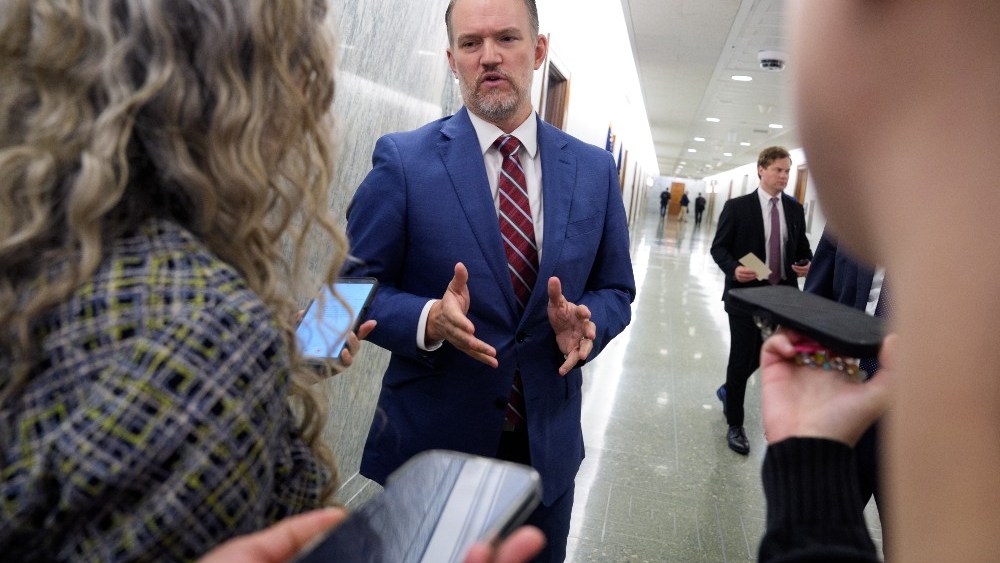
After another round of talks between U.S. Trade Representative Ambassador Jamieson Greer and Canadian trade minister for U.S. relations Dominic LeBlanc concluded in Washington, D.C., Wednesday afternoon, Greer told reporters, “We’re very happy with where we ended up.”
Greer said U.S. government agencies including the Departments of Commerce and Treasury, along with the USTR and the White House, had been in close communication, and that Trump had had “a number of phone calls” with Canadian Prime Minister Mark Carney.
As to where the talks stand, Greer indicated that a consensus between the countries had been reached. “We’re looking at documentation at this point,” he said, though he indicated that he intends to brief Congress on the contents of the deal before revealing its details publicly.
The USTR chief said he had spoken with American stakeholders about the terms, including businesses and unions, adding, “We feel confident that we’ve reached an agreement that will not only continue to protect American workers, American jobs, American supply chains, but really strengthen the North American economy and create a situation where North America will continue to be an energy powerhouse, a manufacturing powerhouse, and align on important things like economic security and digital security.”
“So while we certainly, I think, have eliminated some of the irritants that we’ve had over the past year, we also are taking a strong foot forward,” he added.
LeBlanc was also tight-lipped on the prospective terms of the bilateral trade arrangement, but he noted that he was “very confident in these discussions” as they related to the question of “supply management.”
Though he didn’t elaborate, the sectors at the center of the discussions have included autos and auto parts—both American and Canadian—dairy (Canada maintains strict import quotas and duties on U.S. imports) and spirits originating in the U.S. market. The sale of U.S. alcohol has been constrained over the past year, with all but two Canadian provinces pulling products from store shelves.
In an uncharacteristic show of restraint, Trump also refrained from spilling the beans on the deal’s contents. “Our farmers are going to be thrilled; our manufacturers are going to be thrilled,” he said during a Wednesday press conference. “And basically, we have no tariffs going into Canada anymore.”
“Canada entered these discussions with the best overall trade terms,” Carney wrote on X after the Wednesday meetings adjourned. “We are now moving towards an agreement that reinforces that Canadian advantage, including by securing the best terms in each of Canada’s most important strategic sectors and providing greater certainty about our future trading relationship.”
Wednesday afternoon came and went without confirmation of any concessions, however, Bloomberg reported that the Trump administration plans to slash duties on Canadian cars from 25 percent to 15 percent as a part of the deal, citing sources familiar with the negotiations. Trump seemed to confirm that some movement on auto tariffs would take place, telling reporters, “They were paying a high number. We’re reducing it a little bit.”
Meanwhile, the Wall Street Journal wrote that the U.S. aims to lower tariffs on steel and aluminum, imposed last year under Section 232 under the Trade Expansion Act of 1962, from 50 percent to 25 percent. The statute allows the president to impose import restrictions when the Commerce Secretary stipulates that certain imports threaten national security.
Most importantly, though, the threat of 50 percent duties, which were to be levied under Section 338 of the Tariff Act of 1830, appear to be off the table. Under the statute, the president aimed to address what he viewed as discriminatory trade policies by Canada that he said impact U.S. exporters over their global competitors.
According to Canadian outlet CBC News, Saskatchewan Premier Scott Moe told reporters after a briefing with Carney on Wednesday that the Section 338 tariff action, which would impact about 5 percent, or $30 billion, in Canadian exports, “is not coming into effect.”