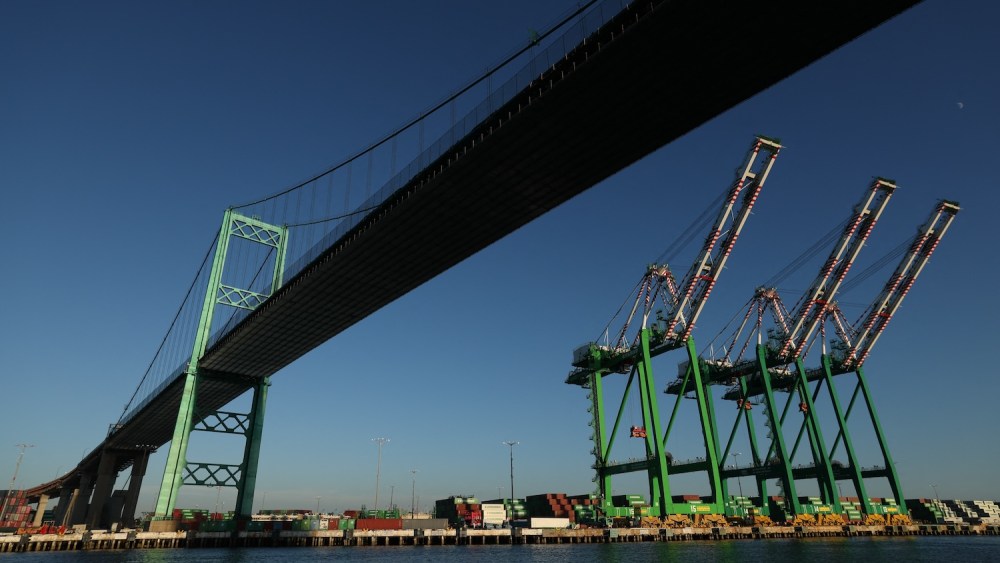
The Office of the U.S. Trade Representative (USTR) proposed an extension of the suspension of port calling fees on Chinese-linked vessels through Jan. 9, putting into writing the two-month reprieve that had been up in the air since the U.S. and China agreed last month to extend their trade truce into January.
Under a notice filed Friday and published Monday in the Federal Register, USTR indicated it proposed to further pause the responsive actions that resulted from its Section 301 investigation into China’s “unreasonable” dominance of the maritime, logistics and shipbuilding sectors.
The proposal would replace a Nov. 9 expiration that had remained in place even after Treasury Secretary Scott Bessent announced on Sept. 23 that the two countries had agreed to prolong their economic détente—first reached last October in Busan, South Korea—until Jan. 10.
USTR has given interested parties until 5 p.m. Eastern on Friday to comment through its portal.
During the office’s proposed suspension period, no party would accrue liability for or be required to pay the fees on maritime transport services via Chinese operators and Chinese-owned vessels, Chinese-built vessels and foreign-built vehicle carriers.
The pause would also continue to cover the duties on ship-to-shore cranes and other cargo-handling equipment set out in the October 2025 modification.
The fees had targeted cranes that were manufactured, assembled or made using components of Chinese origin, or manufactured anywhere in the world by a company owned, controlled or “substantially influenced” by a Chinese national, USTR said.
The USTR first imposed the port docking fees on Oct. 14, 2025, which remained in effect for less than four weeks. The fees effectively were suspended for one year beginning Nov. 10, 2025.
Cosco Shipping and its subsidiary Orient Overseas Container Line (OOCL) were the carriers hit hardest during that brief window, racking up nearly $43 million in fees in the first week alone, a pace that pointed to more than $2 billion over a full year for the two lines.
China had implemented countermeasures against American ships at its ports during the period, opening its own probe into the U.S. Section 301 investigation. Those fees were also short lived, with the country suspending the retaliatory fees upon the U.S. suspension last November.
As of Monday, Beijing has not yet published a parallel move, and China’s Ministry of Transport has issued no announcement as to whether it would extend its one-year suspension.
Matson is the American container shipping line most exposed to China’s reciprocal fees, having paid $6.4 million in Chinese port fees in late 2025.
Sourcing Journal reached out to the Honolulu-headquartered ocean carrier.
Another U.S.-based ocean carrier, Atlantic Container Line (ACL), is among the operators preparing to file in the comment period, according to reporting by independent shipping journalist Lori Ann LaRocco. The carrier will join a joint association comment urging USTR to delay the fees beyond Jan. 9 or suspend them permanently.
Ironically, ACL would be more impacted by the U.S.-levied fees than any China-imposed ones since the USTR reclassified all its China-built ships as roll-on/roll-off “ro-ro” vehicle carriers. Before last year’s update to the Section 301 program, the vessels, which carry 80 percent shipping containers, were considered container ships.
The reclassification would cost ACL an estimated $34 million per year in port fees, which company CEO Andy Abbott said had spooked customers.
More than 200 trade associations including the National Retail Federation (NRF), American Apparel & Footwear Association (AAFA), Footwear Distributors & Retailers of America (FDRA) and the World Shipping Council (WSC) had already urged USTR to extend the suspension, with the groups having urged the government to push back any resumption of port fees.
The associations had warned that the additional fees would layer new surcharges onto landed costs for importers and exporters alike.
“The costs would ripple across shipping networks, affect vessel deployment decisions and increase uncertainty for businesses,” the Sept. 23 letter to USTR Ambassador Jamieson Greer read.
USTR has not said in the suspension notices which scheduled fee tier would apply on resumption, so that rate step remains to be confirmed.
If the fees return in January, the published schedule points to higher rates than carriers paid last fall, with $80 per net ton listed for vessels owned or operated by Chinese entities for entries from April 17, 2026, up from $50 in October 2025, and $23 per net ton or $153 per container discharged for Chinese-built vessels operated by other carriers, up from $18 or $120.
The proposal also arrives over the opposition of lawmakers who have pressed the Trump administration to let the fees take effect, including Sens. Elizabeth Warren (D-Mass.) and Mark Kelly (D-Ariz.), who urged Greer in June to reinstate the charges and commit to keeping them in place.