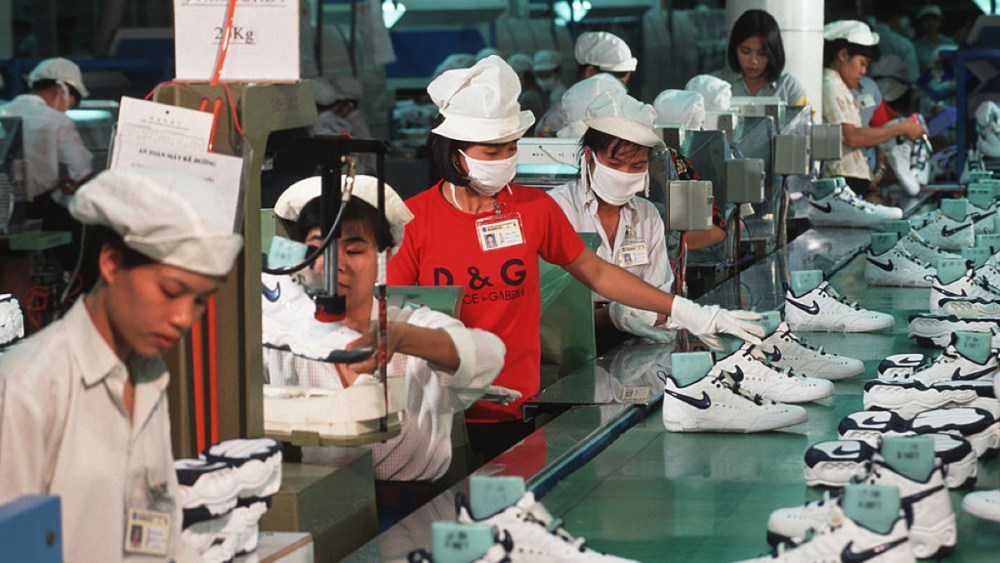
Vietnam, the go-to sneaker production hub, is now facing a tough scrutiny of its intellectual property (IP) practices.
The U.S. Trade Representative’s Special 301 report for 2026 adds Vietnam to its list as a Priority Foreign Country, representing the first time in 13 years that any country has been added to the list. In other changes, Argentina and Mexico were removed from the Priority Watch List to the Watch List because of improvements on IP policy. The European Union was added to the Watch List, while Bulgaria was removed.
The Special 301 Report, released on Thursday, is about the adequacy and effectiveness of U.S. trading partners’ protection and enforcement of IP rights.
“Using all the enforcement tools we have to address unfair trade practices is a top priority,” Ambassador Jamieson Greer, the U.S. Trade Representative, said. “We have rigorously reviewed our trading partners’ IP practices and expect to take action where needed to protect American innovators and creators globally.”
“American innovators, creators, and brand owners rely on robust IP protection and enforcement,” said Ambassador Rick Switzer, Deputy U.S. Trade Representative. “USTR will continue to press our trading partners to resolve trade barriers with respect to IP in their markets through our negotiations for Agreements on Reciprocal Trade and other engagements.”
The U.S.T.R. said as a result of Vietnam’s identification as a Priority Foreign Country, USTR will determine within 30 days whether an investigation required under Section 301 of the Trade Act of 1974, and if so, the USTR will request consultations with Vietnam and seek to resolve the issues that led to Vietnam’s identification as a Priority Foreign Country.
Matt Priest, president and CEO of Footwear Distributors and Retailers of America (FDRA), said: “Footwear and athletic brands rely on Vietnam as a critical, trusted part of the global supply chain that serves American consumers. Today’s designation of Vietnam as a ‘Priority Foreign Country’ in the Special 301 report is a deeply concerning step — one that risks driving up costs for Americans and making counterfeiting and IP enforcement challenges worse rather than better.”
Priest said that for years, U.S. policy has encouraged firms to diversify their sourcing away from China, and many brands did that by investing in Vietnam and other countries to build resilient supply chains. “Targeting those same partners now creates a whack-a-mole policy environment that raises costs, disrupts planning, and risks pushing production decisions in the wrong direction,” the FDRA president said.
And while he acknowledged that strong IP protections matter, the USTR should “use the consultation period to pursue constructive, workable approaches with Vietnam rather than higher taxes on American companies in the name of protecting intellectual property”
Vietnam has become the go-to country for the production of athletic performance shoes. Firms such as On Holding AG pay about 40 percent in duties for U.S. imports from Vietnam for its sneakers. Duties on Indonesian imports are at 39 percent.
Last year, Vietnam footwear exports dropped 27.3 percent in September amid tariff turmoil that began in April after U.S. President Donald Trump disclosed plans for reciprocal tariffs. The country accounts for about 25 percent of shoe manufacturing. And it isn’t just shoe production that’s in Vietnam. OrthoLite, the maker of insoles, last November opened a new facility in the Ninh Binh province in North Vietnam. The move by the premium insole maker is based on a plan to localize the entire product creation process from end-to-end, while also “strengthening the company’s production capabilities” to better support its regional and global brand partners. OrthoLite North Vietnam is led by country manager Michael Hsu. OrthoLite also has its Cirql operation, a newly developed proprietary foam technology targeting the midsole market that’s still in its early stages of development.