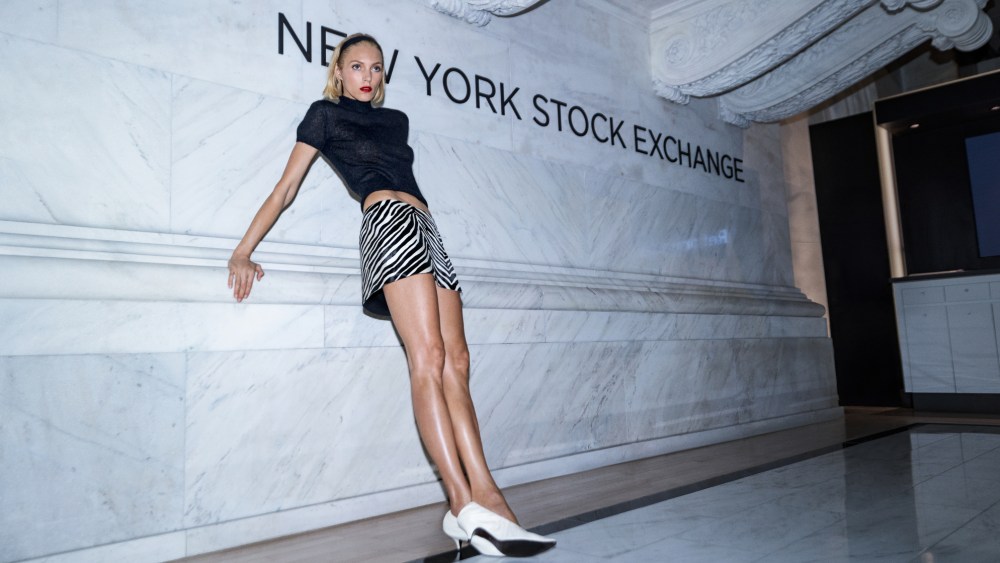
Wall Street is getting some fresh fashion faces.
Reformation made its debut last month, raising a total of $211 million, including $69 million for investors, like its private equity backer Permira.
Menswear specialist Tailored Brands Inc. is looking to complete its own offering soon and Jamie Salter, founder of brand management giant Authentic Brands Group, is eyeing an IPO in the near future. Other fashion possibilities are Alo, Kim Kardashian’s Skims and the luxury essentials firm Quince.
Elon Musk brought the IPO back into vogue this year, raising $75 billion for SpaceX — more than all the money raised in U.S. offerings for 2024 and 2025 combined, according to Renaissance Capital.
You May Also Like
Being a public company can be a very good thing. It makes brands much more visible, offers new avenues to raise money and a ready currency — the publicly traded stock — to pay executives or cut deals.
But it also puts companies on a treadmill of quarterly results and exposes them to the second-by-second whims of traders, which can distort how the business is managed, emphasizing short-term gains over long-term strategy.
The big benefit of going public is really that the investors who owned the business as a private company get to cash out and it looks like more backers will be cashing out soon, perhaps in the fall.
But if these fashion companies are coming into the market only because the getting is good, it could leave them exposed to a world of outrageous expectations from investors who have grown used to AI-sized gains.
David Kelly, chief global strategist at J.P. Morgan, said in a market analysis this month that: “Analyst expectations for earnings have been bolstered by spectacular recent results and forecasts of very strong capital spending by major tech firms in the years ahead. At some stage at least some of these tech firms will disappoint and perhaps cut capital spending as well as write off some of the value of past investments.
“With the latest stock market surge, we estimate that the market value of all U.S. corporate equity is now over 400 percent of GDP,” Kelly said. “This compares to 244 percent just before the pandemic, 204 percent at the peak of the dot-com bubble and 74 percent before the 1987 stock market crash.
“In the end, the value of American corporations depends to a large extent on the work and spending of the American people,” he said. “While productivity gains could lift all boats, stock prices are unlikely to continue to soar unless the fortunes of American consumers and American workers see broader improvement.”