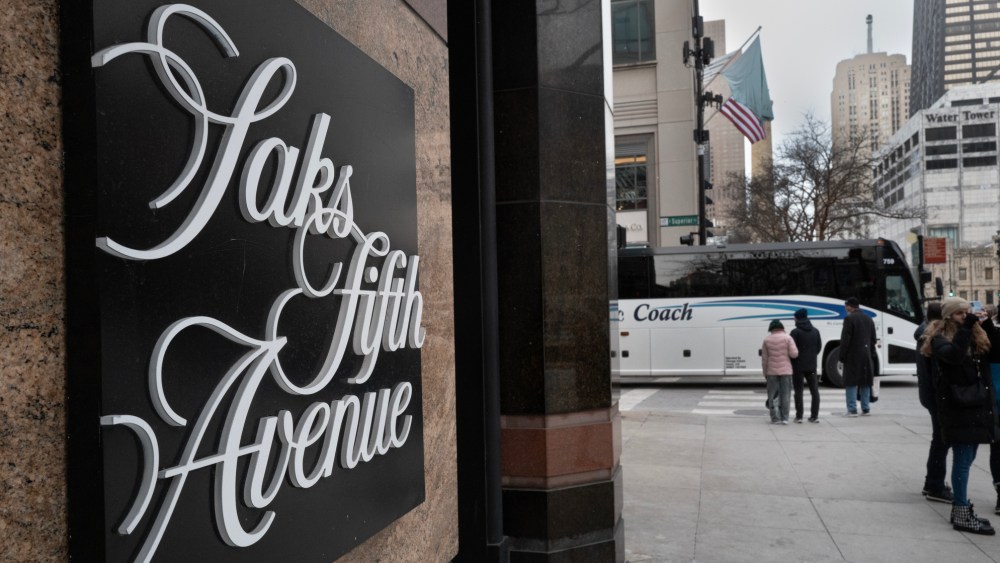
There was no end to the grief Saks Global got as it slunk into bankruptcy in January.
Brands large and small complained for over a year about the late, incomplete or totally absent payment of invoices that were not just past due, but nearly prehistoric.
The company is now wanting to put all of that behind it as it charges ahead with a fresh management team, a new plan and a trimmer business — but there was a flip side to the steady drumbeat about the luxury mainstay not paying its bills.
As Saks Global struggled against insolvency, it was paying out a lot of money — $1.4 billion to creditors in the three months before the filing, according to court documents in the bankruptcy.
You May Also Like
That money went to the partners that were most immediately positioned to help the retailer keep the doors open and the lights on at Saks Fifth Avenue, Neiman Marcus and Bergdorf Goodman.

On paper at least, the biggest share by far went to Bank of America as agent on the company’s asset-backed loan agreement. The bank received $565.5 million over the three months, but companies routinely pay down and then borrow daily from such revolving facilities.
If Saks Global stopped keeping up with its bank, the whole thing would have gone south much quicker.
But while independent vendors, including big name designers with relatively small businesses, scrimped and saved and struggled to get by without, Saks Global found the money to pay brands at the tippy top of the fashion pyramid.
Still, the money only went so far.
Chanel Inc., for instance, received $50.5 million in the runup to the bankruptcy, owing to its very large business with the company. Even that wasn’t enough to make them whole and when the retailer did file, Chanel ranked as the largest unsecured creditor, owed over $136 million.
The key digital on-ramps to the consumer’s shopping journey also got their money, with Google receiving $39.4 million and Facebook parent Meta getting $8.4 million.
And 754 Fifth Avenue Associates received $7.2 million in rent for the Bergdorf Goodman building.
That financial snapshot of three months’ worth of Saks Global’s outflows to creditors paints a picture of a company that, yes, had significant resources at its disposal, but just not enough to go around.
The former iteration of Saks Global got into its mess in late 2024 when it bought Neiman Marcus Group for $2.7 billion. That led to big plans to reset luxury department store retailing and also big interest payments on the debt raised to close that deal. The synergies were there and Saks Global saved some $300 million as it merged Neiman’s with Saks Fifth Avenue. But, as the court documents show, there was also a lot of money going out the door.
Vendors remained wary and the company was ultimately starved of inventory.
And, it turns out that going into bankruptcy is in and of itself an expensive affair.
The Saks Global court documents also detailed $87.7 million in bankruptcy related expenses — including a total of $32.2 million paid to law firm Willkie Farr & Gallagher starting in June.