It’s hardly a coincidence that Chanel, Louis Vuitton, Dior and Gucci have all revealed plans to stage big destination fashion shows in the United States.
“This is a concerted industry effort to show love and bring education to American consumers,” said Luca Solca, luxury analyst at Bernstein. “For many years America has been second priority behind China. It seems clear that — for many reasons — this has changed: a more balanced nationality mix is bound to reduce geopolitical risk, a priority in a less globalized world.
“The USA is a promising market, with material and unexploited wealth reservoirs,” he added.
You May Also Like
Solca was asked to respond to the flurry of announcements last week by three of Europe’s biggest luxury brands that they would bring their cruise 2027 runways to America. Louis Vuitton and Gucci are heading to New York City next May, while Dior opted for Los Angeles.
Meanwhile, Chanel’s latest Metiers d’Art show — the first by new creative director Matthieu Blazy — is scheduled for Tuesday in New York City.
In addition, Moncler Grenoble plans to unveil its fall 2026 collection in Aspen on Jan. 31 representing the first American ski destination show for the Italian brand.
Third-quarter results from Europe’s big luxury players saw organic growth in the U.S. outshine other geographies: up 14.1 percent at Hermès International and 3 percent at LVMH Moët Hennessy Louis Vuitton. At Kering, spending by U.S. customers was almost flat during the period, versus a 10 percent decline in Asia-Pacific.
“Right now, we’re in a setup in the U.S. which is a lot more favorable,” Erwan Rambourg, luxury analyst at HSBC, said recently at an exclusive executive breakfast at the Hôtel de Crillon in Paris put together by luxury adviser Morin Oluwole.
“Despite all the fears some observers might be getting from looking at the headlines, the reality of what counts for luxury in the U.S. — equity markets — is quite supportive right now. For how long, I don’t know, but at least that’s shifted positively over the past six months, whereas the macro in China has not, frankly, improved as significantly,” Rambourg said.
HSBC has long cited the U.S. as an “emerging market for luxury” and Rambourg now sees luxury as “part of the culture.”
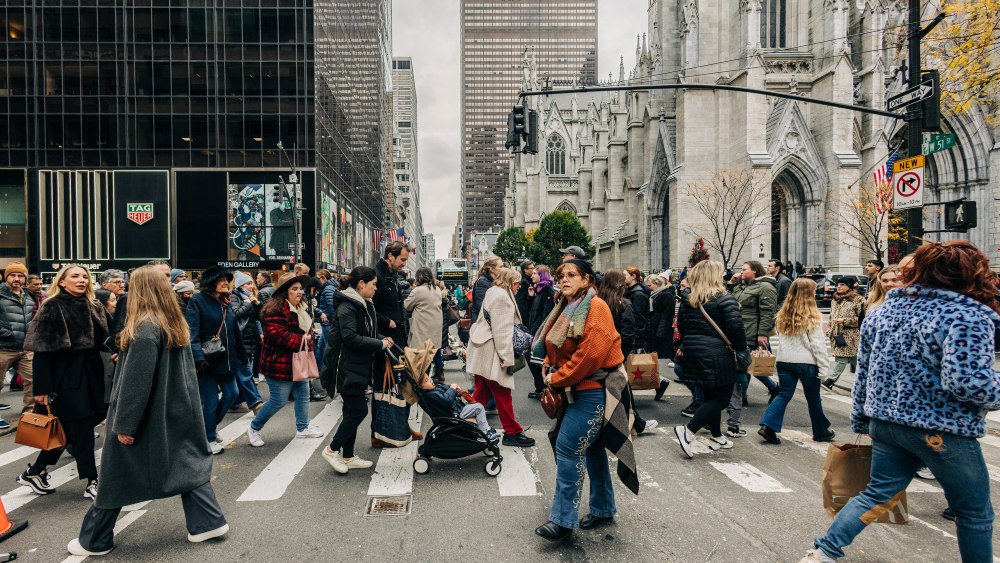
“When I moved to New York 10 years ago, pre-COVID, no one really had an interest or a knowledge of luxury. You go to New York today, every single Decaux outdoor advertisement on Fifth Avenue between the Empire State Building [on 34th Street] and Central Park [on 59th Street] is only luxury.”
Also about a decade ago, luxury brands tended to select exotic locations like Havana, Mexico City or Rio de Janeiro to stage cruise shows, but that was when they were courting press and wholesale clients.
“Now the focus is really towards acquiring VICs and driving that relationship,” said Robert Burke, principal of the fashion, retail and hospitality consultancy Robert Burke Associates. “The brands have realized that at the luxury level, acquiring a few VICs can make a significant difference in their business, and so the VICs are more important than ever before.”
Burke noted that European brands “really resonate with the U.S. consumer, especially the luxury consumer.”
In addition, many European brands have recently invested significantly in new stores in the U.S., Burke added.
Dior, for example, opened flagships in New York and Los Angeles this year. Meanwhile, Moncler plans to open its biggest flagship in the world on New York’s Fifth Avenue in early 2026.
“Brands have come to the realization that it is a quite under-penetrated market,” said Jean Revis, cofounder of Paris-based luxury consultancy MAD, noting that the GDP per capita is double that of France, and the U.S. shelters wealth in a wide swath of cities, including Nashville, where Hermès recently opened a boutique.

Indeed, given that fixed operating costs in big cities are extremely high, they drop dramatically in secondary cities, “making the stores in these cities potentially accretive in terms of EBIT,” Revis said. “There is therefore an interest for the brands to continue to reasonably grow their geographical footprint in the U.S. beyond the ‘usual suspect’ cities.”
HSBC’s Rambourg concurred: “One of the most profitable luxury shopping locations on the planet, and at least in the U.S., is Austin. Why? Because your staff costs are low, your rents are reasonable, but people have substantial financial means and they’ve started to discover your brand. So you do make a lot of money in so-called ‘flyover’ states, and there is a lot of recruitment.”
According to Bernstein’s Solca, there is a need for the luxury industry to cultivate the American market through varied means, including store openings, marketing budgets and events.
“Fashion shows are the luxury and fashion industry events par excellence — even if just cruise shows in this case, short of the main shows, which still need to be where the brand’s heart and origins are,” he noted.
In its recent RBC Luxury Datawatch on the U.S. market, the bank cited “increasing signs of demand bifurcation between low- and high-income demographics, and across categories where recent share price performance and our discussions with investors are pointing to elevating concerns around segments including sportswear and perhaps less concerns around higher price/higher income demographic segments such as luxury, which is broadly consistent with our qualitative risk assessment.”
RBC sees higher risks in North America for sporting goods brands such as Adidas, Nike and Puma, and lower risk for Brunello Cucinelli, Richemont, Hermès and Moncler.
“By category, higher price point categories (luxury and premium eyewear) appear to be holding up better than consumer staples and casual fast-food segments,” the study said.
North America accounts for 22 percent of luxury goods sales on average and 33 percent of sporting goods sales, according to RBC. EssilorLuxottica, Nike, Watches of Switzerland Group and Dr Martens PLC have the highest U.S. exposure (42 to 46 percent) and Swatch, Hermès and Moncler have the lowest (13 to 17 percent).
The strength of the American customer and their spending drive are also felt in Europe, according to Pier Francesco Nervini, chief operating officer, North & Central Europe & Global Accounts at Global Blue.
“We have registered a spending boom by Americans, becoming the first nationality in tax-free spending,” Nervini said during a recent Altagamma conference in Milan. “Between January and September, their spending rose 5 percent compared to the same period last year.”
Although Americans are generally and usually sensitive to the depreciation of the dollar, this “did not represent an obstacle and was not a significant element” in the period, he added.
The strength of the U.S. market for luxury continues even as there are growing concerns over the macroeconomic situation in the country. The Trump administration’s tariffs policy is feeding rising inflation, there are worries over the jobs market, and lower-income consumers are reining in spending.
However, the buoyant stock market — driven by the billions being invested by technology firms in artificial intelligence — is enabling higher-income consumers to continue to spend. As reported, Altagamma’s 2026 consensus states that luxury sales in North America are expected to grow 4.5 percent, with an increasing number of high-net-worth individuals.