Worldly wants to turn compliance from a reactive, spreadsheet-based chore into a strategic business function—and the comprehensive impact platform provider is using artificial intelligence to do it.
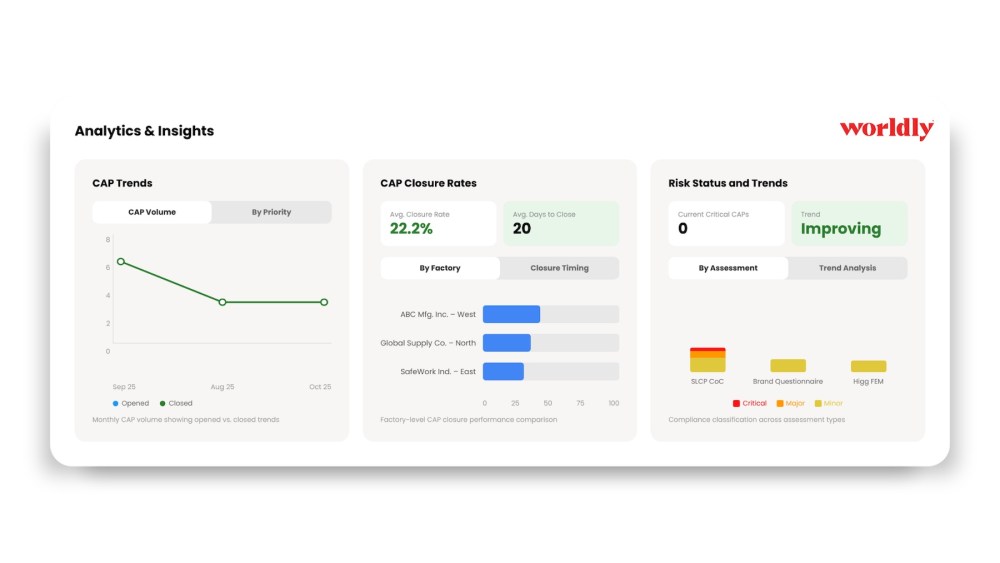
The San Francisco-based company has introduced Supplier Compliance Management: Worldly’s new AI-powered tool that consolidates supplier audit data to help consumer goods brands manage and address risks across global value chains. The platform uses AI to gather third-party audits, assessments and data from the Higg Facility Social & Labor Module (FSLM), then aligns said findings with brands’ codes of conduct and global standards and frameworks.
“Supplier Compliance Management [is] something compliance teams have never had before: a single system that connects what audits find to what a brand’s own standards require, and tracks whether conditions are actually improving,” said Kathryn Smith, Worldly’s vice president of human rights risk solutions. “That’s not incremental. It changes how compliance programs operate.”
By design, the platform should reduce suppliers’ duplicative audits tied to overlapping brand requests. The company claimed that manufacturers can spend some 200-plus days a year undergoing audits—an amount of time likely to limit their ability to focus on remediation. Worldy’s system, then, builds on a network of more than 40,000 facilities that submit primary data, positioning compliance as a more centralized, trackable function rather than a reactive one tied to individual audits.
Italian clothing retailer OVS noted that centralizing this data provides a “clearer picture” of risks that were previously buried in disconnected reports.
“Managing compliance across our supplier base used to mean reconciling data from multiple audit frameworks and spreadsheets, then mapping them back to our Code of Conduct manually,” said Simone Colombo, head of corporate sustainability at OVS. “Worldly’s Supplier Compliance Management brings everything together in one place, giving us a much clearer picture of where risks exist and what is being done to address them—and saving us an enormous amount of time.”
Worldly’s platform is meant to pull that into a single system: covering audits, corrective actions and ongoing tracking. In tandem, the tool standardizes how issues are classified and scored while “structuring oversight of corrective action plans,” too.
Industry groups like the Social & Labor Convergence Program (SLCP) noted that the tool makes assessment data more actionable—particularly as regulatory levers are pulled and stakeholder expectations continue to climb.
“Companies already receive deep insights from an SLCP assessment on the Worldly platform, but we often hear that they require support to translate the granular SLCP data into clear, action-oriented decisions and next steps,” said Janet Mensink, CEO of the Amsterdam-based multi-stakeholder initiative.
“By launching Supplier Compliance Management, Worldly is closing that gap and providing the tools to move from simply viewing data to driving real, measurable improvements on the ground. It’s a clear example of how social assessments like the Converged Assessment Framework can be used for impactful improvements to working conditions.”