
YKK Corporation and Epson have joined forces to address circularity in non-woven materials.
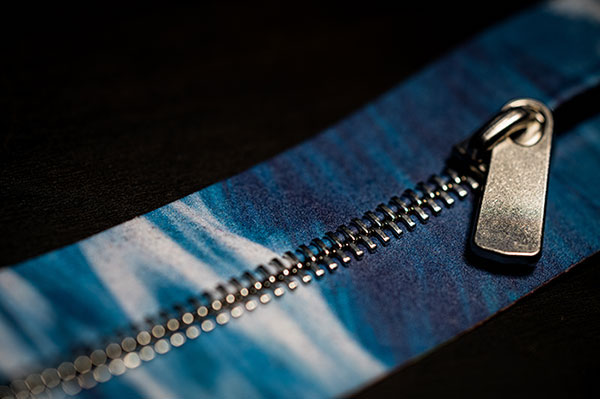
The company’s latest development project takes sheets of non-woven fabric created by recycling used clothing and other textile materials using Epson’s Dry Fiber Technology and uses them as zipper tape for the first time.
The concept zipper was incorporated as a material component for pieces in the newest Yuima Nakazat Couture Collection, called Inferno, which was unveiled last week during Paris Haute Couture Week.
The product is part of the Japanese zipper manufacturer’s premium Excella zipper series. Excella uses the highest-grade metal zippers with carefully polished elements, providing a luxurious touch for apparel and handbags.
“Sharing a common awareness of the challenges surrounding textile circularity, YKK joined the project in support of its vision of creating new value through the upcycling of clothing and materials that would otherwise go unused,” the company stated.
Epson’s Dry Fiber Technology produces highly functional materials by defibrating, binding and forming fibrous material in a waterless process. The process was originally commercialized for paper recycling, but beginning in January 2023, Epson started using it to convert used garments and mill ends into fibers from which new non-woven fabric sheets could be produced. In 2024, the company partnered with The Hong Kong Research Institute of Textiles and Apparel Limited to adapt Dry Fiber Technology for defibrating hard-to-recycle fabrics.
For the Excella zipper, since conventional methods were difficult to apply to the non-woven materials, YKK and Epson said they conducted extensive studies to ensure quality. Epson and YKK worked together to evaluate and optimize the strength, flexibility and thickness required for zipper applications. They also selected a slider with a structure suited to the rigidity of the non-woven tape, improving the zipper’s ease of use.
The circular material aligns with YKK’s 2050 sustainability mission. The company’s Natulon Fiber Sourced zipper, which uses recycled polyester made from textile waste and discarded clothing in the zipper tape, is one example of how the firm is advancing circular economy. YKK aims to transition to 100 percent sustainable textile materials, such as recycled and plant-derived materials, by 2030.