BEIJING — After a life-size cruise ship in Shanghai and an experimental flagship in Seoul, Louis Vuitton‘s latest statement retail project has officially landed in Beijing, at the city’s newly revamped Taikoo Li Sanlitun retail destination.
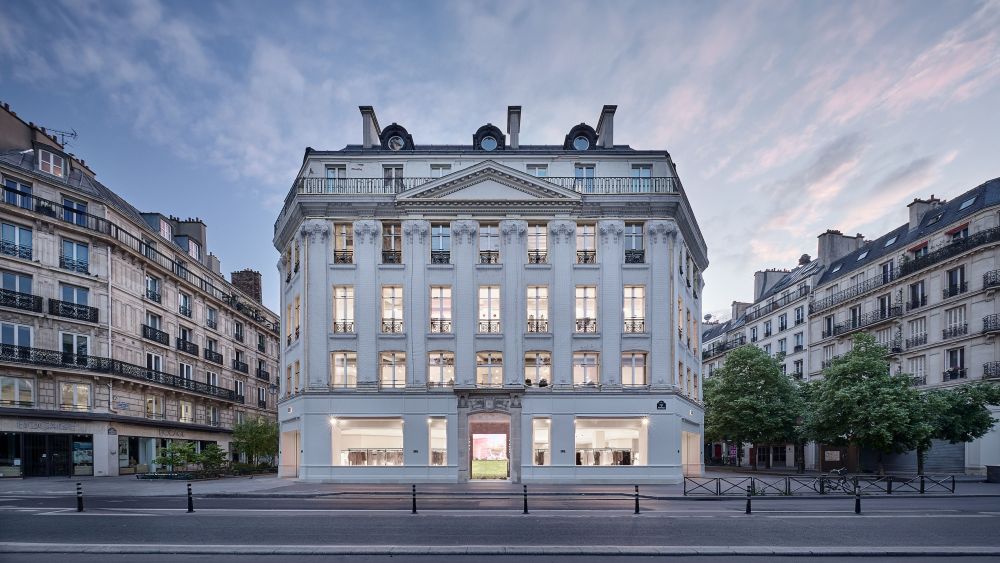
The four-story Maison Louis Vuitton Sanlitun features a glistening facade that plays with form, light, and movement. It was designed by Japanese architect Jun Aoki, a longtime collaborator of the French luxury house who is behind many of its key projects, including the Louis Vuitton stores on Tokyo’s Omotesando and Namiki Dori, as well as Osaka’s Midosuji.
You May Also Like

Forging an organic link between the brand and traditional Chinese garden ornamentation, the glass facade‘s origins can be found in the texture of Taihu stone, also known as “scholar’s appreciation stone.”
The crafted glass is also meant to reference a Nicolas Ghesquière piece from his spring 2016 collection; more specifically, it was the finale number in silver that was later embodied by a “Final Fantasy” character.
The architectural feat, with 315 hand-curved glass pieces that drape over the original structure — formerly Dover Street Market Beijing — forms the outer layer of the architectural “garment.”
Fully manufactured in China, the intricate surface is composed of a limited number of curved surface types, a deliberate choice to ensure cost efficiency, according to the architect.
Pieced together like a lace couture dress, the luminous structure sits along the central axis that connects the mall’s South and North districts, opening up simultaneously to the sky and inviting visitors on the ground for closer inspection. Since its soft opening in late December, guests often formed meandering lines that stretched well into the evening, lingering until 9 or 10 p.m.
According to Aoki, discussions on the project began in 2020. “With any Louis Vuitton store, the first question is always how the building should relate to the city in which it stands,” said Aoki in an exclusive interview.
“Beijing is a city that was formed by transplanting artificial mountains and waters into a land originally scarce in water. Within that context, scholar’s rocks can be understood as a condensation of the spiritual essence of mountains,” Aoki continued.
By focusing on the idea of the scholar’s rock, Aoki was able to transmit four qualities of the solid matter, including “slenderness, wrinkling, perforation, and transparency,” said Aoki.
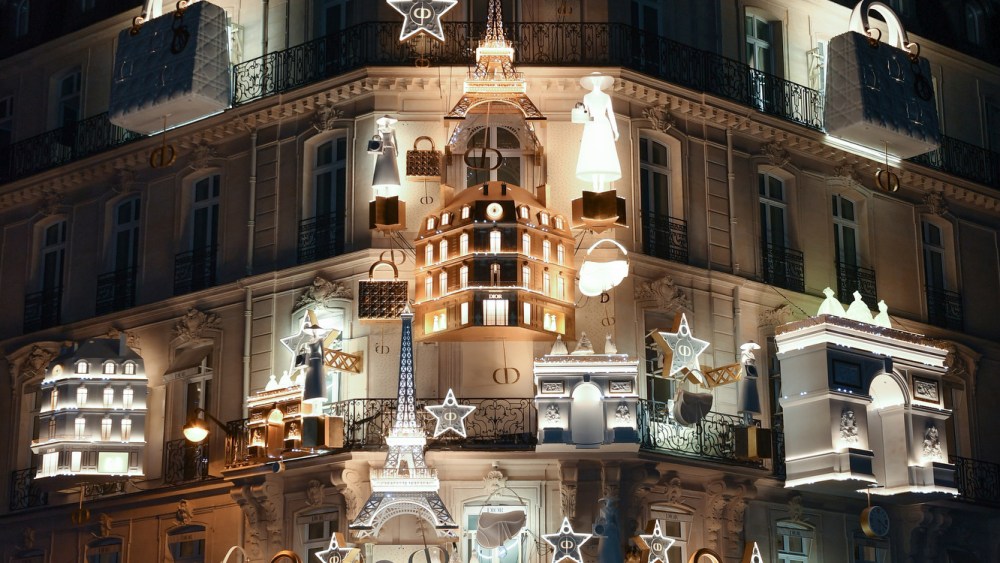
The newly revamped Taikoo Li Sanlitun Northern district, which has just completed a three-year overhaul, was described by neighboring Dior flagship architect Christian de Portzamparc as an ode to Beijing’s pedestrian life. In Aoki’s view, the district’s open-air layout creates a sense of fluidity.
“Sanlitun is dynamic and constantly in motion. I imagined the building as an island placed within this flow,” Aoki explained.
As part of the local government’s mandate to enhance urban vitality in the Sanlitun area, Taikoo Li Sanlitun has played an increasingly important role in advancing Beijing’s urban regeneration and its ambition to become an international consumption hub, according to local media reports.
Situated at the periphery of Sanlitun North, The Opposite House, which was designed by famed architect Kengo Kuma, will soon become home to Beijing’s latest Chanel store and the country’s first Alo Yoga store, according to local media reports.
The official opening of Louis Vuitton’s Sanlitun store on Tuesday was timed to coincide with the launch of LV Ombres, La Beauté Louis Vuitton‘s collection of eye shadows, in the Chinese market, which takes up prime retail space on the first floor of the boutique.

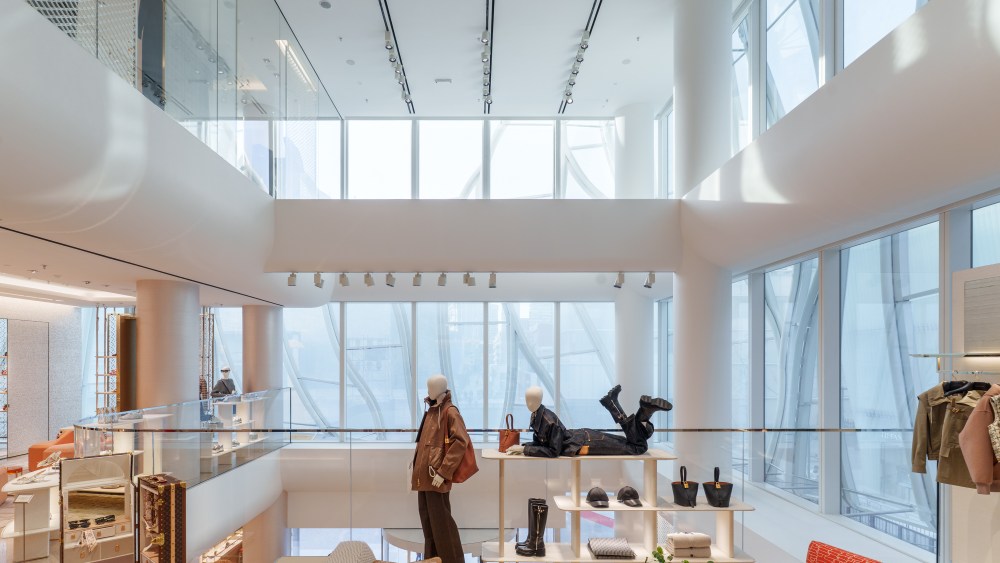
On the first and second floors of the light-filled space, there are Louis Vuitton’s latest womenswear and women’s leather goods and accessories.

The latest men’s offerings, pet accessories and its popular hot-stamping station take up the lower ground floor.

After a swift ascent to the third floor, shoppers encounter a private viewing room for the brand’s home collection, currently outfitted with pieces from designers such as Patricia Urquiola and Cristian Mohaded, an animal-adorned textile collection called Depero, and a maroon version of the Totem Vinyle speaker, which was unveiled at last year’s Milan Design Week.

The store, designed by Vuitton’s in-house architects, is meant to create a “constant stroll” that allows a natural shift of attention between the extensive products on display and the facade’s delicate lace, the brand noted in a statement.
Upon entering the fourth floor, guests experience a notable mood shift as they enter the “infinite room,” a mirrored lobby filled with books and objects, which guides clients toward the main dining room of the Louis Vuitton Café, a first for the city and the second one in China.

Helmed by its star chef Leonardo Zambrino, who was also in charge of opening Louis Vuitton’s Chengdu and Shanghai hospitality operations, the café serves lunch, afternoon tea, and dinner and is available for booking on its WeChat Mini Program.

Specialty dishes on the Beijing menu include a Monogram dumpling, a savory-and-sweet Peking duck roll, and the Hawthorn Fleur, which is enhanced with sage cream and vanilla-infused caramel.
On top of its open-air dining section, the restaurant includes a rooftop terrace that will open during warmer seasons.
In addition to hand-painted, one-off monogrammed leather luggage, works by artists, both emerging and renowned — such as Sun Yitian, Zhou Yilun, Hou Zichao, Nanchuan Daocheng, Key-craft Studio and more — bring a sense of discreet charm to the environment.

Tuesday’s official store launch featured a surprise appearance by Chinese-born film icon Gong Li, alongside brand ambassadors Jackson Wang, Dylan Wang, Zhou Dongyu, Victoria Song, Wang Chuqin, and others.