Slower, honest, softer, trustworthy and “far more human” are part of a new vocabulary shaping design, according to Ana Paula Alves, the founder and strategy director of the trend forecasting firm Be Disobedient.
Last week at Kingpins Amsterdam, Alves and trend forecaster Fedra Fumiatti presented “The Real Shift,” a Spring/Summer 2028 trend forecast that counters the threat artificial intelligence poses to creativity and skill-based careers. In it, they described how consumers expect brands to reveal their processes, develop signature designs and spotlight the artisans and experts in their supply chains. Alves pointed to recent campaigns by Paul Smith, Bottega Veneta and Polaroid that celebrate humanity.
“In a market flooded with synthetic perfection, people will pay a premium for what’s human-made,” she said.
That message was carried across three themes: Real Sport, Real Nature and Real Social.
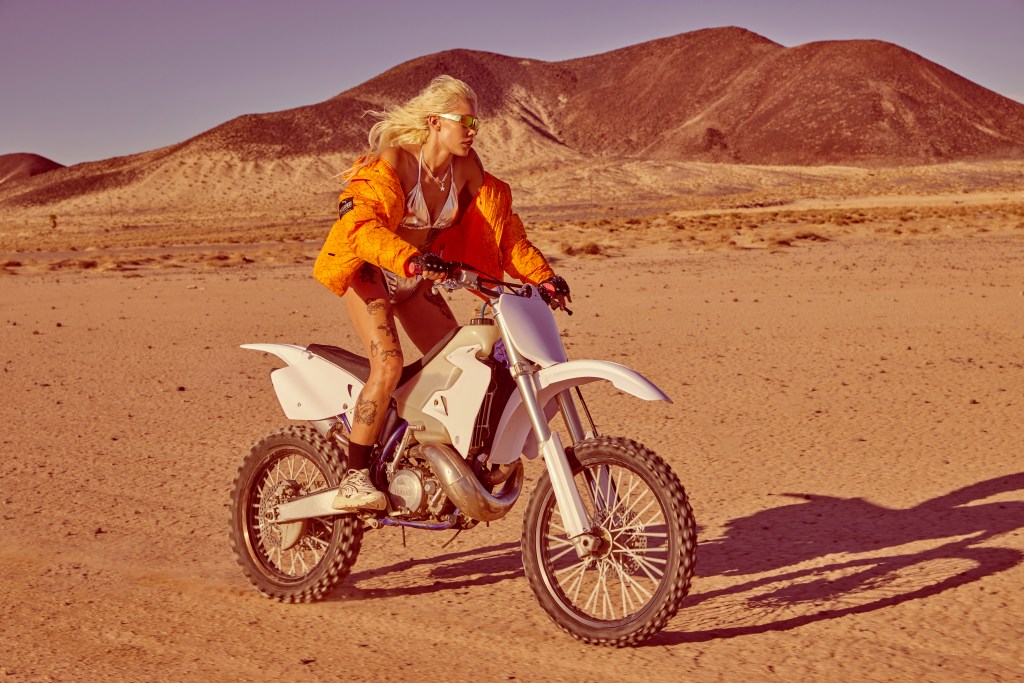
In Real Sport, denim explores the relationship between fashion, body, movement and performance. “Real sport also is about incorporating singular elements such as structured shoulders, shaped panels, padded constructions and stronger proportions,” Alves said.
Ergonomic patterns, stripes, curved lines and lace-up closures are pulled straight from the world of motorsports and the rugby field. Dance inspires the theme’s skirts and dresses with denim fringe, sweat-inspired laminated finishes and body-conscious silhouettes.
Real Sport calls for comfort stretch, knit and soft-touch denim. Key items include denim hoodies, baggy Bermuda shorts made with heavyweight rigid fabrics and oversized jeans with double-knee constructions, carpenter panels, heavy topstitching and bar tacks.
Warp stripes and yarn-dyed fabrics, contrast stitching and piping add pops of color against dark indigo or clean light washes. Alves encouraged the use of “athletic red” and metallic foils for bolder fashion statements. She also emphasized that coordinates should go through the same wash batch ensure uniformity.

In Real Nature, fashion connects luxury with the natural world. Alves described the trend as organic, artisanal, unique, imperfect and natural. “In real nature, when something seems to be a mistake, it’s like appreciated and valued,” she said.
This mindset is carried out through crinkled surfaces, negative contrasts, sun-like effects on fabrics and ocean-inspired gradients and loose silhouettes that reinforce the idea of fluidity. Leather-like surfaces co-mingle with floral and botanical prints, embellishments and embroidery. Alves noted that natural pigments should be used for printed effects.

Other key details include lace trim, organic stains, flocking and camouflage “but not in a military way, but as a way of blending in with the environment,” she said.
Real Social pulls inspiration from archetypes and stereotypes. Art, music and film also weigh heavily on style choices.
Uniforms are a strong influence, from white denim coordinates that feel “pure, clean and polished” to utilitarian apron silhouettes to two-piece twill and denim sets in classic colors like green, gray and brown. Alves said the co-ords are updated with pajama-like touches like square pockets and comfortable silhouettes. Other key details include double waistbands, striped denim, knotted constructions at the waist and raw hems.

The concept of uniforms gets super specific with Dior designer Jonathan Anderson’s signature outfit—a checked shirt and jeans—becoming an easily replicated aesthetic. For the most accurate read of the look, Alves said checks need to be yarn-dyed constructions because prints look flat next to woven checks.
Cropped vests, tailored shorts, high-waisted jeans and brown twill separates with oversized proportions also live here. Light-reflective finishes, double and triple waist bands and graffiti-inspired graphics add spontaneity to the theme.