
Europe’s used clothing travels much farther than trade statistics can reliably follow—leaving exporters with limited visibility into whether garments are ultimately resold, recycled or discarded.
A new study from sustainability consultancy Eunomia Research & Consulting and Norwegian consultancy Mepex tracked 200 discarded clothing items from five Nordic countries through international secondhand textile supply chains, documenting journeys across 23 countries and exposing significant gaps in what happens after garments leave their initial sorting destinations.
The research found that 71 percent of tracked garments had their last recorded location in Europe, with Poland accounting for 30 percent and Slovakia for 18 percent. Pakistan was the third-largest recorded destination, receiving 14 percent of the sample. Other garments traveled to countries across Africa, Asia and the Middle East.

But those locations do not necessarily represent where the clothing was ultimately sold, reused or discarded. The tracking exercise lasted six months, and some garments had not completed their journeys when monitoring ended.
That distinction is central to the study, which found that European textile exporters can generally identify their immediate buyers but have far less information about subsequent shipments, processing activities and final destinations.
The report, “Understanding Used and Waste Textiles Exports from the Nordics,” examined clothing collected in Denmark, Finland, Iceland, Norway and Sweden. Researchers combined digital tracking devices with international trade data, interviews with textile collectors and country-level research in major importing markets.
The findings illustrate the importance of European sorting hubs in the global secondhand clothing trade. High labor costs mean Nordic countries export much of their collected textile material without sorting it domestically, relying instead on established processing operations in countries including Poland, Lithuania, Germany, Slovakia and Bulgaria.
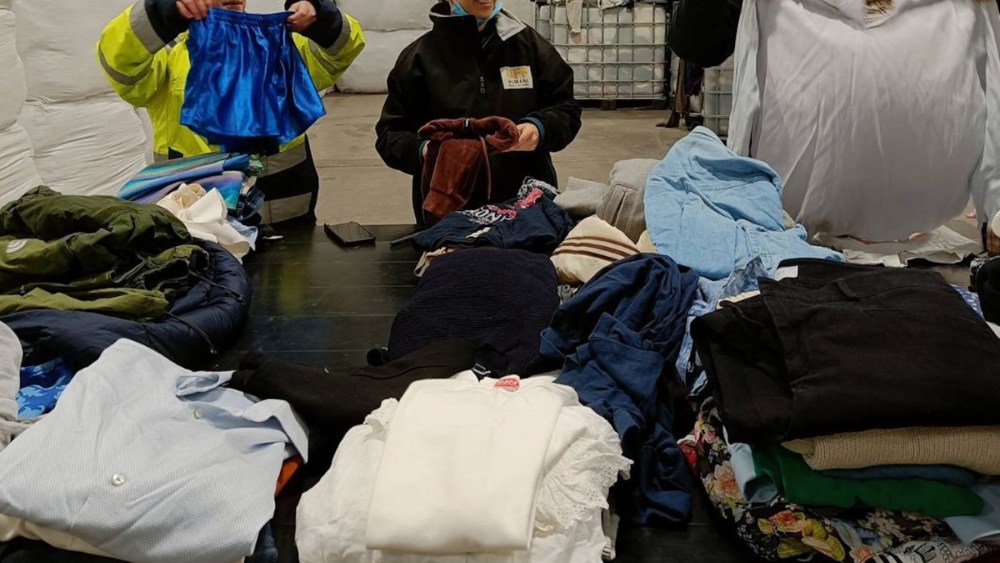
At those facilities, garments are graded and directed toward markets for reuse, repair, recycling or other processing. Clothing can subsequently pass through additional wholesalers, sorting operations and importing countries before reaching consumers or recycling facilities.
Traditional trade statistics capture the initial export destination yet generally cannot follow those later movements.
The study found that 66 percent of tracked items had their last recorded location within the European Union or European Economic Area, while 34 percent were recorded outside those markets. Asia-Pacific accounted for 18 percent of the sample, Africa for 9 percent and the Middle East for 3 percent.
One particularly notable finding involved four tracked items that reached secondhand clothing markets in Nigeria through Benin, despite Nigeria’s prohibition on used clothing imports.
The researchers said the route illustrates the difficulty of tracing garments through international trading networks, particularly when shipments pass through intermediary countries.
However, the study did not directly document illegal dumping, uncontrolled burning or environmental leakage at its African or Asian endpoints. Nor could the tracking devices establish whether garments were ultimately reused, recycled, stored or discarded.
The report found that exported clothing can pass through several sorting and resale markets, making it challenging to determine what happens to garments that buyers reject.
This distinction matters especially for lower-quality clothing.
Researchers found that 56 percent of garments classified as Grade D, the lowest quality category in the study, had their last recorded location outside Europe. That compared with 24 percent of Grade A garments, 17 percent of Grade B garments and 33 percent of Grade C garments.
The evidence implies that lower-grade textiles depend more on international markets, where prospects for reuse or recycling can vary considerably with local demand and processing facilities.
But higher-quality clothing also reached markets in Africa and Asia, reinforcing the role those countries play in extending garment lifetimes.
The researchers cautioned that a garment’s destination depends on more than its condition. Seasonality, style, local preferences and established trading relationships can all influence where clothing is sent.
Winter-weight garments collected in Nordic countries, for example, may have limited resale potential in warmer markets, despite their physical condition.
The report also identified growing pressure on collection and sorting systems as fast-fashion consumption changes the composition of discarded textiles.
Industry stakeholders interviewed for the study reported increasing quantities of low-cost, damaged, contaminated and otherwise difficult-to-resell garments entering collection streams.
That trend presents a challenge as European regulations require more textiles to be collected separately from household waste, potentially increasing the amount of material entering systems originally designed around the resale value of wearable clothing.
“Europe is entering a new era of textile accountability, and the U.K. cannot afford to watch from the sidelines,” said Vita Ellis, sustainability consultant at Eunomia Research & Consulting. “This new research shows that better traceability is becoming a business necessity, not just a regulatory requirement, including for UK brands and retailers selling into the EU, who will have to comply with textile EPR schemes there.”
The findings arrive as the European Union prepares to implement additional requirements affecting textile producers, waste shipments and product design.
Under revisions to the Waste Framework Directive, member states must establish extended producer responsibility systems for textiles, requiring producers to help finance collection, sorting and treatment. Those systems are expected to create new funding mechanisms for textile waste management while placing greater responsibility on brands for products entering the market.
Separately, restrictions under the EU’s revised Waste Shipment Regulation will limit waste exports to certain non-OECD countries beginning in 2027.
The researchers assert that these measures will require better information about the quality of exported textiles, the facilities receiving them and the outcomes achieved after processing.
Without stronger downstream oversight, increasing collection volumes could simply move more difficult-to-manage material through existing international supply chains.
The report recommends clearer textile-quality classifications, stronger accountability for lower-grade exports and minimum standards for receiving facilities. It also calls for investment in Nordic sorting and recycling infrastructure, alongside measures that support domestic secondhand markets, repair businesses and longer-lasting product design.
Extended producer responsibility fees could help finance those changes, the researchers said, particularly if structured to reward durability, repairability and recyclability rather than simply increasing collection volumes.
Kathrine Kirkevaag, senior adviser at Mepex, emphasized that the existing export system has played an important role in keeping clothing in circulation.
“It is important to recognize the model Nordic collectors have used for decades, exporting used textiles to sorting hubs mainly in Central and Eastern Europe,” Kirkevaag said. “The findings show that textile exports play an important role in supporting reuse and extending garment lifetimes.”
At the same time, she said, the sector faces increasing pressure as collection volumes rise and the material mix becomes more difficult to manage.
The study was funded by the Norwegian Retailers’ Environment Fund, the Nordic Council of Ministers and Shape Foundation.
Its findings stress a challenge facing textile circularity efforts: collecting clothing is only the beginning. Determining whether those garments actually remain in use requires visibility into the sorting, trading and processing systems that follow.
For the Nordic countries, the question is no longer simply where discarded textiles are exported, but what happens after they arrive.


