The U.K. government announced Wednesday that it will introduce mandatory due diligence legislation requiring large corporations to identify and address human rights abuses and labor exploitation within their operations and supply chains.
The new rules, which will apply to companies with global or U.K. turnover exceeding 350 million pounds ($471 million), are set to span services across the United Kingdom and goods in Great Britain, with Northern Ireland covered under the EU Forced Labour Regulation via the Windsor Framework.
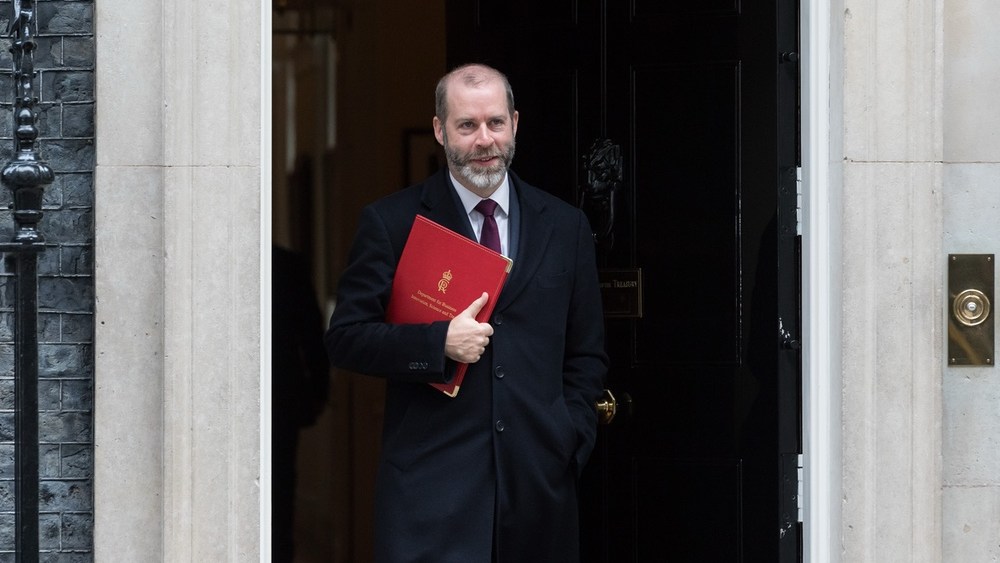
“The regime will be risk-based, proportionate and reflect how responsible businesses already manage risk by aligning with established international standards, including the OECD Guidelines for Responsible Business Conduct and the UN Guiding Principles on Business and Human Rights,” Jonathan Reynolds, secretary of state for business, innovation, science and trade, said in a statement.
The government will also introduce powers to remove goods made with forced labor from the Great Britain market. A regulator, Reynolds said, will be empowered to investigate businesses suspected of placing such goods on the market and, where due diligence obligations have not been met and forced labor is identified, direct their withdrawal.
“This will provide a clear and targeted mechanism for tackling some of the most serious abuses in global supply chains and protecting responsible businesses from unfair competition,” he said.
The move follows the government’s evidence-based review of the U.K.’s approach to promoting responsible business conduct, which found the country’s current framework for preventing forced labor to be fragmented and overly reliant on voluntary action and reporting measures. The Modern Slavery Act 2015 was “world leading” when it was introduced, Reynolds said, but international standards and legislative practice have “since moved on, leaving the U.K. out of step with G7 partners and other major trading economies.”
“While plans to strengthen the Modern Slavery Act through the Immigration and Asylum Bill are an important step, we recognize that further action is needed to bring us in line with key partners,” he said. “Having carefully considered our findings alongside the government’s commitments on economic growth, reducing administrative burdens and maintaining the integrity of the U.K. internal market, we have concluded that a phased and proportionate approach is appropriate.”
Resources will include a centralized responsible business conduct guidance hub on the government’s website to consolidate guidance, tools and templates.
The announcement also comes a month after 20 leading businesses, including seven of the U.K.’s major supermarkets, joined the Ethical Trading Initiative, the British Retail Consortium, B Lab U.K., trade unions and civil society organizations in writing to Prime Minister Andy Burnham to call for his government to commit to mandatory human rights and environmental due diligence in the current parliamentary session, which ends next May.
“Any U.K. company or public body can source cotton picked through state-imposed forced labor, or cobalt mined by children, or bananas below the cost of production and face little legal accountability at home, while responsible competitors are undercut as a result,” read the letter, which was co-signed by retailers such as Asos, Marks & Spencer, New Look, John Lewis Partnership and Superdry & Co. “mHREDD legislation closes that gap: it creates a level playing field, by rewarding businesses already acting responsibly, and requiring action from those that are not. The same logic applies to the public sector, which procures at scale and can use that purchasing power and leverage to promote social value and shape supplier behavior across whole sectors.”
The letter cited new research from the Fabian Society, which found that serious labor exploitation and environmental harm in the United Kingdom costs roughly 4.4 billion pounds ($5.9 billion) a year, a conservative estimate. By contrast, it said, a new regime requiring businesses to prevent such harm across their value chains would cost an estimated 420 million pounds ($565 million) a year, equivalent to less than 10 percent of the cost of the damage.
“And it is about more than economics,” it added. “It is about power: workers are injured in factories with poorly enforced safety systems. Rivers are polluted by industrial waste. Too often, the companies responsible are not held to account, while the people affected have little or no access to remedy, and a fractional stake in the value their work creates. These harms occur here in the U.K. and overseas, in many sectors from agriculture and apparel to care and construction.”
In short, the letter said, voluntary standards have had decades to work but haven’t delivered enough on their own. At the same time, the legal requirements that do exist need to be better enforced: Government figures show that 40 percent of companies fail to meet basic reporting requirements under Section 54 of the Modern Slavery Act, “without consequence.”
Anti-Slavery International, one of the letter’s signatories, praised the development, calling the recommendations from the government’s responsible business conduct review an “essential first step.” But the nonprofit also criticized the government’s proposal to apply the EU Forced Labour Regulation in Northern Ireland while excluding the rest of the United Kingdom, saying it would “perpetuate patchwork regulation, create legal divergence that harms growth and leave U.K. consumers vulnerable to products made with forced labor.”
“We welcome the government’s recognition that standalone mandatory due diligence legislation and import controls are necessary to protect U.K. markets from forced labor goods,” said Craig Bradshaw, its business and human rights manager. “Up to this point, voluntary efforts have not effected any change as businesses have continued to profit from the exploitation of people and planet. A Business, Human Rights and Environment Act and a complementary import ban on goods made with forced labor must apply across the entirety of the U.K.”
Labour Behind the Label, a Bristol-based watchdog group, also argued that the obligation cannot be narrowed to forced labor alone. Rather, it said, human rights abuses and labor exploitation must be “considered in their totality,” including forced overtime, underpayment of wages, exploitation and harassment and unsafe working conditions. Any meaningful attempt by companies to address them, the group said, must include cooperation with independent trade unions and incorporate testimony from workers collected confidentially through a trusted source outside the factory gate.
“We are also extremely concerned about the lack of consideration for environmental harms in today’s statement,” said Ellen Kettell, Labour Behind the Label’s advocacy lead. “Environmental destruction is intrinsically linked to human rights and cannot be considered independently, as is evidenced by the 40-degree heat Bangladeshi garment workers have had to endure over the summer months. This is a fundamental flaw of the government’s announcement and should be addressed immediately.”
The Ethical Trading Initiative similarly urged Burnham’s government to go further, warning that the legislation’s success will “depend on the detail.” The multi-stakeholder organization wants environmental harms brought into scope as the regime develops, a clear timetable for introducing the legislation in this parliamentary session, and workers and their trade unions placed “at the heart” of due diligence, including access to remedy.
It also wants the rules to cover the full value chain and include companies’ own purchasing practices, set proportionate expectations so the largest businesses use their leverage to support suppliers rather than offload requirements onto them, and give the regulator a role beyond forced labor goods, with sanctions that “drive improvement and a route to remedy for people who are harmed.”
It remains unclear whether the new legislation will prompt Washington to remove the 10 percent Section 301 tariff on U.K. imports imposed over perceived shortcomings in the country’s forced labor policies. Tariffs of up to 12.5 percent tied to forced labor have prompted a number of countries, including Cambodia, Canada, El Salvador and Vietnam, to strengthen their rules on forced labor imports. The U.K. government had discussed tightening its modern slavery laws in 2020 following a major public consultation on transparency in supply chains, though commitments such as civil penalties, a centralized registry and mandatory reporting were shelved amid the competing priorities of Brexit and Covid-19.
At a Business and Trade Committee evidence session on China and the U.K. economy at the House of Commons in July, Chris Bryant, Britain’s minister of state for trade, said he would be “absolutely amazed and demoralized” if the United Kingdom did not introduce “some form of forced labor ban” before the current parliament wraps up in August 2029.
He also said the first and most effective way to “bring about change” would be to introduce due diligence requirements for company directors, who could be held civilly liable, “so that they would have to make sure that within their supply chain there was nothing sourced from forced labor.”