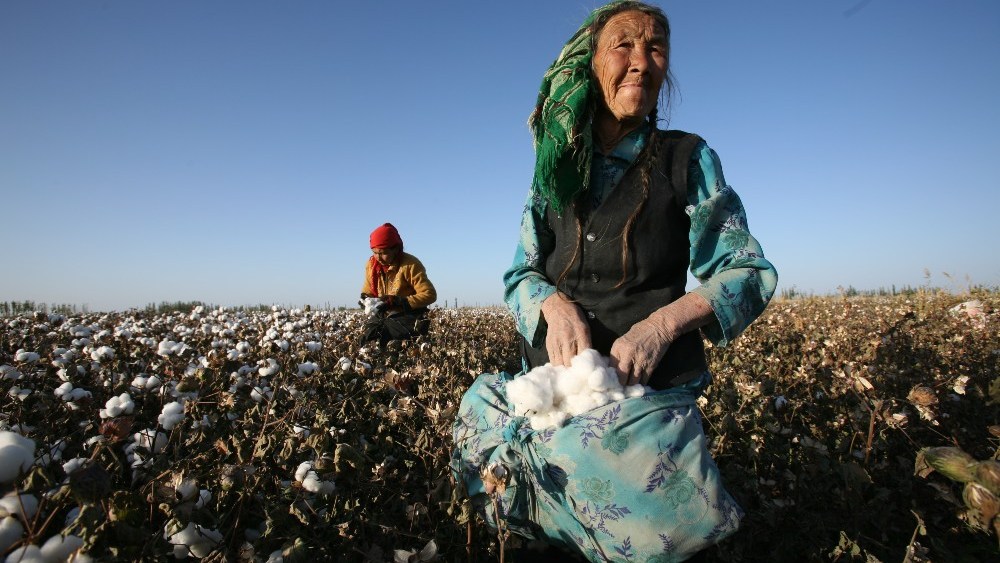
The landscape of corporate supply chain liability for forced labor is evolving at a fast pace. U.S. importers face import bans and customs enforcement under the Tariff Act of 1930 and the Uyghur Forced Labor Prevention Act (UFLPA). Recent decisions under the Trafficking Victims Protection Reauthorization Act (TVPRA) now show how far that liability may reach.
Although the TVPRA is primarily a criminal statute that prohibits forced labor, it also allows foreign victims to sue U.S.-based businesses for damages in U.S. courts. Federal courts may exercise extraterritorial jurisdiction over these offences, if the alleged offender is a U.S. national or lawful permanent resident, or is present in the U.S. regardless of nationality. As a result, a foreign plaintiff can sue a U.S.-based fashion and footwear importer, if evidence shows that it had actual or constructive knowledge of forced labor anywhere in its supply chain.
Some courts have applied the TVPRA narrowly, rejecting forced labor claims because all of the alleged violations occurred in a foreign territory or because the U.S.-based business received no economic benefit from the venture. Recent decisions, however, signal a significant shift in courts’ willingness to exercise extraterritorial jurisdiction where a U.S.-based business knowingly or recklessly participated in, and benefited or attempted to benefit from a forced labor venture. These decisions also show how courts are likely to evaluate corporate due diligence on forced labor in supply chains.
Operational oversight as participation
Federal courts have sought to clarify what counts as “participation” in a forced labor venture under the TVPRA. Some courts have defined participation as “taking part or sharing in an enterprise or undertaking that involves danger, uncertainty, or risk, and potential gain.” Under this standard, merely sourcing from a supply chain does not by itself constitute participation in a forced labor venture (Doe 1 v. Apple Inc.).
Other courts have examined how involved the business is in the supplier’s day-to-day operations: the more actively it manages or operates the supplier’s venture, the more likely a court is to find participation. In Ratha v. Rubicon Resources, LLC, the en banc Ninth Circuit held that “one can participate in a venture without operating or managing it.” The court noted that Rubicon’s employees visited and conducted pre-audits of the supplier’s factories, coordinated sales and marketing, and arranged import and shipping, and that Rubicon’s own marketing materials claimed it controlled “every aspect of production.” The court held that a reasonable jury could find that Rubicon participated in the venture. On Oct. 13, the Supreme Court declined to hear Rubicon’s appeal, leaving in place the decision to send the Cambodian workers’ case back to the district court.
Tailored services as participation
The decision in Akhmad v. Bumble Bee Foods, LLC offers further guidance on participation. The court found that the plaintiffs, Indonesian fishermen, had plausibly alleged Bumble Bee’s participation in the venture. According to the complaint, Bumble Bee did more than buy tuna through a global supply chain: it sponsored fishery improvement projects, audited and monitored the vessels, and helped the vessel operators obtain environmental certification from the Marine Stewardship Council, which made the tuna more marketable. The court described this collaboration as “tailored” and as “active, [and] ongoing support.”
In F.C. v. Jacobs Solutions Inc., the court concluded that a plaintiff can allege participation under the TVPRA in two ways. First, the plaintiff can allege that the defendant had sufficient knowledge, actual or constructive, of the TVPRA violations. Second, “regardless of the defendant’s knowledge,” the plaintiff can allege that the defendant “associated itself with the venture by performing particularized services for it.” The plaintiffs’ allegations in Jacobs satisfied the second path: they alleged that the defendants had touted the “customized, unique nature” of their services, “including site inspections to monitor compliance with health and safety guidelines at locations operated by the plaintiffs’ employers to construct World Cup stadiums.”
Attempt liability
The Abolish Trafficking Reauthorization Act of 2022, signed into law in January 2023, amended the TVPRA’s civil remedy to reach anyone who “attempts or conspires to benefit” from participation in a forced labor venture. A U.S.-based business can therefore face civil liability for attempting to profit from forced labor in its supply chain, even if the transaction is never completed and no benefit is received.
Actual or constructive knowledge
Under the TVPRA’s “knew or should have known” standard, a foreign victim can claim damages even if the U.S.-based business had no actual knowledge of forced labor in its supply chain. Constructive knowledge is enough. In Jacobs, the court explained that the TVPRA imposes “a duty to refrain from knowingly benefitting from participation in a venture” where the business knows of, or recklessly disregards, forced labor risks.
In allowing the forced labor claim to proceed, the court observed that the plaintiffs did not simply allege that the defendants “stood idle while forced labor hid in shadowy corners.” Instead, the plaintiffs alleged that the defendants actively “managed and supervised construction” of the stadiums, served as “delivery partner” in their construction, and publicly boasted of their “inspection regime for enforcement.” The court also noted the defendants’ alleged “contractual duty” to conduct “periodic inspections of work and living sites.” That obligation, together with the defendants’ undertaking to manage and oversee the contractors’ work, undermined their argument that they lacked constructive knowledge of the risks.
Knowledge from public reports
What if government or NGO reports warn of forced labor or unsafe working conditions in a particular sector or country? Do those reports impute knowledge to importers? In Ratha, the Ninth Circuit pointed to evidence that Rubicon was aware of U.S. government reports describing widespread forced labor risks in the Thai seafood industry, as well as adverse media and public reports, including a whistleblower report describing labor abuses at one of the supplier’s factories. After learning of the alleged abuses, Rubicon attempted to sell the shrimp to Walmart, which rejected 14 containers over concerns about labor abuse. Rubicon briefly paused its sales efforts but resumed them in July 2012.
The court held that Rubicon’s failure to take any concrete action, and its attempt to sell the shrimp after learning of the allegations about factory working conditions, could lead a reasonable jury to find that Rubicon knew or should have known of the alleged trafficking. Availability of reports warning of forced labor risks at a specific supplier or location, as well as the rejection of shipments by another business, can support a finding of constructive knowledge.
Two shifts
The recent decisions reflect two shifts. First, U.S. courts are more receptive to lawsuits against U.S.-based businesses over forced labor in their supply chains, and they are extending liability to businesses that oversee or manage suppliers’ operations, or that ignore red flags and recklessly disregard publicly available information on forced labor risks. Second, plaintiffs are using these lawsuits not only to recover damages but also to expose deeper supply chain problems and to demand stronger corporate oversight and transparency in preventing and remediating forced labor. In this changing landscape, fashion and footwear importers have no choice but to take due diligence and prevention and remediation of forced labor seriously.
Proactive due diligence
Although the defendants in none of the above cases were fashion or footwear importers, these decisions have important ramifications for due diligence in the fashion and footwear industries. Importers need to adopt proactive due diligence practices that change their sourcing practices, enhance supply chain transparency, and provide effective remediation for worker abuses at supplier factories.
Fashion and footwear importer’s supply chains involve complex sourcing across raw fiber farms, spinning mills, tanneries, and cut-and-sew factories. Due to this complexity, the more distant a supplier is, the less visible potential abuses become. On-site audits and cooperation with supplier factories on social and environmental compliance measures are among the most common due diligence practices adopted by fashion and footwear importers. Thus, it is important to consider how far liability could extend for forced labor abuses at a remotely located supplier. If and when retailers and brands conduct forensic-level supply chain mapping down to raw materials, could that constitute participation in the forced labor venture of a remotely located supplier? If so, what due diligence actions can fashion and footwear importers take to minimize their legal risks?
There is no straightforward answer and the suggestions are not exhaustive. However, depending on sourcing locations, production tiers, and the context of their business operations, fashion and footwear importers should embed and operationalize effective due diligence through their policies and governance structures, improve transparency across supply chain tiers, establish robust risk assessment and remediation processes, and avoid reckless disregard of actual or potential forced labor risks in their supply chains. Once a risk is exposed or reported, simply pausing sales is not enough. The attempt liability under the TVPRA closes off an important legal defense for importers seeking to argue that they did not profit from the venture.
Throughout the sourcing and contracting process, importers should pay close attention to changing legal and compliance requirements, as well as reports of forced labor risks from government sources, the U.S. Department of Labor’s List of Goods Produced by Forced or Child Labor, NGO reports, whistleblower disclosures, and worker complaints filed anywhere in their sourcing networks. Independent human rights organizations frequently investigate and trace forced labor risks, and importers should consult their reports and findings. They should also regularly review the UFLPA Entity List and U.S. Customs and Border Protection enforcement actions. These suggestions above are not exhaustive.
The recent decisions show that a zero-tolerance policy on forced labor cannot remain a statement of corporate commitment. It must translate into concrete changes in how fashion and footwear importers source, manage, and monitor their supply chains. As the legal boundaries of corporate liability continue to evolve, fashion and footwear importers must move towards proactive, meaningful due diligence that addresses the conditions enabling forced labor in the first place. The question is no longer simply whether businesses know about forced labor in their supply chains, but whether they take meaningful steps to prevent it and what they do when they know, or should have known, about it.