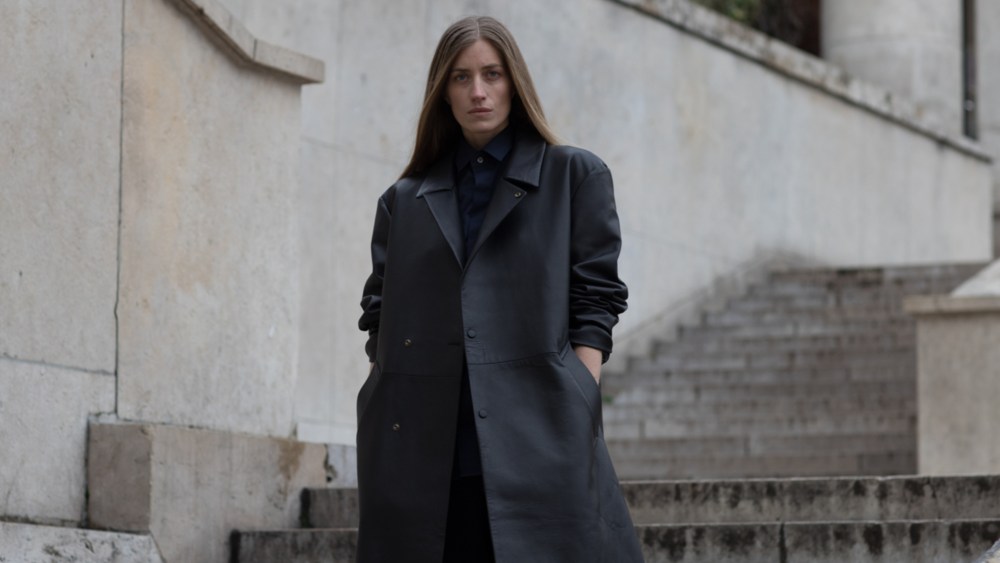
Andreas Murkudis already carries about 150 fashion labels at his namesake store in Berlin, but he’s adding one more come fall — and he’s its cofounder, too.
Called Bare and debuting at the Rainbow Wave showroom in Paris during men’s fashion week and through Paris Couture Week, the compact collection is billed as “elevated essentials” of “uncompromising quality” — minus the nosebleed prices that plague many designer and luxury labels today.
“These are really the perfect pieces,” Murkudis said in an exclusive interview, lauding like-minded brands like Dressedundressed, which offers only a handful of styles, all of which he carries. “This is easy for my work, but also easy for the customers to choose the right pieces from a collection.
“It’s a perfect little wardrobe, and the idea is also to keep most of the items in the collection and maybe use other fabrics,” he said of Bare. “You add some new pieces, but also you keep the bestselling items. I think that’s important.”
You May Also Like

The debut Bare collection comprises 22 styles for women and men, including coats, soft tailoring, knitwear and shirts.
Shirts retail from 300 to 600 euros, merino wool knits from 400 to 600 euros, blazers from 1,000 to 1,200 euros and coats from 1,400 to 1,600 euros. Textile sourcing and production are centered in Japan, except for cashmere knits, which are manufactured in Scotland and retail around 1,600 euros.
Independent brand consultant Benoit Duverger is the sole investor in Bare and its cofounder, leveraging his 20-year friendship with Murkudis, whom Duverger conscripted for collaborations when he was working for Pringle of Scotland and Birkenstock 1774.
Murkudis, who is responsible for curating and merchandising Bare, selected Berlin-based designer Bomi Lee, who has been working behind the scenes designing for brands including Seya and Muji Labo. “I told [Benoit] she’s the perfect person. She’s really good and she was ready to do her own project,” he said.
The partners are hoping to secure between 20 and 30 wholesale accounts, targeting plugged-in specialty stores like The Broken Arm in Paris, La Garçonne in New York and Antonia Milan, for example.
Asked about the backstory behind the name, Murkudis replied, “I think it’s easier to design a collection than to find a perfect name.”
Duverger proposed “bare,” which connotes having nothing to wear, a tongue-in-cheek commentary amid an overabundance of fashion.

Duverger, who started his fashion career as an intern for Jil Sander in Hamburg, said that German designer remains a key touchstone for him, and something of a guiding light for Bare, which values modernity, restraint, longevity and innovative fabrics.
When he attended the major Jil Sander retrospective at the Museum Angewandte Kunst in Frankfurt back in 2018, he was flabbergasted to realize that her designs, some nearly 30 years old, remained “totally timeless” and could still be sold in stores and worn at the time.
Bare also aims to endure, and offer value. Duverger said many designer brands have “completely derailed with pricing, which is becoming more and more insane. Clients today are more informed… So I think the market is actually huge for brands which offer clothes you can touch and recognize as quality for a reasonable price.”
The executive also cited a “fatigue of choice, whereas we bring clarity.”
He noted that he still wears a Jil Sander jacket that she carried in her Hamburg shop for 10 years. “That’s our concept. I would call it low risk,” he quipped.
Duverger said he wants “slow growth. I don’t want to scale. I want to pick the right partners,” he said, which will include one exclusive digital partner for the first season. “For me, it’s more important people buy deep.”
That said, he’s also hoping to open a freestanding Bare boutique in Paris “as soon as possible,” and stock an eclectic offer of categories, akin to Murkudis’ Berlin emporium.
Despite challenging market conditions, and crisis times for some department stores and e-tailers, Murkudis said his 10,000-square-foot store tucked in a courtyard off Potsdamer Strasse had a “very good year” in 2025, and business has started off strongly in 2026.
The retailer described his main clientele as “artistic people, like artists, musicians, DJs, graphic designers, architects… people who earn their own money” and want clothes that take them from work to dinner.
“I think everyone can come and find something in our store, and we offer also beauty and books and jewelry and porcelain. So we have a huge selection and a lot of categories,” he said. “It’s important to not to have only luxury customers, to have also normal people who work, students or whatever.”
He said his customers are split evenly between Germans and international visitors who appreciate his curation, and a wide range of prices, with brands like Aspesi and Cellar Door on the more accessible end, all the way up to Dries Van Noten, Yohji Yamamoto, Sacai and Rick Owens.
Asked to account for the longevity and relevance of the Andreas Murkudis store, Duverger replied: “Integrity and curation. It’s a very personal curation of quality. If you buy chocolate, if you buy ceramics, if you buy a pair of pants, it’s the same mantra.”