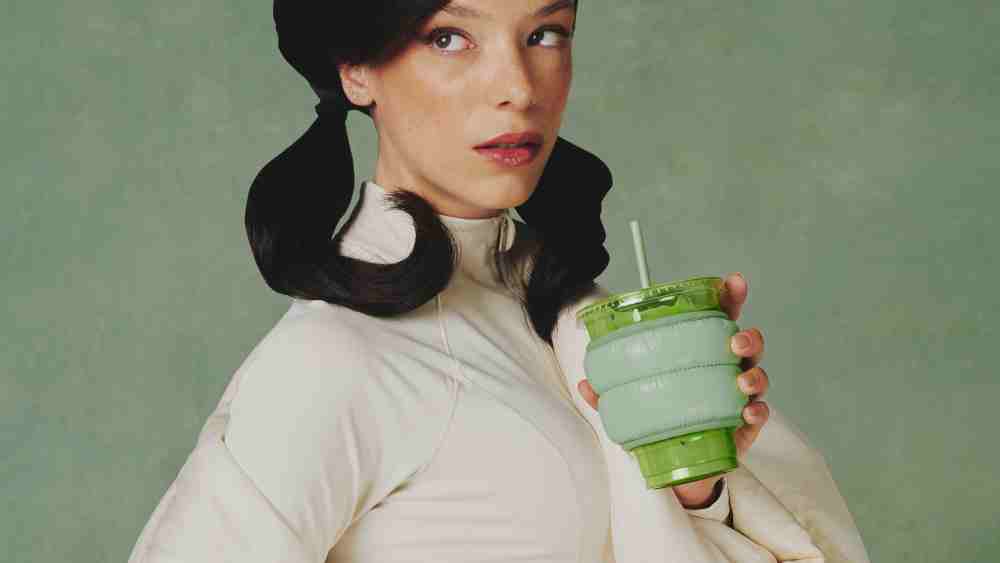
Blank Street Coffee has garnered serious fashion appeal since starting as a COVID-19 pandemic coffee cart in Brooklyn — rising to the fore with its quilted coffee sleeve, or “puffer jacket,” which turned iced drinks into fashion plates; an apparel collaboration with Only NY and a pop-up at London Fashion Week.
It’s no wonder they have built a strong following of celebrities and influencers including Sabrina Carpenter, Emma Chamberlain and Kendall Jenner, whose 818 tequila brand collaborated with Blank Street.
Last year, the chain was valued at about $500 million. To fuel the initial growth spurt, it raised $7 million in 2021, and followed up with a $25 million series A-round investment.
You May Also Like
A source familiar with the situation told WWD that Blank Street is now in the early stages of fundraising to fuel further expansion. While Blank Street declined to comment, the company told WWD on Friday that its international network is ready to hit 106 locations with its West Coast debut in mid-August in Studio City, with Beverly Hills to follow. Best known for its viral matcha drinks — especially the blueberry matcha — and its signature sage-green cafés, the brand has locations across New York; Boston; Washington, D.C.; London, and other markets.
For Los Angeles, Blank Street is rolling out new menu items led by the Cortado Cloud, a layered drink available in vanilla bean, matcha or espresso with a lightly salted cream top. The firm will also expand its offering, launching ice cream by the end of the year with four signature flavors: Vanilla Bean Affogato, Mocha, White Chocolate Matcha and Strawberry Shortcake Matcha.
The two new cafés are designed to reflect their neighborhoods: the Beverly Hills location reworks a historic Tudor Revival building with warm timber, flagstone and curved forms, while the Studio City outpost references California modernism.
Here, cofounder and venture capitalist Issam Freiha, who founded the firm with college friend Vinay Menda and Ignacio Llado Alvarez-Salas, reflects on the firm’s design strategy and growth plans.
WWD: Blank Street is making its West Coast debut in Los Angeles this August, starting with Studio City on 13273 Ventura Blvd. Why L.A.? And why now?
Issam Freiha: L.A. has always been a dream for us, both personally and as a brand. It’s a city I have a deep emotional connection to. So the question was never if we’d come to L.A., it was when Blank Street would feel truly ready for L.A. This city sets an incredibly high bar for coffee and matcha and we didn’t want to show up until we had lots of confidence that our brand and hospitality standards had evolved enough to meet and exceed people’s expectations.

WWD: Why was Studio City chosen as the first location?
I.F.: Studio City is a historic and iconic Los Angeles neighborhood, deeply rooted in the entertainment industry. It’s also a relatively calmer, more rooted part of the city, with a laid-back suburban charm. That’s exactly the kind of customer base we wanted to kick off our launch with. The site itself sealed it. The facade is striking, it has this architectural quality that reminded me of L.A.’s Case Study midcentury design heritage.
And there’s a personal element that made it feel like the right place to plant our flag. One of our earliest team members, Evan Mateen, who’s now our real estate director, grew up there and went to high school nearby. In some ways, this opening is a homecoming for him, and that kind of connection to a place matters to us.
WWD: The design of Blank Street’s cafés has become part of its identity. Who is behind the interiors, and what ties the global locations together?
I.F.: Our in-house interior design team is exceptionally talented, led by Paola Han, our global design director.
Our brand lives at the intersection of two tensions we call “tofu and cigarettes,” on one hand simple, sleek and clean, and on the other energetic, fun and a little wild. That tension shows up in every design decision: what stays sharp and restrained, and what we go a little crazy on. Separately, our designers spend a lot of time thinking about how to preserve the architectural identity of the space we’re opening in.
WWD: Tell us about the interior design that sets the new Studio City location apart from the others.
I.F.: Studio City is a good example of that [tofu and cigarettes concept]. The store sits within an original midcentury modern building with this incredible curved overhang, so we wanted to go all-out on that concept while making it still feel like a Blank Street store. Before designing anything, our team flew in from London to go through a full L.A. cultural immersion. They toured all the neighborhoods, the Case Study homes Stahl House, Sheats-Goldstein, Sowden House — and a couple of Erewhons I’m sure — to really ground ourselves in the architectural history of the city before a single design decision was made.
This Studio City space is a perfect example of all this. The interiors have a simple, sleek midcentury feel, but still preserve the youthful energy and fun that defines Blank Street. And as a nod to the production studios in the neighborhood, we outfitted the store with these crazy, beautiful speakers. We can’t wait for everyone to see it.

WWD: Blank Street’s sage green has become instantly recognizable. How did that come about?
I.F.: Alongside our global design director, we also have an incredible global creative director who is responsible for all things look, feel and soul of Blank Street.
The story behind our green is actually a funny one. It began as a purely practical decision, a color chosen so our original coffee carts would blend naturally into their first backdrops: the parks and backyard gardens of New York City. We of course got lucky over time as matcha became a bigger part of our menu. The color has evolved into the perfect expression of our menu.
WWD: Who came up with the idea for The Sleeve — the viral puffer jacket for coffee?
I.F.: This was an idea by Elizabeth Brierley, our marketing manager based out of the U.K. She’s been drumming up creative bangers from the very first day she started at Blank Street. The inspiration came during our Scotland launch last year, which coincided with one of the coldest weeks the region had seen. We initially produced The Sleeve as a limited run for that launch, but the response was so strong that it evolved into a wider brand initiative. So this past February, we launched The Sleeve globally during London Fashion Week.
WWD: What gap in the market did you see that made Blank Street worth building?
I.F.: Over time, the average coffee shop became more transactional and commoditized, to the point where I started to just prefer making it at home and traveling with my own coffee setup. The opportunity we saw was to massively innovate on the retail experience itself. The way we’re doing that with Blank Street is by building a “daily luxury” brand where every touchpoint, from the menu to store design to hospitality, exudes a level of quality, fun, creativity and hospitality that is worth traveling for. You should never have to compromise on the most important part of your day, and for me that’s my morning flat white. It’s a simple moment that I believe deserves maximal care and attention.
WWD: How has your background as an investor shaped the way you operate as a founder?
I.F.: Working in finance was helpful in understanding what investors look for when evaluating brands, but it was not in actually building one. If anything, my background in cycling was far more formative. Through cycling I discovered my love of coffee, visited hundreds of coffee shops around the world, developed my taste for it, and became a prototypical coffee nerd. It also gave me real access to coffee culture in cities like L.A., the friends I rode with here gave me a much more intimate feel for the market than any research could have.
WWD: You’ve developed a strong celebrity and fashion following, with names like Sabrina Carpenter and Kendall Jenner. How did that happen?
I.F.: Honestly, both happened randomly and organically. We’re genuinely excited to work with people who are already customers or friends of the brand and who share our values and aesthetic point of view. We stay focused on doing what we love, and every so often we find ourselves in conversation with a person or brand we have chemistry with.