China’s first half 2026 earnings season has delivered a message that is becoming increasingly difficult to ignore: growth is concentrating, while the gap between winners and laggards is widening.
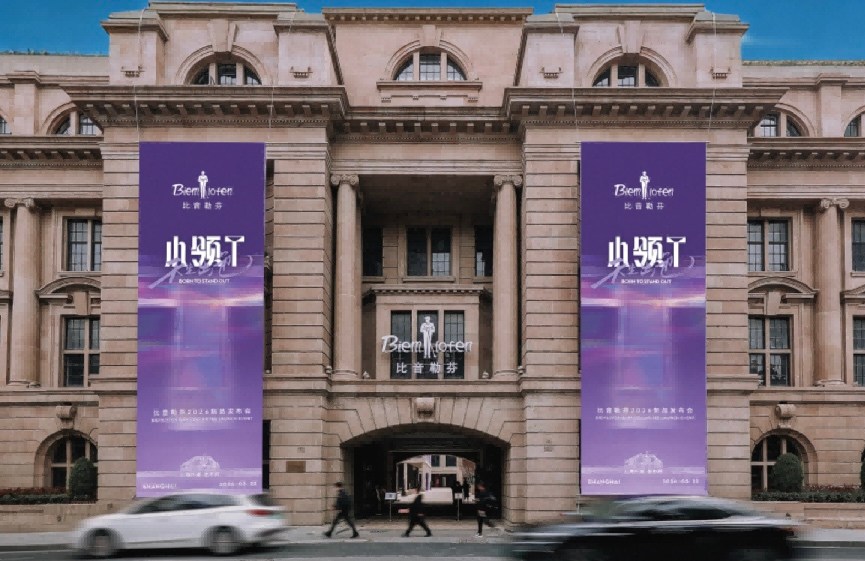
On one side, Biemlofe posted revenue growth of 23.7 percent, with online sales rising more than 100 percent. Balabala generated 4.83 billion yuan ($677 million) in first-half revenues, accounting for 71.8 percent of parent company Semir’s total revenue. Dazzle Fashion, Ellassay and JNBY all reported gross margins above 65 percent.
On the other hand, legacy casualwear brands are facing mounting pressure. Heilan Home grew revenue 7.4 percent, but net profits declined 5.9 percent — a classic case of revenue growth failing to translate into earnings. Semir’s casualwear business grew just 3.4 percent, while Peacebird and Septwolves continue to work through inventory and channel restructuring.
You May Also Like
The contrast is becoming structural rather than cyclical.

HLA Philippines, with nearly 40 stores and counting. Courtesy photo.
China’s broader apparel market still showed growth in the first half, with retail sales of apparel, footwear and knitwear increasing 6.7 percent year-over-year. Yet sales at above-quota specialty stores fell 8.7 percent.
The result is a market increasingly defined by two diverging curves: scale and profitability are concentrating among companies with stronger brands, clearer positioning and more efficient operating models, while legacy players continue to see declining traffic, rising costs and increasingly fragmented consumer demand.

The industry reshuffle has entered a new cycle and three categories are capturing growth.
Outdoor: The Winners Are Brands, Not Simply Categories
Outdoor remained one of the strongest growth stories of the first half.
China’s outdoor goods market reached 522.7 billion yuan in 2025, up 13.5 percent year-over-year, while lightweight urban-outdoor products — including down jackets, soft shells and windbreakers — recorded volume growth of 25 percent.
But the listed companies tell a more nuanced story than the headline “outdoor is hot” suggests.
Toread reported first-quarter revenue growth of 39.4 percent and net profit growth of 14.4 percent, supported by recovery across outdoor, skiing and camping. Sanfo Outdoor posted Q1 revenue growth of almost 36 percent, while net profit surged 141.9 percent, helped by a higher-margin specialty retail strategy and exclusive agency brands including X-Bionic
Mobi Garden, meanwhile, saw first-quarter revenue decline 19.8 percent and net profit fall 33.3 percent as its OEM/ODM-heavy business absorbed a normalization in orders.
The implication is clear: outdoor demand alone is no longer enough. Brand equity, direct consumer relationships and control of the retail proposition are increasingly determining who captures the growth.
The category may be expanding, but the value is not being distributed evenly.
Kidswear: From Store Expansion to Category Depth
Kidswear has moved beyond its volume-growth phase and into consolidation.
Balabala, the kidswear flagship of Semir Group, generated 4.83 billion yuan in first-half revenue, up 11.9 percent, and now accounts for 71.8 percent of the parent company’s revenue.
Anta Kids, meanwhile, has become a formidable challenger, having crossed 10 billion yuan in annual gross merchandise volume by the end of 2024 and continuing to record high-single-digit offline growth into the first quarter of this year.
The competitive question is changing. It is no longer simply about who can open the most stores. Age-band extension, category breadth, product sophistication and supply-chain efficiency are becoming the new battlegrounds.
As Zhan Junhao, founder of Fujian Huace Brand Positioning Consulting, told The China Times, Balabala’s advantage comes from years of full-age-band kidswear positioning and supply-chain efficiency. But the increasing strength of sportswear brands in kidswear also raises the risk of category concentration, while the growth ceiling for China’s domestic kidswear market is beginning to come into view.
Premium: Pricing Power Is Back in the Conversation
Perhaps the most underappreciated signal in the first half came from the premium brand segment.
Dazzle Fashion, Ellassay, JNBY and Biemlofe — four premium-leaning Chinese brands — all reported gross margins above 65 percent.
In a market where consumers remain cautious, those margins matter. They suggest that pricing power has not disappeared in China; it has become more selective.
Consumers may be scrutinizing purchases more closely, but they continue to pay for differentiated product, strong design, credible brand identity and a relationship that extends beyond the transaction.
Erdos offers another indication of this shift. The group reported a 43.2 percent increase in first-half net profit, with its 1436, Erdos and Blue Erdos premium fashion lines providing growth even as its steel and ferroalloys businesses faced softer conditions.
For the midmarket, the implication is uncomfortable: price may be the most visible battleground, but differentiation is the more important one.
The Midmarket Faces a Structural Crisis
The pressure on China’s midmarket apparel players cannot be explained simply by a weak consumer cycle. The more fundamental problem is that the middle is being squeezed from both directions.
Heilan Home grew revenue 7.4 percent in the first half but net profit declined 5.9 percent as group-buy customization contracts contracted and selling expenses increased. Semir’s casualwear business grew only 3.4 percent, materially below the kidswear business that is increasingly carrying the group. Peacebird and Septwolves continue to navigate inventory, product-cycle and channel restructuring.
As Cheng Weixiong, founder of Shanghai Liangqi Brand Management, told Beijing Business Today, the definition of everyday apparel has fragmented as consumers move between sports, outdoor, guochao and other increasingly specific consumption scenarios. At the same time, online white-label products, no-name brands and lower-priced players are taking share from traditional casualwear leaders.
That creates a three-way squeeze.
Premium brands are pressing down from above. White-label and value players are pushing up from below. Scenario-led brands are taking increasingly specific pieces of the market from the middle.
The traditional midmarket model — broad assortment, moderate pricing, extensive distribution and relatively undifferentiated product — is becoming increasingly difficult to defend.
This is not a temporary correction. It is a business-model problem.
China’s Apparel Playbook Has Been Rewritten
The first-half numbers point to two conclusions.
The consumer has not disappeared. But the era of easy channel-driven growth has.
As consumers become more selective, premium positioning grounded in credible product differentiation continues to work. The problem is not premium pricing itself. The problem is paying a premium for something consumers no longer perceive as meaningfully different.
At the same time, China’s channel proposition has undergone a fundamental revaluation.
Direct retail, digital operations and membership programs are no longer competitive differentiators. They are the price of admission.
The more consequential shift is happening at both ends of the channel.
Offline retail is being transformed from a sales endpoint into a content platform, experience space and trust-building asset. Online, meanwhile, has moved from a source of incremental growth to an increasingly competitive stock game, where traffic costs are rising and customer acquisition is becoming harder to justify.
The question is therefore no longer whether a brand has offline and digital capabilities. It is whether the experience and trust created offline can generate enough lifetime value to offset the increasingly expensive economics of online acquisition.
That changes the role of the store — and potentially the economics of the entire retail network.
China’s apparel market in 2026 is no longer one market. It is a collection of increasingly distinct micro-markets — outdoor, kidswear, premium, midmarket and value — each with its own consumer logic, channel structure and competitive dynamics.
Anyone still planning around the assumption that “the consumer will come back” is planning for a market that no longer exists in the form it once did.
The Next Test: Four Curves, Not One
The next major data point will be the third quarter — and it may be considerably noisier than usual. July and August are traditionally inventory-clearance months in the apparel calendar, while September marks the beginning of the fall wholesale push. Monthly figures can therefore swing significantly.
This year, weather has added another layer of volatility, with typhoons and a prolonged heatwave already affecting monthly retail patterns.
But beneath the short-term noise, a more important structural picture is emerging.
China’s apparel industry is no longer following a single growth curve. At least four are running in parallel: upstream mills navigating cost pass-through; downstream manufacturers absorbing margin pressure; premium brands expanding pricing power, and midmarket players fighting to defend relevance.
The next third-quarter results will therefore not deliver a single verdict on China’s apparel sector. They will tell four different stories — and increasingly, investors, brands and international companies entering China will need to understand all four.