LONDON — Erdos, a fashion brand synonymous with cashmere in China, is investing in building long-term global awareness with the “Wear Your Mind” project with the University of Cambridge, the alma mater of Wang Zhen, president of Erdos Group.
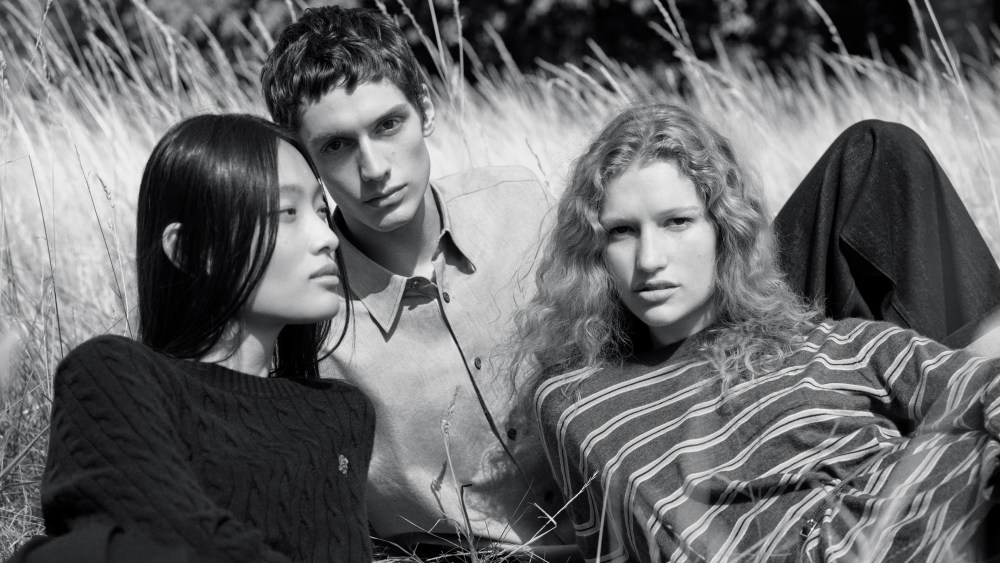
Released earlier this month, the capsule blends collegiate iconography with the Chinese fashion brand’s four decades of material expertise. Wang’s father, Wang Linxiang, was part of the founding team of the Yikezhao County Cashmere Sweater Factory, launched in 1980, the predecessor of Erdos Group. The lineup incorporates the university’s lion emblem and collegiate stripes, reinterpreted through Erdos’ craftsmanship, proportions and contemporary design language.
The move comes as parent Erdos Resources Co. Ltd. is enjoying strong financial momentum. The company reported a 43.2 percent increase in first-half 2026 net profit, with its main line Erdos, essential range Erdos 1980, the more affordable Blue Erdos subbrand, and Erdos Kids fueling growth.
You May Also Like
Headquartered in the resource-rich region of Inner Mongolia, the group has built one of the world’s most comprehensive cashmere infrastructures, spanning herding, animal welfare, fiber research, spinning, weaving, knitting, garment manufacturing and product innovation. The Erdos fashion brand operates 360 stores in China, including 284 full-price boutiques and 76 outlet locations.

Against that backdrop, the Cambridge collaboration is less about chasing instant visibility, and more about resetting how Chinese cashmere is perceived.
“It is about participating in a broader global conversation around materials, culture and the future of the industry, while giving international audiences a fuller understanding of what Chinese cashmere expertise represents today,” said Tana Dai, general manager of Erdos Cashmere Group and general manager of the group’s brand business division.
For Dai, Erdos is not a lower-priced substitute for European cashmere, but a knowledge leader in a fiber where China is now the world’s largest producer, manufacturer and consumer.
“China is home to some of the world’s finest cashmere, and Inner Mongolia sits at the heart of that industry,” she said. “What gives us confidence for the future is the combination of this exceptional material resource, more than four decades of industry expertise, and an increasingly clear creative identity.”
Rather than mining the university’s past for obvious collegiate tropes, under Dai’s direction, a team of designers, merchandisers and marketing executives traveled to Cambridge to understand what the institution represents today.
“What stuck with us was not a single building or archway, but the intellectual atmosphere,” she recalled. “What interested us was looking beyond the familiar collegiate image and focusing on the ideas behind it.”
That thinking underpinned “Wear Your Mind,” which frames the collaboration around curiosity, critical thinking and independent thought. The familiar crests and stripes came later, translated into lion embroidery, bespoke buttons, contrast jacquard and cable-knit techniques in soft cashmere and wool.
“The distinctiveness lies in transformation rather than application,” Dai said.
For Chinese consumers already familiar with Cambridge as a British cultural export, the aim was to avoid a nostalgic “heritage mash-up” and instead offer a new proposition that still feels recognizably Erdos.

More broadly, Dai hoped the project helps counter the persistent perception that Chinese fashion is strong on production but weaker on concept and cultural depth.
“We hope it can contribute to a broader understanding of contemporary Chinese fashion as something with its own material knowledge, cultural perspective and point of view, rooted in where it comes from, while remaining open to exchange with the world,” she said.
The timing is favorable. International curiosity about contemporary China has been gaining traction online, encapsulated in the “Chinamaxxing” trend on social media, where users document everything from Chongqing’s skyline to harem dramas and “blind box” culture.
Dai is wary of reading too much into a hashtag.
“Trends can draw attention, but long-term relevance comes from having a clear point of view and something authentic and distinctive to contribute,” she said. “The more meaningful opportunity is whether that curiosity develops into a deeper interest in Chinese creativity, craftsmanship, design and culture.”
By using Cambridge as a trusted cultural touchpoint, Erdos is betting it can turn that curiosity into a more informed understanding of Chinese cashmere.
To reinforce that message, the collaboration extended beyond product to an exhibition at the Fitzwilliam Museum, which Dai touted as a key way to put the brand’s story in front of Western consumers more used to valorizing Italian or Scottish cashmere.
“The Fitzwilliam Museum exhibition allows us to bring that full journey into a cultural setting,” she said, tracing cashmere “from material to knowledge, from fiber to finished garment,” and mapping its natural origins, the evolution of the modern cashmere industry and the capabilities Erdos has developed across the entire value chain.

A highlight is the Erdos Eco Ranch in Inner Mongolia, where herders, researchers and industry specialists work together on grassland ecology, goat breeding, fiber quality, nutrition, soil health, animal welfare and greener development.
“It helps make visible the larger world behind a finished garment — the grasslands, animals, people, knowledge and care that make cashmere possible,” Dai noted. The aim is to recast Chinese cashmere as a premium, responsible and deeply researched proposition rather than merely a volume player.

Another element designed to signal seriousness rather than surface branding is “An Inquiry Into Life,” a talk at St. Catharine’s College that brought together anthropologist Alan Macfarlane and China’s veteran TV host Chen Luyu. Their conversation ranged from youth culture in China and the U.K. to algorithms, social media, AI and identity.
“What interests us is creating a platform for genuine exchange,” Dai said of Erdos’ role in the series, which will continue in China beyond the initial U.K. launch. For her, such programs are a key part of the brand’s long-term international strategy.
“Product remains fundamental, but understanding a brand also comes from understanding the ideas, values and culture around it,” she said. “Our ambition internationally is therefore not simply to enter more markets, but to build long-term relationships based on shared values and genuine exchange.”

Over the next decade, Dai’s goal is not to copy-paste Erdos’ nationwide store footprint abroad, but to sharpen what the brand stands for globally.
She wants Erdos to be “recognized globally for something very clear: a contemporary Chinese fashion brand with an exceptional authority in cashmere, a distinctive point of view on natural materials and design, and the ability to participate confidently in international cultural and fashion conversations.”
Crucially, that evolution will not come at the expense of its roots.
“We want international audiences to recognize that a Chinese brand can be deeply rooted in its own landscape, craftsmanship and culture while speaking a genuinely global language,” Dai said. “Not losing what makes us Chinese in order to become international, but making that authenticity part of what gives us international relevance.”
For now, China remains the primary market for the Cambridge collection and commercial performance matters. But Dai said the real benchmark here is whether the collaboration can create lasting curiosity and, more importantly, a new mental slot for Erdos in the global hierarchy of cashmere and fashion.