Democratic lawmakers introduced legislation this week that would tie duty-free access under the African Growth and Opportunity Act to environmental enforcement, targeting a long-standing loophole in the landmark trade preferences program that critics say gives foreign polluters a competitive edge over American manufacturers.
The Environmental Commitment Objectives for African Growth and Opportunity, or ECO AGOA for short, would add mandatory environmental compliance to the list of political, human rights and market-based standards sub-Saharan nations must meet to be designated and remain eligible as beneficiary countries.
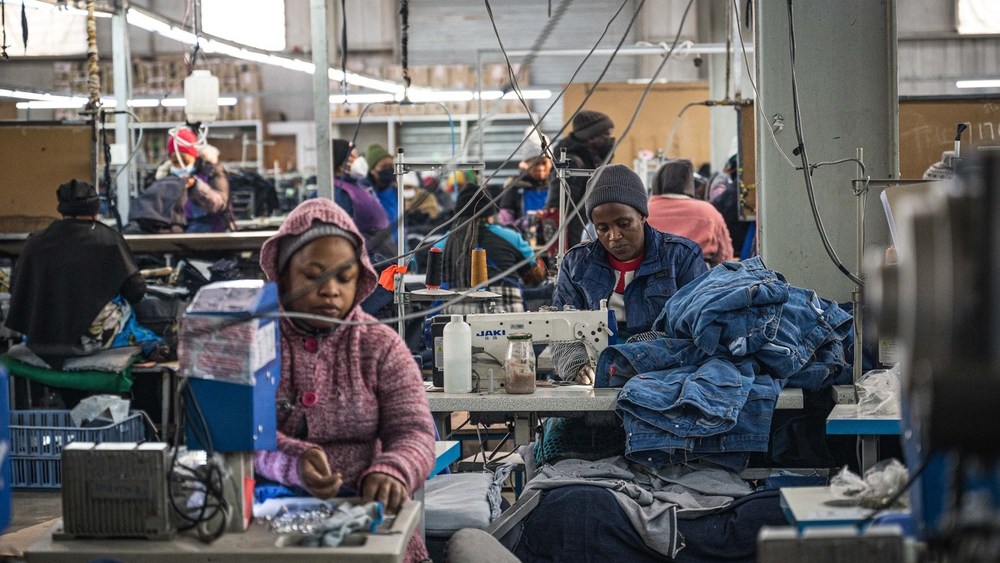
AGOA, whose latest authorization was set to expire at the end of 2026 after Congress restored the program retroactively in February following a lapse that began in September 2025, was given a reprieve when President Trump signed a two-year extension on Sept. 2, keeping the program in place through Dec. 31, 2028. It currently provides 32 sub-Saharan African countries with duty-free access to the U.S. market for more than 1,800 products, including apparel, textiles and footwear.
Senator Sheldon Whitehouse, Democrat of Rhode Island, and Representative Lloyd Doggett, Democrat of Texas, who are sponsoring the bill, said ECO AGOA wouldn’t establish new environmental standards but would instead make AGOA eligibility contingent on countries enforcing their own environmental laws and fulfilling international commitments.
“Without environmental accountability criteria, the fossil fuel industry and other big polluters rake in more profits while harming the health of local communities and putting U.S. manufacturers that use clean production methods at a disadvantage,” Whitehouse said in a statement. “Our bill would promote AGOA’s development goals and strip big polluters of the economic reward and competitive advantage they get from polluting.”
While ECO AGOA doesn’t single out garments, it could bring greater scrutiny to the environmental records of major apparel-sourcing hubs. In Lesotho, textile mills have faced allegations of releasing toxic wastewater into rivers without required pretreatment. Kenyan apparel manufacturers operating in export-processing zones have been fined for sending poorly treated, chemical-heavy effluent into river basins. And in Madagascar, textile factories and industrial parks have been accused of skirting water-treatment requirements and releasing untreated or partially treated wastewater into waterways.
The lawmakers were more explicit about their concerns in the critical-minerals sector, pointing to duty-free lead imported from poorly regulated recycling operations as an example. They cited a 2025 New York Times investigation that found elevated blood-lead levels in seven out of 10 people tested in Ogijo, Nigeria, including every worker tested at a lead-recycling factory. Those imports, the lawmakers said, undercut U.S. battery-recycling plants that operate under stricter environmental standards.
For Doggett, competition for Africa’s critical minerals has become what he calls a “race to the bottom.” The new bill, he said, will rectify that.
“The Trump regime’s critical minerals deals ignore the poisoning of water, soil and lungs when environmental laws go unenforced,” Doggett said in a statement. “ECO AGOA sets a simple standard: If you want America’s trade preferences, enforce your own environmental laws. It is a modest step that helps our partners protect their own people and resources.”