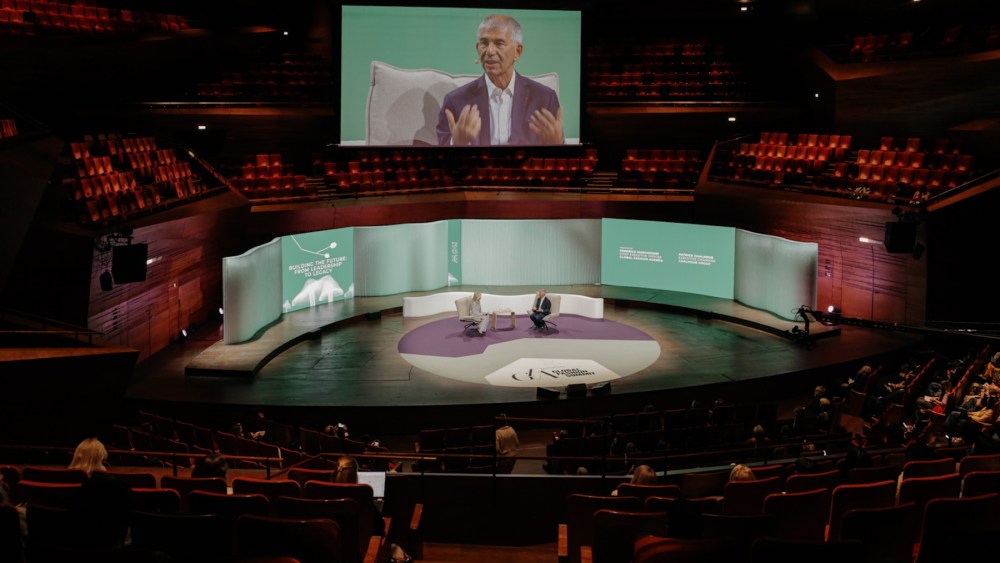
Global Fashion Agenda is putting new emphasis on a four-month-old partnership with Chalhoub Group as it seeks to bring more of the Middle East’s luxury market into fashion’s sustainability conversation.
The Copenhagen nonprofit first announced the retailer and distributor as an Associate Partner in May, following the Global Fashion Summit. On Thursday, the organizations offered additional details about the relationship and the environmental work Chalhoub hopes it will support.
The partnership will bring Chalhoub’s regional perspective, luxury expertise and experience managing complex value chains into GFA’s network of brands, manufacturers, policymakers and innovators, the organizations said. GFA describes its “Associate Partners” as companies that provide feedback and input on the organization’s content.
A post-summit announcement in May said Chalhoub would contribute to GFA publications, programs, forums and resources. Neither organization has disclosed a financial commitment, partnership term, specific joint project or performance targets.
“The Gulf region is no longer on the periphery of fashion’s transformation: it is at its center,” GFA chief executive officer Federica Marchionni said. Chalhoub’s seven decades of experience and influence in the region represent “not just a credential,” she added. “That is leverage.”
Dubai-based Chalhoub owns more than 10 brands and handles distribution and marketing for more than 400 international names spanning luxury fashion, beauty, jewelry, watches, eyewear and home goods. It operates more than 950 stores and recently entered a separate agreement with Gap Inc. to introduce Gap, Banana Republic and Athleta to the Middle East.
That reach could prove particularly relevant to Chalhoub’s indirect, or Scope 3, emissions, which account for more than 90 percent of its carbon footprint.
Investments generate 47 percent of its Scope 3 emissions, while purchased goods and services account for another 31 percent, according to Chalhoub’s 2025 sustainability report. Transportation, employee commuting, fuel and energy activities and the treatment of sold products at the end of their lives contribute smaller shares.
The group has committed to cutting Scope 3 emissions intensity per $1 million in revenue by 58 percent from a 2021 baseline by 2032. Its 2025 intensity was 13 percent below that baseline.
Progress across Chalhoub’s direct operations has been similarly uneven. The company is targeting 50.4 percent reductions in both Scope 1 and Scope 2 emissions by 2032. Through 2025, Scope 1 emissions had declined 3 percent from 2021, while Scope 2 emissions were 5.6 percent higher.
Chalhoub reported a 15 percent year-over-year reduction across all three emissions scopes in 2025, though it said the decrease resulted primarily from updated emissions factors. Scope 1 emissions increased 18 percent during the same period.
A gap analysis conducted last year concluded that continuing along a business-as-usual trajectory would leave the group short of its 2032 targets. Chalhoub evaluated roughly 70 possible decarbonization levers and identified three priorities: increasing renewable electricity sourcing, deepening climate engagement and data exchange with brands and incorporating emissions into investment decisions.
Its Planet FWD platform, introduced with the sustainability report in June, is intended to organize that work under three pillars covering net-zero emissions, circularity and nature.
The circularity component includes commitments to route all non-merchandise items through circular channels by 2030 and introduce at least one resale, rental or other circular business model for each Chalhoub-owned brand. Its existing Resolve program has diverted more than 650 pallets of visual merchandising and non-stock materials from disposal, achieving a 90 percent diversion rate in the United Arab Emirates.
Florence Bulté, Chalhoub’s chief sustainability officer, said the GFA partnership would help the group foster dialogue, exchange knowledge and advance collective action as it works toward its 2032 science-based targets and net-zero goal for 2040.
“Sustainability [is] not a standalone initiative, but a collective and continuous effort that must be embedded into governance, decision-making and everyday operations across the organization,” she said.
The partners have not yet said when their first joint output will appear or how they will measure the relationship’s contribution to Chalhoub’s environmental targets.