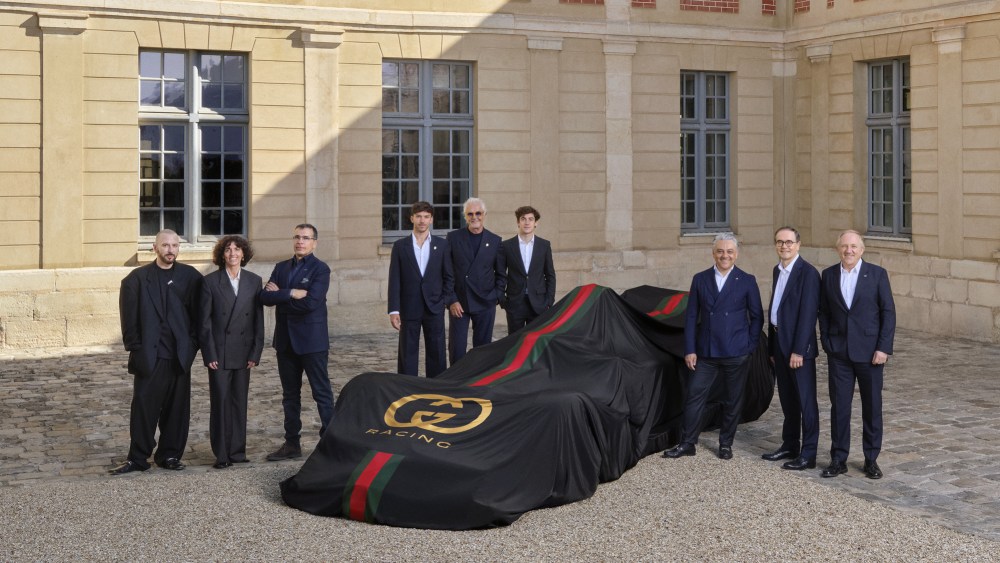
Gucci has signed on as title partner of the Alpine Formula 1 Team, which from the 2027 season will compete in Gucci colors under the banner Gucci Racing Alpine Formula 1 Team.
Financial terms for the multi-year deal were not disclosed.
The F1 team partnership represents the first volley for Gucci Racing, “a new business and experiential platform built around the values of performance, precision, discipline and excellence at the intersection of luxury and sport,” the Italian fashion house said in a statement Wednesday.
“Conceived to extend well beyond trackside visibility, the partnership will be activated across a range of initiatives over the coming seasons — from content and product to high-end client experiences and exclusive engagements — with the ambition to build a distinctive and high-impact platform over time,” it detailed.
You May Also Like
Gucci characterized the Alpine team sponsorship as a first for a luxury fashion house, and one that would “enable Gucci to reinforce the brand’s desirability, visibility and cultural relevance at a scale and frequency that few other platforms can offer.”
The tie-up had already been mooted in multiple media reports and adds to fashion’s fevered interest in Formula 1. The number of sponsorships between brands and teams, drivers and the sport itself have multiplied in recent years, with the likes of Louis Vuitton, Tommy Hilfiger, Adidas, Hugo Boss and Puma all implicated.
It seems a natural project for Luca de Meo, the former Renault Group honcho who became chief executive officer of Gucci parent Kering last September, and who has already recruited several top executives from the automotive industry. During his five-year tenure at Renault, de Meo played a key role in developing Alpine’s Formula 1 program.
“Formula 1 has evolved far beyond sport to become one of the world’s most powerful premium content platforms, reaching over 1.5 billion people each season and inspiring a rapidly expanding, younger and increasingly female audience,” de Meo commented. “As a space of creativity, pursuit of excellence and human achievement, we see it as a unique platform for a luxury brand to push boundaries, spark meaningful connections and build long-term value and brand desirability, while delivering measurable and lasting impact.”
Francesca Bellettini, president and CEO of Gucci, said the Alpine deal signals “our ambition for the brand and the role we want Gucci to play on this stage. Formula 1 represents today a unique convergence of performance, culture, and global reach, and Alpine Formula 1 Team is the right partner to bring this vision to life.
“Gucci Racing is more than a presence on the grid: it is an expression of who we are and where we want to take the brand. And there is much more to come,” she added.

During a press briefing at Kering’s Paris headquarters with a handful of journalists, Bellettini characterized the partnership as a “very bold, very Gucci move” – and a wide-ranging initiative.
“It’s not just putting a logo on a car or a helmet. It’s a real partnership that involves a 360 collaboration,” she said, seated in front of a monitor broadcasting the new black-and-yellow Gucci Racing logos of interlocking Gs.
She made it clear that Gucci’s creative director Demna is a Formula 1 fan and “fully involved because every project we do at Gucci embeds business and creativity.”
The Georgian designer was implicated in the design of the new logo and “you will be able to see moving forward how much his creativity is brought also inside the paddock, the grid, and everything that we’re going to do.”
Asked about fashion-related projects the partnership might yield, Bellettini suggested there would be many but “not easily accessible.”
Will Gucci do a complete takeover of the cars for the new Gucci Racing Alpine Formula 1 Team?
“As much as possible,” Bellettini said, prompting a round of chuckles. “For whomever is familiar with Demna, you know that he is a unique creative director who gets excited by new opportunities and challenges.”
The executive noted that Gucci, founded in 1921, has had dalliances with the car industry and auto racing, mentioning that the grandson of founder Aldo Gucci was a race car drive.
“In 1970, Gucci was the first luxury brand to create a partnership with AMC to actually create a sports car together, and it went far beyond simple personalization,” she said. Subsequently, Gucci did collaborations with carmakers Cadillac, Rolls-Royce and Fiat.
The Alpine brand was founded in 1955 by Jean Rédélé and has been fully controlled by Renault Group since 1973. Its Formula 1 team currently ranks fifth in the 2026 standings. The Monaco Grand Prix is the next race, scheduled for June 7.
“As a historic Formula 1 manufacturer, it is a powerful asset to support Alpine’s ambition: building awareness, desirability and influence across markets, while reaching new audiences and young generations,” said François Provost, CEO of Renault Group.
During the press briefing, Philippe Krief, CEO of Alpine, held out hope that Gucci would help it learn more about fanning product desirability – and make further inroads with female consumers, who influence 70 percent of all car purchases.
Flavio Briatore, executive advisor of Alpine Formula 1 Team, expressed his excitement “about the possibilities the partnership with Gucci brings and the great things we can achieve together at a global level. The Enstone Team has a history of doing things differently to others and has previously shown that fashion can finish first in Formula 1.”
Briatore was referring to wins in the mid-’90s when the team was associated with Benetton and pilot Michael Schumacher.
In an interview with WWD, the Italian marveled how the average age of Formula 1 fans has rougly halved in the past five years, crediting the social-media prowess and appeal of its famous young pilots, including Alpine’s own Pierre Gasly.
“We are very proud to have Gucci involved,” he said. “Formula 1 is the place to be!”