It’s a Friday morning at The Mall at Green Hills in Nashville, and the front doors haven’t even opened to the public.
Store managers are just beginning to restock shelves and prep for the rush to come. Mall walkers are logging their steps in the hallways. And two of the leaders orchestrating the remarkable turnaround at Journeys are in the middle of an FN cover shoot on the escalator.
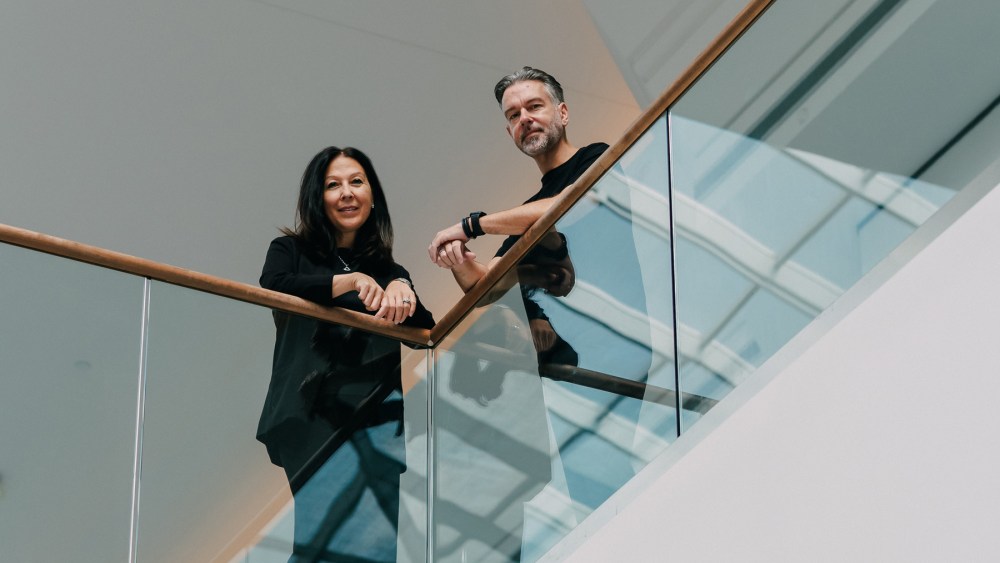
Mimi Vaughn, board chair, president and chief executive officer of Genesco Inc., poses alongside Journeys Global Retail Group chief executive officer Andy Gray in the atrium outside their store. The location is a model example of the new philosophy and 4.0 concept introduced by the 40-year-old retailer.
There’s a reason for the early-morning call time. It’s prime season for back-to-school and fall shopping.
You May Also Like
And destinations like The Mall at Green Hills, owned by Simon Property Group, are in the midst of their own comeback stories.
Retail data company Placer.ai noted that mall momentum continued in the first half of 2026, with indoor malls seeing 4.3 percent growth in foot traffic in July versus the same time last year.
Leading the revival is Gen Z and Gen Alpha, who, after growing up in the digital realm, are discovering that malls offer a space for experiences “in real life.”
In July, the Ipsos Consumer Tracker asked shoppers age 18 and up about their mall habits and found that within the 18 to 34 cohort, 63 percent said they go to malls “often” or “sometimes” — a 9-point bump from last year.

Throughout its four decades, Journeys has been a mall staple, and Gray said the chain is still a strong believer in brick-and-mortar and malls “for the simple reason of that’s where our consumer likes to shop. It’s a place where they can discover, a place where they can hang out with their friends, where they can touch, try on, as well as experience the best versions of brands.”
According to the company, roughly 80 percent of Journeys’ total sales come from its stores. But even more important than revenue, Gray added, is the “broader responsibility” that retailers have, to emphasize community and in-person activities.
“This current generation is the most connected consumer but also the most disconnected and isolated consumer that we have ever seen,” he explained. “The mall and store environment creates a meaningful benefit through human interaction, community, a place where you can express yourself and build confidence.”
Journeys has been investing heavily in its fleet of 924 stores, rolling out a new remodel that offers fresh formats to excite customers. But Gray said it’s about more than making stores look pretty. “It’s a business objective, but I do think there’s a societal benefit as well,” he said.
A History of Reinvention
Journeys certainly has a deep history on which it can build relationships with mall newcomers.
Founded in 1986 by a team inside Genesco, the retailer has always been laser-focused on teens, starting with its first door inside Rivergate Mall in Nashville. Over the years, it has evolved with each successive generation, catering to their ever-changing tastes and the arrival of e-commerce.
“Journeys’ whole customer base turns over every few years, and you have to be constantly appealing to the newest, latest taste in that consumer who’s very fickle,” explained Vaughn. “If you don’t have what they want, they’re not shopping with you.”
What Journeys has in its favor, she explained, is its authenticity. “Customers understand if you’re not, and they can really smoke that out — particularly teen customers,” said Vaughn.
Another reason for Journeys’ staying power: the team’s willingness to embrace change. Gray explained, “We have managed to stay relevant to each new generation, which is much easier to say than do. Trends change, consumers change, the competition changes. The brands that last and endure are ones that have the courage to evolve and not lose who they are.”
Its retail partners agree. Nina Flood, global brand president of Timberland, said, “Journeys is a trusted, collaborative and consumer-centric partner. They bring deep insights into their customer base, move with agility and are always looking for ways to drive mutual growth.”

True to its name, Journeys has been on a path of reinvention in recent years that has yielded favorable results. In the second quarter of fiscal 2027, for instance, the retailer logged its eighth straight quarter of positive comparable-store sales, with a 2 percent gain. And company leaders noted that Q3 is off to a strong start, with a mid-single-digit comp in August alone.
Wall Street watchers have been bullish about the progress. In August, Williams Trading issued a “buy” rating for Genesco based on “ongoing strength at Journeys, which represents [roughly] 62 percent of [Genesco’s] annual revenue.” Analyst Sam Poser particularly highlighted the roll-out of the 4.0 stores as a major contributor to his favorable outlook for the company.
Fresh Leadership
Vaughn, who took over as chief of Genesco in 2020, recalled that Journeys emerged from the COVID-19 pandemic in good shape, but that the consumer landscape had changed drastically, triggering the need for a different approach.
To shape that strategy, Genesco brought on a spate of new leaders. First up was Gray, a Scot who spent two decades with Foot Locker, rising through the ranks of its U.K. and European divisions before moving to the U.S. team in 2016. He took over leadership of Journeys in January 2024 and last year was tapped to lead the newly created Journeys Global Retail Group, which consists of Journeys and Journey Kidz, as well as Schuh in Europe and Little Burgundy in Canada.

Also in 2024, he was joined by fellow Foot Locker veteran Chris Santaella as chief merchandising officer and longtime Levi’s executive Stacy Doren as chief marketing officer. They round out the Journeys leadership team, which also includes company veterans like chief operating officer Mike Sypert; John Tighe, senior vice president of direct-to-consumer, and Becky Hardin, senior vice president of real estate and store planning.
Gray said his background gave him a unique, outside-in perspective on the Journeys business and mall consumer. But he took his time getting to know the organization — its culture, people and systems — before beginning to implement change. “If there’s a business that’s been very successful for 40 years, there’s a reason why, so let’s learn what those reasons are,” he explained. “Learning from the past was a big part of [my process], and then, ultimately, setting a direction for the future.”
The New Journeys
The first step for the Journeys leadership was to gather data to get a clearer snapshot of today’s young consumer. They discovered that these teens are vastly different from their predecessors.
“The previous generation often identified themselves with an identity, a style, a brand, a tribe. Retailers and brands serviced it, and off they went,” said Gray. “This current generation is the exact opposite — they’re very multidimensional. They do not want to get put in a box.”
A 2026 back-to-school report from YPulse backs up that assertion. It noted that the style landscape for teens is splintered into micro-aesthetics, with athletic/sporty and streetwear as the most dominant — but together they don’t even represent half of students’ preferred aesthetic. And 13 percent of survey respondents said they didn’t have a specific style at all.
Journeys see that as an opportunity. “We’re a very inclusive retailer, which is great for this consumer shift,” said Gray. “[We can be] the face of this multidimensional, next generation of consumer: multibrand, multicategory, multistyle. I think we’re very well-suited to serve.”

At the same time, the retailer also jumped into what it saw as a white space in the mall, becoming a bigger resource for teen girls — what it’s calling its “Lead With Her” approach.
Gray — who certainly should know after his decades at Foot Locker — pointed out that most premium mall shoe stores skew heavily male in their selections, even though “the North American mall is quite built around this young teen female. There are 20-plus places for her to buy clothing, cosmetics and accessories, but there’s no singular footwear destination in that space.”
This new “sharp focus” on teen girls changed the company’s merchandising strategy, opening the aperture to brands and products that speak to her fashion needs.
But then the next question, according Gray, was, “Where does it all go?” Thus began Journeys’ latest store redesign project that began rolling out to stores in 2024.
Whereas early Journeys stores were made in the image of a teenager’s moody, messy bedroom, the new 4.0 concept is bright, open and easy to navigate, with a focus primarily on shoes (T-shirts and hoodies are out, and the bags and socks are tightly edited). The design is also very flexible, something Gray said was essential for reflecting and adapting with today’s youth.

“The old environment — which we know and love, and which had served us very well for many years — was fixed in its nature. It was more challenging to work with the new categories, the new storytelling,” explained the group CEO. “When we put this remodel into place, it was done through the lens of the consumer versus a beautification project. We had better storytelling, we changed our assortment, our service level, and we added some technology for our stores.”
Journeys’ redesigned locations are outpacing its existing doors in terms of sales, prompting the retailer to speed up the rollout strategy. It now expects to have 180 doors converted by year-end.
To capitalize on the opportunity, the store team is expanding the footprint of some spaces and relocating others to better locations. At the same time, it continues to trim the fleet — a process that’s been underway for several years — by closing underperforming doors.
But Gray said the company will remain a store-led business, even as its digital division sees significant growth: In Q1, the e-commerce business posted double-digit gains.
“The digital environment allows us to bring in a lot more people in different ways, but the best expression of our brand is always going to be in person, with the service model and all the different aspects that we can bring to bear in physical retail. We believe in both channels,” said the executive.
He noted that the digital strategy will continue to evolve significantly in the next few years, leveraging technologies like agentic artificial intelligence and social commerce to create more personal, seamless experiences. “We will be nimble and able to meet that,” Gray said.
Indeed, as a company that caters to the most-fickle and fastest-moving customers that retailers have ever seen, Journeys has its work cut out for it. Gray’s strategy: “Never get comfortable. There’s always a challenge around the corner.”
And as the mall chain celebrates the four-decade mark, he predicted more evolution is on the horizon. “When I look ahead, I don’t just see a bigger Journeys — I see a more relevant one,” said Gray. “The future belongs to brands with the courage to evolve without ever losing who they are. That’s been the Journeys story for 40 years, and it’s exactly why I believe our greatest chapter is still ahead of us.”