
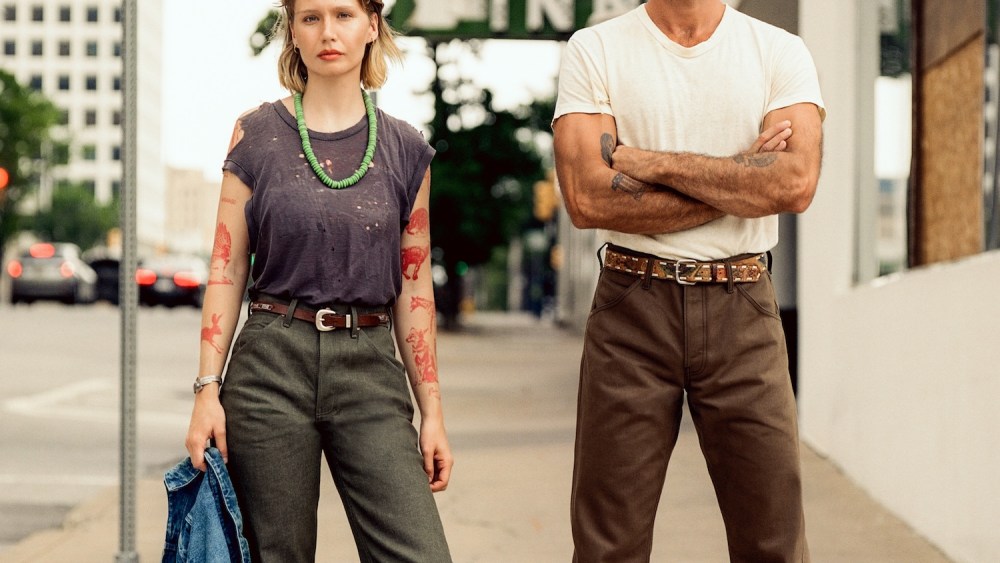
Imogene + Willie and Wrangler’s “Made in USA” collaboration demonstrates the importance of strong relationships in building and sustaining domestic supply chains. The three-part collection was produced entirely in the U.S., with both teams drawing on their existing partners, including Mount Vernon Mills in Trion, Ga. and garment and laundry facilities in Los Angeles. Wrangler provided the “coveted” deadstock fabrics from White Oak, the shuttered Greensboro, N.C. denim plant.
The American brands will launch the third and final drop of their collection on Nov. 7, featuring deadstock denim styles in western cuts, including a rigid western snap shirt.
“There are so many collaborations happening today, and we wanted ours to have a real reason for existing,” said Jackie Berkley, Imogene + Willie’s head of people and culture. “Bringing Wrangler’s first domestically manufactured collection in more than 20 years to life felt like something worth doing, and something both brands could be proud of.”
Berkley said the partnership shows what’s possible when brands of different sizes come together with a shared commitment to American manufacturing. “For domestic mills and manufacturers to survive, they need consistent business and brands willing to invest in their capabilities,” she said. Imogene + Willie has witnessed this in its Cotton Project, which brings farmers, mills and makers within a 400-mile radius of the brand’s Nashville headquarters together to create T-shirts and jeans.
“What’s especially meaningful about the Wrangler collaboration is the opportunity to bring that work to a much wider audience. A company with Wrangler’s history and reach choosing to make a collection domestically sends an important message about the value of the people and expertise we still have here,” Berkley said. “These are relationships that take years to build, and there’s an incredible amount of knowledge held by the people who have spent their lives doing this work. We hope collaborations like this encourage continued investment in those businesses so that the next generation has the opportunity to learn from them.”
While the collaboration is wrapping up, Berkley said the teams are proud of what they’ve created. “It’s been a special opportunity to celebrate the history of American denim, work with people we admire, and introduce both brands to new communities. We hope the collection continues to inspire more conversations and opportunities around making clothing here in America,” she said.
Here, Berkley discusses the experience of exploring Wrangler’s archives, bringing together the two brands’ distinct perspectives and the lessons learned throughout the collaboration.

SJ Denim: What made Wrangler the right partner for Imogene + Willie?
Jackie Berkley: Wrangler has such an important place in American denim history and has been such a huge source of inspiration for what we do at Imogene + Willie. These are clothes that have been worn and loved for generations, and when we hunt for vintage treasures, it’s often beloved Wrangler pieces that have inspired our designs.
When the opportunity came along, we were so excited by the trust that Wrangler placed in our team to explore their archives and interpret some of their original pieces through our own lens. Denim has always been at the heart of who we are since our founding in 2009, and this felt like such an amazing opportunity and full circle moment to return to those roots. There are so many collaborations happening today, and we wanted ours to have a real reason for existing. Bringing Wrangler’s first domestically manufactured collection in more than 20 years to life felt like something worth doing, and something both brands could be proud of.

SJ Denim: Describe the design process.
JB: One of the things we loved most about this project was the opportunity to study the original garments so closely. There were so many details we wanted to preserve, from the patterns and construction to the washes, stitching, and finishing details that made these pieces distinctly Wrangler.
We also wanted the collection to feel like something people would wear for years to come, which meant being thoughtful and creative about fit and considering where certain adjustments could make a garment more wearable without losing the character of the original.
Working with limited quantities of original fabrics alongside newly developed materials also required careful planning with our manufacturing partners, and availability of the fabric dictated in part how much we could make. We approached those decisions with the same philosophy that guides our own collections: make something well, make it with intention, and make something people will want to hold onto.
SJ Denim: How did the collaboration bring together each brand’s distinct expertise in American denim manufacturing and heritage?
JB: I think the greatest opportunity Wrangler gave us was access to its history and the freedom to explore it. Their archives are an extraordinary resource, filled with decades of design decisions, craftsmanship, and the stories of people who have worn these clothes. For our team, being trusted with that history was really special. We were able to study original garments, revisit patterns that hadn’t been produced in years, and work with materials that would otherwise have remained in the archives.
Our close relationships with American mills and manufacturers were an important part of bringing the collection to life. Being able to combine that experience with Wrangler’s resources and institutional knowledge allowed us to create something neither brand would have approached in quite the same way independently.
SJ Denim: Fabrics are key to the “Made in USA” label. How did you select fabrics?
JB: For the first release, we used original deadstock Cone Mills White Oak selvedge denim, which was an exciting surprise we didn’t necessarily go into the partnership expecting. Wrangler was not historically known for using selvedge denim, but had released one style in 1964 with selvedge fabrics: the 10MW. Having access to this deadstock supply from Cone Mills allowed us to authentically reproduce this style for this project.
For the second release, we worked closely with Mount Vernon Mills in Trion, Ga., which is known for originally developing the washed broken twill fabrics for Wrangler’s “cowboy cut” styles. In addition to that fabric, they also contributed with a washed 2×1 denim specifically developed by Mount Vernon Mills to reproduce the right-hand twill fabrics originally used by Wrangler, as well as a cotton twill that was overdyed, washed and abraded to capture the look and feel of a well-loved vintage jacket.
Mount Vernon has been an important partner of ours for years, and they’ve always been incredibly willing to work with us despite being a small brand. Their recent investment in the original Draper looms from White Oak is another exciting chapter in the story of American denim manufacturing. We’re proud to have a relationship with a mill that continues to invest in keeping this work alive.
SJ Denim: What can an independent denim brand gain from partnering with a company that has the infrastructure, distribution and production capabilities of Wrangler?
JB: There’s so much to learn from a company that has been making apparel for generations. Wrangler brought an incredible depth of knowledge and resources to this partnership, and we were fortunate to have access to people who understand the history and construction of these garments so intimately.
There’s also tremendous value in being able to share our own story with a much broader audience. We’ve spent years building relationships with domestic mills and manufacturers, and much of that work happens behind the scenes. A collaboration with a brand like Wrangler gives us an opportunity to bring more attention to those people and the work they do.
I think that’s one of the most meaningful things a partnership like this can offer a smaller brand. It creates an opportunity for more people to discover what you’re doing and why you’ve chosen to do it that way.

SJ Denim: Conversely, what do you think a large heritage brand gains from working with a smaller, design-led label?
JB: I think smaller brands can bring a different perspective and a certain freedom to explore. We’re very close to our products, our manufacturing partners and the people who wear our clothes. That influences everything from the way we approach a fit to the smallest finishing details.
We’ve always been inspired by the clothes people have loved and held onto for years. With this collection, we were able to spend time with Wrangler’s archives and look at those original pieces through that same lens. We wanted to understand what made them special in the first place and how we could bring that character into something people would want to wear today.
There’s something wonderful about a brand with so much history being willing to let a smaller team explore it in a new way. I think that openness is what made this collaboration.

SJ Denim: Did this project expose any gaps in the domestic denim supply chain?
JB: So much of the infrastructure that once supported American textile manufacturing has disappeared. Mills have closed, specialized machinery has been lost, and the number of people with the knowledge to make these garments has continued to shrink. We’ve experienced those challenges firsthand throughout our years of producing domestically.
What made this project special was the opportunity to work with partners who are still investing in that future. Mount Vernon Mills is a wonderful example. They’ve continued developing fabrics and investing in machinery while maintaining relationships with smaller brands like ours.
I think people sometimes assume that making clothing in America is simply a matter of choosing to do so. The reality is that it takes years of relationships, coordination and a shared commitment from everyone involved. We hope this collection helps people understand just how much goes into making something here, and why it’s worth protecting.
SJ Denim: How are consumers responding to the collection?
JB: We’ve been really encouraged by the response, particularly from people who have a deep appreciation for vintage denim and American-made clothing.
One of the most rewarding parts has been seeing people connect with the collection for different reasons. Some have worn Wrangler their entire lives and recognize the silhouettes immediately. Others are discovering these pieces for the first time through Imogene + Willie. It’s been really special to see those communities come together around something they both appreciate.
We also love that the collection has given us an opportunity to share more about the people and places behind the garments. We’ve always believed that people care about where their clothing comes from and who makes it, and it’s exciting to see that interest extend to the history of this collaboration.


